The KwaZulu-Natal government has taken another significant step towards strengthening agriculture and improving food security with the official unveiling of the new Department of Agriculture and Rural Development offices in Nkandla. On 31 July 2026, KwaZulu-Natal Premier Mr Thami Ntuli officially opened the modern administration block, marking an important investment in agricultural development and rural communities. The new facility is expected to improve access to essential government services for farmers while supporting the province’s broader agricultural and economic development goals. The project comes at a critical time, as agriculture continues to play an increasingly important role in addressing food insecurity and creating sustainable livelihoods. By bringing services closer to farming communities, the provincial government aims to empower both emerging and established farmers with the resources they need to succeed.
The need for improved agricultural support is particularly important in Nkandla and the wider King Cetshwayo District, where many households continue to face food insecurity. According to the recent General Household Survey, approximately 19 percent of households in the district experience moderate to severe hunger. This reality highlights the importance of strengthening agricultural production and ensuring that farmers receive the technical assistance and resources required to increase food output. Agriculture remains one of the most effective ways to improve household food security, generate employment and stimulate local economic growth. The opening of the new offices reflects the government’s recognition that stronger agricultural institutions are essential to achieving these objectives.
Premier Thami Ntuli described the new offices as more than simply an administrative building, emphasising their role in delivering practical support to farming communities. He explained that the facility represents the provincial government’s commitment to bringing government services closer to the people while strengthening support for those who produce food across the province. The Premier highlighted that farmers will now have improved access to services related to mechanisation, irrigation and climate-smart farming practices. These services are expected to improve productivity while helping farmers adapt to changing environmental conditions. By reducing the distance between farmers and government support programmes, the new offices will make it easier for producers to access guidance and assistance when they need it most.
The modern administration block has been designed to provide a professional and functional working environment for departmental officials while improving service delivery to the public. The facility includes modern offices, meeting rooms and dedicated farmer support facilities that will accommodate a range of agricultural programmes and advisory services. Construction of the building was coordinated by the Department of Public Works and Infrastructure, which served as the implementing agent on behalf of the provincial government. The previous structure was completely demolished before the new building was constructed over a period of approximately two years. The completed development now provides officials with a worker-friendly environment that supports efficient operations while creating a welcoming space for farmers seeking assistance.
The Department of Agriculture and Rural Development, under the leadership of MEC Mrs Thembeni KaMadlopha-Mthethwa, invested R43 million in the construction of the new facility. Beyond improving infrastructure, the project also created valuable employment opportunities for local communities during the construction phase. More than 60 local jobs were generated, providing income and valuable work experience for residents. In addition, the Expanded Public Works Programme created 45 employment opportunities, with many of these positions benefiting young people and women. These employment outcomes demonstrate how public infrastructure projects can contribute not only to improved government services but also to local economic development and skills creation.
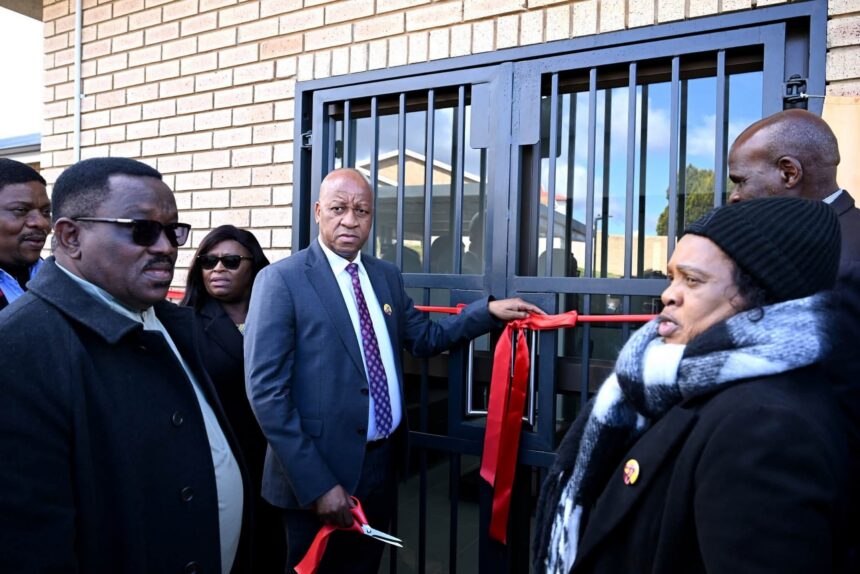
During the official handover ceremony, where a commemorative plaque was unveiled, Premier Ntuli praised the Department of Agriculture and Rural Development for recognising the importance of providing officials with a modern and conducive working environment. He noted that quality infrastructure contributes directly to improved public service delivery by enabling officials to perform their duties more effectively. According to the Premier, the investment reflects the province’s commitment to building institutions that serve communities efficiently while supporting agricultural development. His remarks reinforced the message that government infrastructure should always be designed with the needs of citizens in mind. The completion of the project represents a long-term investment in both public administration and rural development.
Speaking to farmers gathered at the nearby Nkandla Municipality Stadium, MEC Thembeni KaMadlopha-Mthethwa reminded officials that the true value of the building would be measured by the services delivered inside it rather than by the structure itself. She stressed that government offices should become centres of action where practical support is provided to farmers every day. The MEC said the office should serve as the engine room for food security, supporting households, schools and hospitals through stronger agricultural production. She called on officials to prioritise assistance for both smallholder and commercial farmers by expanding access to mechanisation, irrigation systems and market opportunities. Her message underscored the importance of translating infrastructure investments into meaningful improvements for farming communities.
The MEC also highlighted the growing importance of climate-smart agriculture as farmers face increasing challenges associated with changing weather patterns and environmental pressures. She encouraged departmental officials to make greater use of technology and sustainable farming practices when supporting local producers. Climate-smart farming techniques can improve water efficiency, protect soil health and increase resilience against drought and other climate-related risks. The MEC further emphasised the importance of ensuring that young people and women play a central role in the future of agriculture. She noted that meaningful sector growth cannot be achieved if vulnerable groups remain excluded from development opportunities, adding that extension practitioners have an important responsibility to promote sustainable farming methods that will keep the green fields of Nkandla and surrounding areas productive for future generations.
The unveiling of the new Department of Agriculture and Rural Development offices in Nkandla marks an important milestone in KwaZulu-Natal’s efforts to strengthen agricultural services, improve food security and support inclusive rural development. The R43 million investment has delivered modern infrastructure, created employment opportunities and positioned the department to provide more effective support to farmers across the region. With improved access to mechanisation, irrigation, climate-smart farming guidance and market opportunities, local producers are better equipped to grow their enterprises and contribute to the province’s food supply. The leadership shown by Premier Thami Ntuli and MEC Thembeni KaMadlopha-Mthethwa demonstrates a clear commitment to ensuring that agriculture remains a driver of economic growth and community wellbeing. As officials begin working from the new facility, the focus will now shift to delivering the practical support that enables farmers to thrive and strengthens food security for communities throughout KwaZulu-Natal.
Join 'Farmers Mag' WhatsApp Channel
Get the latest Farming news and tips delivered straight to your WhatsApp
CLICK HERE TO JOIN