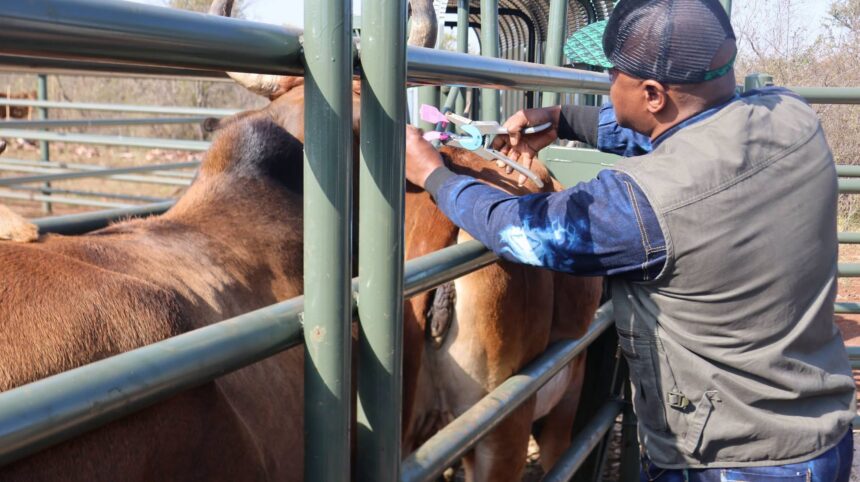
Livestock farmers in the uMshwathi Local Municipality, KwaZulu-Natal, are receiving valuable support through a programme that combines essential animal healthcare with practical farmer education. While cattle are being treated with deworming medication to improve their health and productivity, farmers are also learning about the importance of complying with South Africa’s animal identification legislation. This integrated approach reflects the National Department of Agriculture’s commitment to strengthening the livestock sector by improving animal welfare, enhancing disease management and supporting responsible livestock ownership. Healthy animals and proper identification systems are fundamental to a sustainable and profitable livestock industry. By addressing both animal health and livestock management, the programme is helping farmers protect their investments while contributing to the long-term resilience of the agricultural sector.
Deworming remains one of the most important preventative health practices in livestock production. Internal parasites can reduce growth rates, lower fertility, weaken immune systems and significantly decrease overall productivity in cattle. Animals affected by heavy parasite burdens often experience poor weight gain, reduced milk production and increased susceptibility to disease. Regular deworming helps eliminate harmful parasites before they cause serious health problems, allowing cattle to remain healthy and productive throughout the year. Healthy livestock not only perform better but also provide greater economic returns for farmers through improved production and reduced veterinary costs.
Alongside the deworming programme, Ms. Lilly Qwabe from the Directorate: Animal Production is educating farmers on the importance of registering an official animal identification mark in accordance with the Animal Identification Act, 2002 (Act No. 6 of 2002). Her awareness campaign highlights the role that proper animal identification plays in protecting livestock owners and strengthening South Africa’s livestock industry. Many farmers may not fully appreciate the legal and practical advantages of registering an official identification mark until they experience challenges such as stock theft or disease outbreaks. By providing this information directly to livestock owners, the department is helping farmers better understand their responsibilities and the benefits of compliance with national legislation. Education remains an essential tool in improving livestock management practices across rural communities.
An official animal identification mark serves as legal proof of ownership and provides farmers with greater security for their livestock. Stock theft continues to pose a significant challenge in many farming communities, resulting in substantial financial losses each year. Clearly marked animals make it easier for authorities to identify stolen livestock and return them to their rightful owners. Proper identification also reduces disputes over ownership and provides valuable evidence when livestock are bought, sold or transported. Registering an official identification mark therefore offers practical protection for farmers while supporting more secure livestock management systems.
Livestock traceability has become increasingly important within modern agriculture, particularly as animal movement and disease surveillance continue to receive greater attention. An effective identification system allows authorities and producers to trace the movement of animals throughout the production chain when necessary. This information becomes especially valuable during disease outbreaks, where rapid identification and movement control can help contain the spread of infectious diseases. Improved traceability also strengthens consumer confidence in South African livestock products by demonstrating that animals can be monitored from farm to market. As export opportunities continue to grow, robust traceability systems are becoming an essential component of competitive livestock production.
Animal identification also plays a critical role in protecting the health of South Africa’s livestock industry. Effective disease control depends on accurate records and the ability to quickly identify affected animals during disease investigations. Registered identification marks support veterinary authorities in implementing disease surveillance, monitoring animal movements and responding effectively to outbreaks. Faster response times reduce the risk of widespread disease transmission, protecting both individual farmers and the broader livestock sector. Strong identification systems therefore contribute directly to national animal health and food security.
The educational campaign encourages every livestock owner to register an official animal identification mark and comply with the requirements of the Animal Identification Act. Farmers are reminded that registration is not simply an administrative process but an important investment in protecting their livestock and farming businesses. Compliance strengthens the integrity of the livestock industry while improving confidence throughout the agricultural value chain. Producers who adopt proper identification practices are better prepared to participate in formal markets where traceability and legal compliance are increasingly important. Taking this step today can prevent costly challenges in the future.
The combination of cattle deworming and farmer education in the uMshwathi Local Municipality demonstrates how practical agricultural support can strengthen livestock production from multiple perspectives. Healthy animals, informed farmers and effective identification systems all contribute to a more productive and resilient livestock sector. By encouraging farmers to register their official animal identification marks while maintaining strong animal health programmes, the National Department of Agriculture is helping build a safer and more sustainable future for livestock farming. Every registered identification mark strengthens ownership, improves traceability, supports disease control and protects valuable agricultural investments. Farmers are encouraged to register their official animal identification marks, safeguard their livestock and play an active role in building a stronger and more competitive South African livestock industry.
Join 'Farmers Mag' WhatsApp Channel
Get the latest Farming news and tips delivered straight to your WhatsApp
CLICK HERE TO JOIN