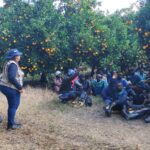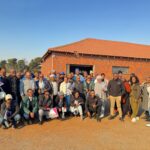
The National Department of Agriculture is participating in the Science, Policy and Practice Workshop at the 61st Annual Congress of the Grassland Society in Grabouw, Western Cape, reaffirming South Africa’s commitment to sustainable rangeland management and climate resilience. Held under the theme, “Herding for Health in Action: Bridging Science, Policy and Practice for Climate-Resilient Rangelands,” the workshop brings together experts from across Southern Africa to explore practical solutions for protecting grassland ecosystems while supporting livestock production. As climate change continues to place increasing pressure on agricultural landscapes, events such as this provide an important platform for identifying strategies that help farmers adapt to changing environmental conditions. The workshop also strengthens collaboration between government, researchers, conservation organisations and farming communities. Through knowledge sharing and practical engagement, participants are working towards building healthier rangelands that support both agricultural productivity and biodiversity conservation.
Healthy rangelands are among South Africa’s most valuable natural resources because they provide grazing for millions of livestock while supporting water catchments, wildlife habitats and rural livelihoods. However, these ecosystems face growing threats from climate change, prolonged droughts, land degradation and unsustainable grazing practices. Declining vegetation cover and soil erosion reduce the productivity of grazing land, making it increasingly difficult for livestock farmers to maintain healthy herds. Restoring and protecting these landscapes has therefore become a national priority for both agricultural development and environmental sustainability. The workshop recognises that long-term solutions require cooperation between scientists, policymakers and the communities who manage these landscapes every day.
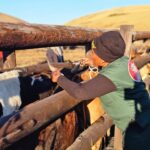
The Herding for Health initiative serves as one of the key focus areas of the workshop, providing practical examples of successful rangeland management across Southern Africa. The programme promotes adaptive grazing management, ecosystem restoration and community-led governance as effective approaches to improving both environmental health and livestock production. Rather than relying on fixed grazing systems, adaptive grazing encourages farmers and communities to adjust livestock movement according to changing pasture conditions, rainfall patterns and seasonal growth. This flexible management approach allows vegetation to recover naturally while maintaining productive grazing areas for future use. As a result, farmers can improve the long-term sustainability of their rangelands while reducing the impacts of climate variability.
Adaptive grazing management has become increasingly important as farmers experience more frequent droughts and unpredictable weather patterns. By carefully managing grazing pressure and allowing grasslands sufficient recovery time, livestock producers can improve pasture quality and maintain healthier soils. Healthy grasslands capture more rainfall, reduce soil erosion and support a greater diversity of plant species that provide nutritious grazing throughout the year. Improved grazing management also benefits livestock by ensuring more consistent access to quality forage, leading to better animal health and productivity. These practical techniques demonstrate how environmental conservation and profitable livestock farming can work together to achieve shared goals.
Another important topic discussed during the workshop is ecosystem restoration, which plays a critical role in reversing land degradation and improving the resilience of agricultural landscapes. Restoration efforts may include controlling invasive plant species, rehabilitating degraded grazing areas, improving soil health and protecting natural water resources. Healthy ecosystems provide essential services that support agriculture, including water filtration, carbon storage and biodiversity conservation. Restoring damaged landscapes also increases their ability to withstand climate-related challenges such as drought, flooding and extreme temperatures. These interventions create long-term benefits for both farming communities and the natural environment.
Community-led rangeland governance forms another cornerstone of the Herding for Health approach. Sustainable management of communal grazing areas depends on cooperation among farmers, local leaders and government institutions. Communities that actively participate in planning and decision-making are often better able to implement grazing strategies that balance livestock production with environmental protection. Shared responsibility encourages farmers to manage natural resources more effectively while reducing conflicts over grazing land. This collaborative approach also strengthens local ownership of conservation efforts, increasing the likelihood that sustainable practices will continue over the long term.
The workshop provides an important opportunity for researchers, policymakers, agricultural practitioners and development partners to exchange knowledge and learn from one another’s experiences. Scientific research provides valuable insights into climate adaptation, grassland ecology and sustainable livestock management, while farmers contribute practical knowledge gained through years of working on the land. Policymakers use this combined expertise to develop agricultural strategies that respond to real-world challenges facing farming communities. Bringing these different groups together helps ensure that future policies are based on sound science while remaining practical and achievable for producers. This exchange of ideas strengthens the connection between research, policy development and on-farm implementation.
Climate resilience remains one of the central themes of the congress because agriculture is increasingly vulnerable to changing environmental conditions. Rising temperatures, shifting rainfall patterns and more frequent extreme weather events are affecting livestock production and the health of grazing ecosystems across Southern Africa. Building climate-resilient landscapes requires a combination of improved land management, environmental restoration and informed policy decisions. Programmes such as Herding for Health demonstrate that practical, science-based solutions can help farmers adapt while protecting natural resources for future generations. Investing in resilience today will help ensure that agricultural systems remain productive despite future climate challenges.
The participation of the National Department of Agriculture also highlights government’s commitment to supporting evidence-based agricultural development. By engaging directly with researchers, conservation experts and development partners, officials gain valuable insights that can inform national policies and future support programmes. These partnerships encourage innovation while strengthening cooperation across sectors involved in agriculture and environmental management. Continued collaboration will be essential in expanding successful approaches to more farming communities throughout South Africa. Such initiatives also contribute to achieving national goals related to food security, biodiversity conservation and sustainable rural development.
The Science, Policy and Practice Workshop at the 61st Annual Congress of the Grassland Society demonstrates the growing importance of collaboration in addressing the challenges facing South Africa’s rangelands. Through the Herding for Health initiative, participants are sharing practical lessons that show how adaptive grazing management, ecosystem restoration and community-led governance can strengthen biodiversity while improving the resilience of agricultural landscapes. The involvement of the National Department of Agriculture reinforces the country’s commitment to science-based solutions that benefit both farmers and the environment. By bringing together researchers, policymakers, practitioners and development partners, the workshop is helping shape more sustainable approaches to rangeland management across Southern Africa. These collaborative efforts will play a vital role in protecting natural resources, supporting livestock producers and building climate-resilient farming systems for generations to come.
Join 'Farmers Mag' WhatsApp Channel
Get the latest Farming news and tips delivered straight to your WhatsApp
CLICK HERE TO JOIN