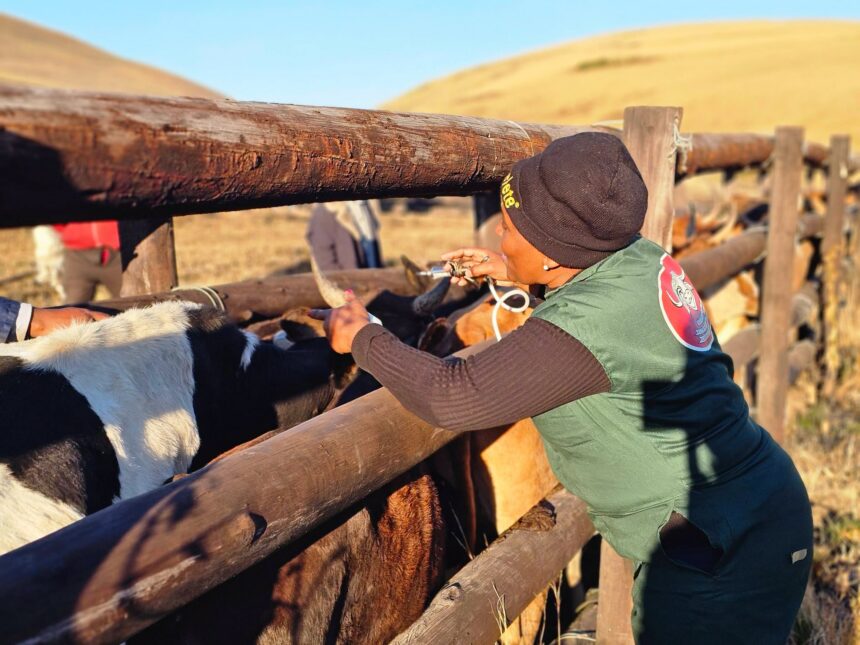
South Africa’s livestock industry continues to strengthen its approach to managing Foot and Mouth Disease (FMD) through updated control measures that promote responsible animal trading and stronger biosecurity practices. One of the most important changes introduced under the new measures is that F-branding is no longer required for animals suspected of, infected with or vaccinated against Foot and Mouth Disease. This update is intended to improve disease management while ensuring that farmers make informed decisions based on current animal health information rather than outdated identification methods. Understanding these changes is essential for livestock farmers, traders and buyers who want to protect their herds and support the country’s animal health programmes. By following the latest guidelines, producers can reduce the risk of disease transmission while maintaining confidence in the livestock market.
Foot and Mouth Disease is a highly contagious viral disease that affects cloven-hoofed animals, including cattle, sheep, goats and pigs. Although the disease rarely affects humans, it can have devastating economic consequences for livestock producers because it reduces productivity, disrupts trade and results in strict movement restrictions. Effective disease control depends on early detection, responsible livestock movement and strong cooperation between farmers and veterinary authorities. For this reason, government continues to update its control measures in line with scientific evidence and practical disease management strategies. Farmers who understand these measures are better equipped to protect their livestock and minimise production losses.
One of the most significant changes under the new control measures is the clarification regarding F-branded animals. In the past, animals suspected of having Foot and Mouth Disease, those infected with the disease or those vaccinated during disease control programmes were often identified using an F-brand. However, under the updated regulations, this branding practice is no longer required. More importantly, the presence or absence of an F-brand should not be used to determine an animal’s current health status. An F-brand simply reflects actions taken under previous disease control measures and does not indicate whether an animal currently poses a disease risk.
Farmers should understand that many animals carrying an F-brand were branded under earlier control programmes that have since changed. These animals should not automatically be regarded as infected or dangerous simply because they bear the historical mark. Disease status should instead be determined through current veterinary assessments, health declarations and official disease control information. Relying solely on branding can lead to unnecessary concern or poor purchasing decisions that may disadvantage both buyers and sellers. The updated policy encourages farmers to focus on verified animal health information rather than historical identification marks.
Responsible livestock purchasing remains one of the most effective ways to reduce the spread of Foot and Mouth Disease. Farmers are encouraged to buy animals only from known and reputable sellers who maintain good animal health and sound biosecurity practices. Establishing long-term relationships with trusted suppliers helps reduce uncertainty and provides greater confidence in the health status of purchased livestock. Buyers should also ask questions about the source farm, disease history and management practices before completing any transaction. Careful purchasing decisions protect not only individual farms but also neighbouring farming communities and the broader livestock industry.
Before purchasing livestock, farmers should ensure that animals appear clinically healthy and are accompanied by a valid health declaration. Healthy animals should be alert, active and free from visible signs of illness such as excessive salivation, lameness, mouth lesions or blisters around the feet and mouth. A health declaration provides important information regarding the condition of the animals and demonstrates that appropriate health assessments have been conducted. Farmers should never assume that an animal is healthy based only on its appearance or the absence of an F-brand. Combining visual inspections with official documentation provides a more reliable basis for making purchasing decisions.
Another essential precaution is confirming that the farm of origin is not under quarantine due to a Foot and Mouth Disease outbreak or any other regulated animal disease. Quarantine measures are implemented to prevent infected animals from moving between farms and spreading disease to unaffected areas. Purchasing livestock from a quarantined property significantly increases the risk of introducing disease into an otherwise healthy herd. Buyers should verify the disease status of the source farm through official channels whenever possible before arranging livestock transport. This simple step plays a critical role in protecting the national livestock industry.
Even after healthy animals have been purchased, farmers should follow strict quarantine procedures on their own farms. Newly acquired livestock should be isolated from the main herd for a minimum of 28 days before being introduced to other animals. During this isolation period, farmers can closely monitor the animals for any signs of illness while allowing sufficient time for potential diseases to become apparent. Quarantine facilities should prevent direct contact between new arrivals and the existing herd, with separate feeding and watering equipment used where possible. These biosecurity measures greatly reduce the risk of introducing infectious diseases into established livestock operations.
Strong biosecurity extends beyond purchasing decisions and should form part of every livestock farming operation. Farmers should maintain good hygiene practices, limit unnecessary animal movements, disinfect equipment and vehicles entering livestock areas and report suspected disease outbreaks to veterinary authorities without delay. Regular monitoring of animal health enables producers to identify problems early and respond quickly before diseases spread throughout the herd. Maintaining accurate livestock records also supports disease investigations and movement control when required. Consistent biosecurity practices protect farm productivity while strengthening confidence in South Africa’s livestock sector.
The updated Foot and Mouth Disease control measures reinforce an important message for livestock producers. Purchasing decisions should be based on verified animal health, the disease status of the source farm and effective biosecurity practices rather than the presence or absence of an F-brand. Healthy animals, responsible trading and strong biosecurity remain the foundation of successful disease prevention and sustainable livestock production. By following the latest guidelines, farmers can reduce disease risks, protect their investments and contribute to the continued growth of South Africa’s livestock industry. These practical measures support healthier herds, safer livestock movement and a more resilient agricultural sector for the future.
Join 'Farmers Mag' WhatsApp Channel
Get the latest Farming news and tips delivered straight to your WhatsApp
CLICK HERE TO JOIN