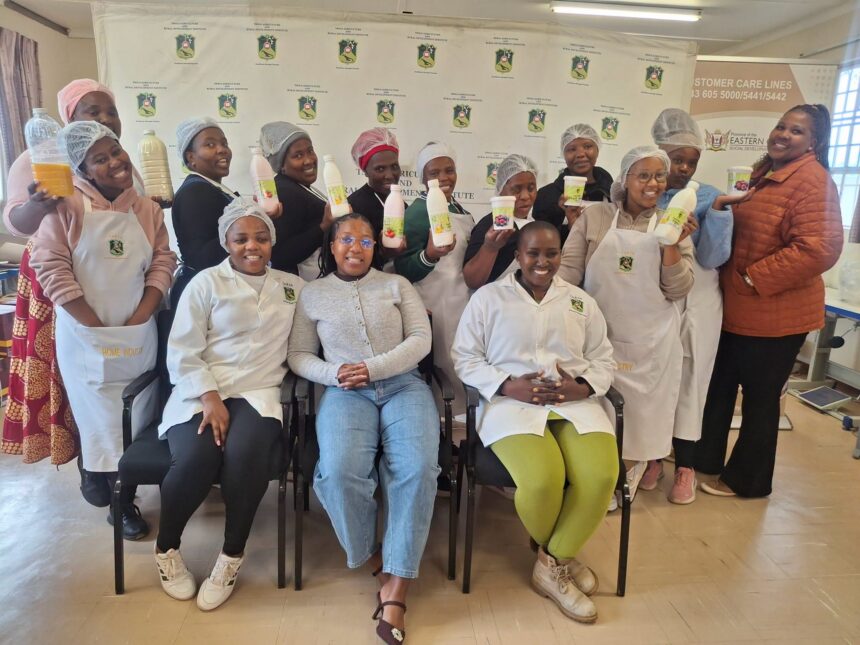
Adding value to agricultural products is one of the most effective ways for small-scale farmers to increase their income and build sustainable businesses. Instead of selling raw milk at lower prices, dairy farmers can process it into products such as yoghurt, maas and flavoured dairy beverages that attract higher market value and meet growing consumer demand. This approach not only improves profitability but also helps reduce product losses by extending shelf life and creating a wider range of products for different markets. Recognising the importance of value addition, the Department of Social Development, in partnership with TARDI, recently provided specialised agro-processing training to members of the Amakhosikazi Indwe Dairy Primary Co-operative. The initiative demonstrates how practical skills development can empower rural women, strengthen farming enterprises and contribute to long-term food security.
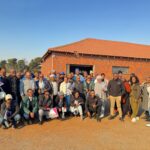
Eight members of the Amakhosikazi Indwe Dairy Primary Co-operative participated in the training programme, which was designed to enhance both their technical knowledge and business management skills. The women-owned cooperative focuses on producing dairy and related products, including yoghurt, juice and other value-added dairy products for local consumers. Through the training, participants gained practical experience in modern agro-processing techniques that will help improve product quality and production efficiency. They also learned how proper planning and good manufacturing practices can increase customer confidence and support business growth. By investing in these skills, the cooperative is better positioned to expand its product range and improve its competitiveness within the local food industry.
For dairy farmers, processing milk into yoghurt and maas creates opportunities to generate greater returns from the same volume of milk. Value-added products often command better prices than raw milk while giving producers greater flexibility to supply different markets. Farmers who diversify their products are also less vulnerable to fluctuations in milk prices because they can offer consumers a wider selection of dairy products. In addition, processed dairy products can be marketed to supermarkets, local shops, schools, restaurants, informal traders and community markets, creating multiple income streams for small-scale producers. Developing these market opportunities can help cooperatives establish reliable customer bases while supporting the growth of local economies.
The training focused on several key areas that are essential for successful agro-processing. Participants received guidance on production processes, product handling, hygiene standards and quality control, all of which are critical for producing safe and consistent food products. Maintaining strict hygiene throughout the production process helps protect consumer health while ensuring products meet acceptable food safety standards. The members also learned how proper processing techniques improve product consistency, reduce waste and maximise the use of available raw materials. These practical skills provide a strong foundation for producing high-quality dairy products that can compete successfully in the marketplace.
Business management formed another important component of the programme because technical skills alone are not enough to build a successful enterprise. Members strengthened their understanding of financial management, record keeping, production planning and cooperative management. These skills enable producers to monitor costs, improve efficiency and make informed business decisions that support long-term sustainability. Understanding customer demand, managing inventory and planning production schedules also help reduce unnecessary expenses while improving profitability. Strong business practices allow cooperatives to grow steadily and prepare for future expansion opportunities.
The programme also highlighted the importance of value addition in strengthening rural agricultural businesses. Rather than relying solely on the sale of fresh milk, farmers can process their products into goods with higher market value and longer shelf life. This reduces post-harvest losses while allowing producers to respond to changing consumer preferences. Diversifying production also helps farmers spread business risk because income is generated from multiple products instead of a single commodity. For many small-scale dairy farmers, value addition represents an important pathway towards financial stability and business resilience.
Women continue to play a vital role in South Africa’s agricultural sector, particularly within rural communities where farming often supports household livelihoods. Empowering women through specialised agricultural training strengthens not only individual businesses but also entire communities. Increased income generated through successful farming enterprises can improve household food security, support children’s education and create employment opportunities for others in the community. Women-led cooperatives also encourage collaboration, knowledge sharing and collective problem solving, making them valuable contributors to local economic development. Supporting female entrepreneurs therefore produces benefits that extend well beyond individual farming operations.
The partnership between the Department of Social Development and TARDI demonstrates how collaboration between government and development institutions can create meaningful opportunities for emerging farmers. Training programmes that combine technical knowledge with business development provide participants with the practical tools needed to build sustainable enterprises. Continued investment in skills development ensures that rural cooperatives remain competitive while adapting to changing market conditions and consumer expectations. Expanding similar initiatives to other farming communities could strengthen South Africa’s agro-processing sector while creating new employment opportunities in rural areas. Such partnerships play an important role in building resilient agricultural value chains that benefit producers and consumers alike.
The agro-processing training provided to the Amakhosikazi Indwe Dairy Primary Co-operative is an excellent example of how targeted skills development can transform rural farming enterprises. By equipping members with practical knowledge in yoghurt, maas and juice production, as well as quality control, business management and value addition, the programme has strengthened the cooperative’s capacity for sustainable growth. The training provides members with the confidence and expertise to produce higher-value products, access new markets and improve their overall profitability. As more rural cooperatives embrace agro-processing, they can create stronger businesses while contributing to food security and local economic development. Initiatives such as this continue to demonstrate that investing in women’s agricultural skills is a practical and sustainable way to build resilient farming communities and a stronger agricultural sector.
Join 'Farmers Mag' WhatsApp Channel
Get the latest Farming news and tips delivered straight to your WhatsApp
CLICK HERE TO JOIN