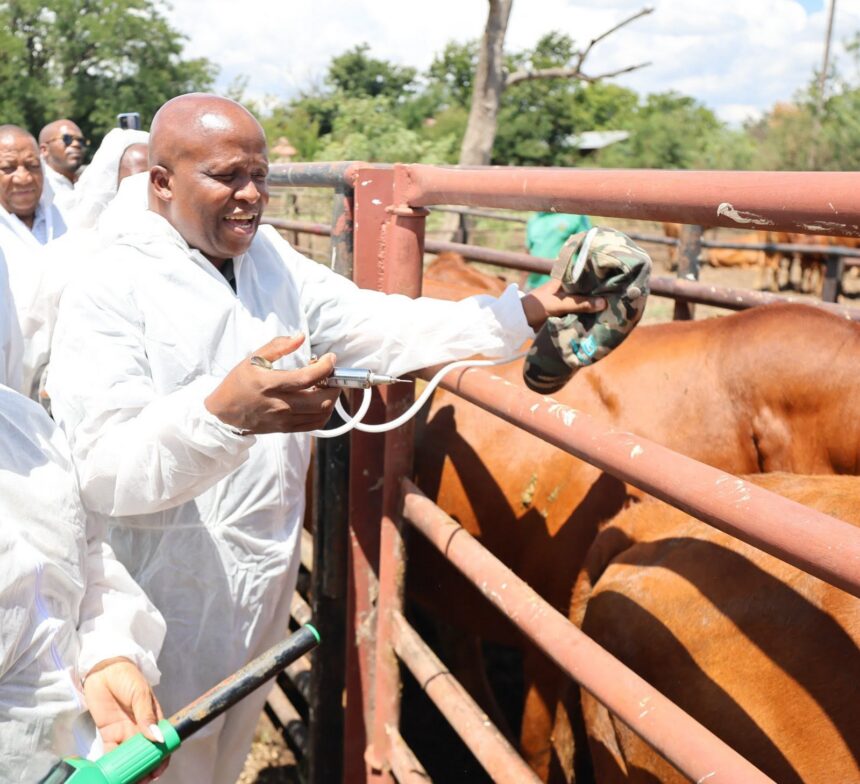
The North West Department of Agriculture and Rural Development has reached a major milestone in its fight against Foot-and-Mouth Disease (FMD), with more than one million cattle vaccinated since the province launched its mass vaccination campaign earlier this year. The achievement reflects the province’s commitment to protecting animal health, supporting livestock farmers and limiting the spread of one of the most economically significant diseases affecting cloven-hoofed animals. As of 19 July 2026, veterinary teams had vaccinated 1 032 615 cattle, representing approximately 74% of the province’s estimated cattle population. The province is now working towards achieving 80% vaccination coverage by the end of August, a target considered critical for establishing herd immunity. This progress places North West among South Africa’s leading provinces in implementing the national Foot-and-Mouth Disease intervention programme.
The mass vaccination campaign began in early March as part of South Africa’s coordinated national response to contain Foot-and-Mouth Disease outbreaks affecting several parts of the country. Since then, veterinary officials, animal health technicians and support teams have travelled extensively across all four districts of the North West Province to vaccinate cattle in both commercial and communal farming areas. The campaign has required careful planning, strong coordination and close cooperation between government officials and livestock owners. Reaching more than one million vaccinated cattle demonstrates the scale of the operation and the determination to protect one of the province’s most valuable agricultural industries. Continued participation from farmers remains essential as the vaccination programme moves into its next phase.
Foot-and-Mouth Disease is a highly contagious viral disease that affects cloven-hoofed animals such as cattle, sheep, goats and pigs. Although it poses little risk to human health, the disease spreads rapidly among livestock and can have devastating economic consequences for farmers and the agricultural sector. Infected animals often suffer from fever and painful blisters on the mouth, tongue and feet, reducing their ability to feed, move and maintain normal production. Outbreaks can result in severe production losses, restrictions on livestock movement and limitations on both domestic and international trade. Preventing the spread of the disease is therefore essential for protecting livestock, maintaining food production and supporting rural economies.
The North West Department of Agriculture and Rural Development has credited the success of the campaign to the dedication of its veterinary professionals and animal health teams. North West MEC for Agriculture and Rural Development, Madoda Sambatha, praised the commitment, professionalism and tireless efforts of veterinary officials who have worked across the province to vaccinate livestock under challenging conditions. Their work has included travelling to remote farming communities, coordinating vaccination schedules and ensuring that livestock owners understand the importance of participating in the programme. The achievement of vaccinating more than one million cattle reflects months of sustained effort by teams committed to protecting animal health. Their contribution has played a critical role in advancing the province’s disease control objectives.
Despite reaching this significant milestone, provincial authorities have stressed that the vaccination campaign is far from complete. MEC Sambatha warned farmers against becoming complacent simply because the one million vaccination mark has been achieved. Vaccination programmes require careful follow-up to ensure that animals receive the full protection provided by the vaccine. Veterinary teams will continue visiting farms and communities to administer the required second dose, which is essential for building strong and lasting immunity against the disease. Completing both vaccination rounds remains one of the most important steps in reducing the risk of future outbreaks.
The province’s target of reaching 80% vaccination coverage by the end of August is particularly important because it is expected to provide herd immunity within the cattle population. Herd immunity occurs when enough animals are protected to significantly reduce the spread of disease throughout the population. Achieving this level of protection lowers the likelihood of widespread outbreaks while helping safeguard both vaccinated and unvaccinated animals. Reaching the target requires continued cooperation from livestock owners across the province. Every eligible animal vaccinated contributes to the overall effectiveness of the disease control programme.
Farmers have also been encouraged to continue implementing strict biosecurity measures alongside vaccination efforts. Vaccination alone cannot completely eliminate the risk of disease if proper livestock management practices are not maintained. Farmers are advised to monitor their animals regularly for signs of illness, report any suspected cases immediately and comply with livestock movement regulations designed to prevent further spread of the virus. Good hygiene practices, controlled animal movements and responsible farm management all contribute to stronger disease prevention. Maintaining these measures will help protect individual farms as well as neighbouring livestock operations.
The campaign also demonstrates the importance of collaboration between government and farming communities in responding to animal health emergencies. Successful disease control depends not only on veterinary expertise but also on the willingness of farmers to participate fully in vaccination programmes and follow official guidance. By presenting eligible cattle for vaccination and cooperating with veterinary teams, livestock owners are making an important contribution to protecting the wider agricultural sector. Strong partnerships between government and producers improve the effectiveness of disease control while strengthening confidence within the livestock industry. These collaborative efforts are essential for ensuring the long-term sustainability of cattle farming in the province.
The North West Department of Agriculture and Rural Development’s achievement of vaccinating more than one million cattle marks a major step forward in the province’s fight against Foot-and-Mouth Disease. With over 74% of the estimated cattle population already vaccinated and an 80% coverage target set for the end of August, the province is making significant progress towards establishing herd immunity and protecting its livestock industry. Continued commitment from veterinary teams, animal health professionals and farmers will remain essential as the campaign enters the critical second-dose phase. By combining widespread vaccination with strong biosecurity measures and close cooperation between government and livestock owners, North West is building a stronger defence against future disease outbreaks. These ongoing efforts will help protect animal health, safeguard farmer livelihoods and strengthen the long-term resilience of South Africa’s livestock sector.
Join 'Farmers Mag' WhatsApp Channel
Get the latest Farming news and tips delivered straight to your WhatsApp
CLICK HERE TO JOIN