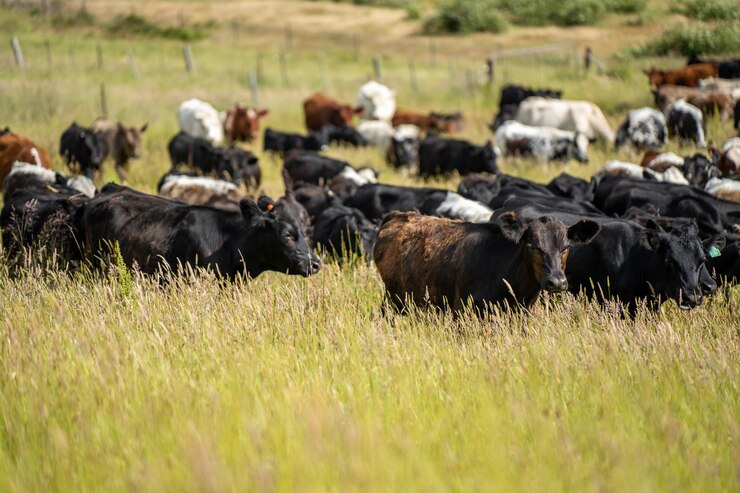
Sustainable livestock farming depends on healthy grazing land, responsible land management and farming practices that protect natural resources for future generations. Across South Africa, farmers are increasingly adopting methods that improve productivity while conserving the environment. One of the most effective approaches is rotational grazing, a management system that allows grazing land to recover naturally while maintaining healthy livestock. This practice not only improves pasture quality but also strengthens the long term sustainability of livestock farming enterprises. In the Eastern Cape, the Department of Agriculture continues to promote these principles through practical support provided by its VeldCare Programme.
A recent example of this support can be seen at Zanzolo Farm, where Production Scientist Lungisa Qayi from the Eastern Cape Department of Agriculture’s OR Tambo District assisted the farming operation through the Land Use Management: VeldCare Programme. As part of the initiative, fencing was provided to improve grazing management and enable more effective use of available pasture. This practical intervention gives farmers the ability to divide grazing land into separate camps, making it easier to manage livestock movement throughout the year. Proper fencing is a critical component of rotational grazing because it allows farmers to control where animals graze and when pastures are allowed to recover. By investing in essential infrastructure, the programme helps farmers improve both productivity and environmental stewardship.
According to Lungisa Qayi, the fencing enables livestock producers to implement rotational grazing systems that allow animals to move between different grazing camps. Rather than allowing livestock to graze continuously in one area, rotational grazing gives previously grazed camps sufficient time to rest and regenerate before animals return. This recovery period allows grasses and other vegetation to restore their energy reserves, develop stronger root systems and produce new growth. Healthy pastures are able to provide higher quality forage for livestock while maintaining their long term productivity. This management approach benefits both the land and the animals that depend on it.
One of the greatest advantages of rotational grazing is its ability to improve veld condition over time. Continuous grazing often places excessive pressure on grasslands, preventing plants from recovering and reducing the overall quality of grazing areas. Overgrazing can lead to soil erosion, reduced biodiversity and declining pasture productivity, making farming increasingly difficult. Rotational grazing helps prevent these problems by distributing grazing pressure more evenly across the landscape. As grasses recover between grazing periods, the veld becomes healthier, more resilient and better able to withstand environmental stresses such as drought.
Improved veld condition directly contributes to better livestock performance. Nutritious grasses provide animals with the energy, protein and minerals required for healthy growth, reproduction and overall productivity. Livestock grazing on well managed pastures often experience improved body condition, better weight gain and stronger resistance to disease. Healthy grazing systems also reduce the need for costly supplementary feeding because animals can obtain more of their nutritional requirements directly from natural forage. For farmers, this can improve profitability while reducing production costs. Sustainable grazing therefore creates benefits that extend throughout the entire livestock production system.
Rotational grazing also plays an important role in protecting soil health and water resources. Healthy vegetation helps reduce soil erosion by protecting the ground from wind and rainfall while improving water infiltration into the soil. Strong root systems stabilise the land and increase its ability to retain moisture during dry periods. This contributes to greater resilience during drought conditions, which are becoming more common in many parts of South Africa due to climate change. Well managed grazing systems therefore support both environmental conservation and agricultural productivity. Protecting natural resources today helps ensure that future generations of farmers can continue using the land successfully.
The Eastern Cape Department of Agriculture’s Land Use Management: VeldCare Programme is designed to encourage sustainable farming practices that balance agricultural production with environmental conservation. Through practical support such as fencing, technical guidance and land management expertise, the programme helps farmers improve the long term health of their grazing systems. Government support is particularly valuable for emerging and developing livestock producers who may not always have access to the infrastructure needed for effective grazing management. By strengthening farming systems at the local level, the programme contributes to broader goals of food security, rural development and environmental sustainability.
Community resilience is another important outcome of sustainable grazing management. Healthy grazing land supports more productive livestock enterprises, which in turn strengthen household incomes and create opportunities for economic growth in rural communities. Farmers who adopt responsible land management practices are better equipped to respond to changing environmental conditions while maintaining stable production levels. Stronger livestock businesses also contribute to local employment, food production and rural development. The benefits of programmes such as VeldCare therefore extend well beyond individual farms and positively influence entire farming communities.
The support provided to Zanzolo Farm through the VeldCare Programme demonstrates how practical interventions can create lasting improvements in agricultural sustainability. By facilitating the provision of fencing, Production Scientist Lungisa Qayi has helped create the conditions needed for effective rotational grazing and healthier veld management. This approach improves pasture quality, reduces overgrazing, strengthens livestock productivity and protects valuable natural resources. As South African farmers continue facing environmental and economic challenges, sustainable grazing practices will remain essential for building resilient farming systems. Through continued investment in responsible land management and farmer support, the Eastern Cape Department of Agriculture is helping secure a stronger future for livestock production and rural communities alike.
Join 'Farmers Mag' WhatsApp Channel
Get the latest Farming news and tips delivered straight to your WhatsApp
CLICK HERE TO JOIN