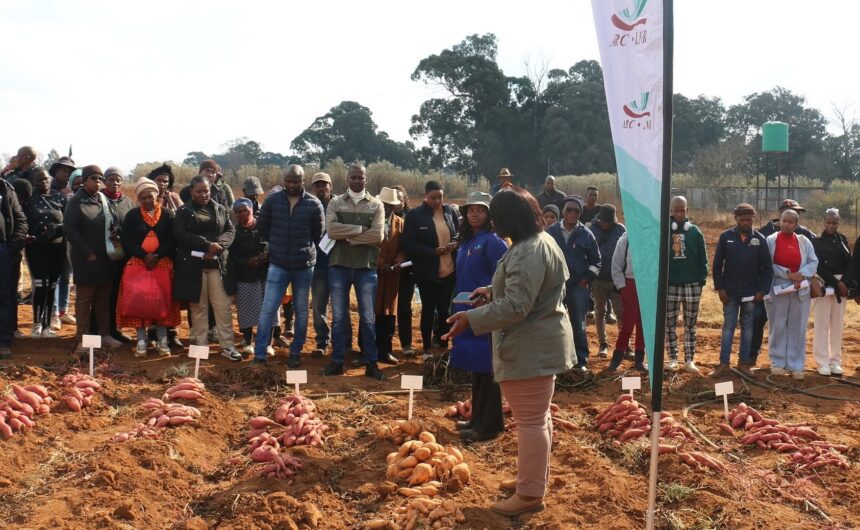
The Agricultural Research Council (ARC) continues to play an important role in strengthening South Africa’s agricultural sector through practical research that directly benefits farmers. One of its latest initiatives, the ARC Sweet Potato Trial in Ermelo, Mpumalanga, is providing valuable insights that help producers make better decisions about crop selection and farm management. By evaluating different sweet potato genotypes under local growing conditions, the research is generating reliable information that farmers can apply to improve productivity and sustainability. The trial reflects the importance of conducting agricultural research in the environments where crops are actually grown, ensuring that recommendations are practical and relevant. As climate conditions and production challenges continue to evolve, research-driven farming solutions are becoming increasingly important for improving food security and supporting rural livelihoods.
Sweet potatoes are among the most versatile and nutritious crops grown in South Africa. They are valued for their adaptability, relatively low production costs and ability to produce reliable yields under a wide range of conditions. Rich in vitamins, dietary fibre and essential minerals, sweet potatoes contribute significantly to household nutrition while also providing opportunities for commercial production. Demand for the crop continues to grow as consumers seek affordable and healthy food options. For farmers, selecting the right cultivar can make a substantial difference in productivity, profitability and long-term farming success.
The ARC Sweet Potato Trial in Ermelo was established to evaluate different sweet potato genotypes under the unique environmental conditions of Mpumalanga. Every farming region presents its own combination of climate, rainfall, soil characteristics and disease pressures, meaning that not every cultivar performs equally well across the country. By testing multiple genotypes under local conditions, researchers are able to identify which varieties produce the best results for farmers in the area. This localized research helps remove much of the uncertainty that producers face when choosing planting material. Instead of relying solely on general recommendations, farmers receive information based on actual field performance within their own production environment.
One of the key objectives of the trial is to identify sweet potato cultivars that consistently deliver high yields while maintaining excellent quality. Yield remains one of the most important factors influencing farm profitability, but quality is equally important for meeting market standards and consumer expectations. Sweet potatoes with good size, shape, colour and storage characteristics are often more attractive to buyers and command better prices. By evaluating both production volume and crop quality, the ARC provides farmers with balanced information that supports sound commercial decision making. This approach helps producers maximize returns while maintaining high production standards.
The trial also places strong emphasis on identifying cultivars that demonstrate improved tolerance to pests and diseases. Pest infestations and plant diseases remain major challenges for sweet potato producers, often reducing yields and increasing production costs through additional control measures. Cultivars with natural resistance or greater tolerance require fewer chemical interventions and generally perform more consistently under challenging conditions. This not only lowers input costs but also contributes to more environmentally sustainable farming systems. Improved resistance ultimately gives farmers greater confidence that their crops can withstand common production challenges while maintaining healthy growth.
Beyond cultivar evaluation, the ARC trial provides valuable knowledge on crop establishment and field management practices. Successful sweet potato production depends on much more than selecting the right variety. Proper land preparation, planting techniques, irrigation management, weed control and nutrient application all play critical roles in determining final yields. Through ongoing research and field observations, the ARC generates practical recommendations that help farmers improve these aspects of production. Better management practices allow producers to use available resources more efficiently while reducing avoidable production losses.
The benefits of the research extend well beyond the trial plots themselves. Farmers who adopt well-performing sweet potato cultivars and improved management practices are more likely to achieve reliable harvests and stable incomes. Increased productivity strengthens household food supplies while creating additional opportunities to market surplus produce within local communities. As more farmers gain access to improved planting material and practical production knowledge, regional agricultural productivity can continue to grow. These improvements contribute to stronger rural economies while helping communities become more resilient to changing environmental and economic conditions.
Sweet potatoes also play an important role in improving nutrition and food security across South Africa. The crop provides an excellent source of carbohydrates, vitamin A, vitamin C and dietary fibre, making it a valuable component of healthy diets. Orange-fleshed sweet potato varieties are especially important because of their high beta-carotene content, which supports good vision, immune function and overall health. Increasing the availability of high-quality sweet potato cultivars therefore benefits both producers and consumers. As production expands, more families gain access to affordable, nutritious food that supports healthier communities.
Research conducted directly within farming regions provides significant advantages over studies performed under controlled conditions alone. Local field trials expose crops to the same weather patterns, soil conditions and disease pressures experienced by commercial farmers. This allows researchers to generate recommendations that are realistic, practical and easier to implement. Farmers are more likely to adopt new technologies and cultivars when they can see proven results under conditions similar to their own farms. This close connection between research and agricultural production strengthens knowledge transfer and encourages continuous improvement throughout the farming sector.
The ARC Sweet Potato Trial in Ermelo demonstrates how practical agricultural research can deliver meaningful benefits for farmers, rural communities and the broader food system. By identifying promising sweet potato genotypes based on yield, quality and tolerance to pests and diseases, the trial provides farmers with valuable information that supports better cultivar selection and improved field management. The knowledge generated through this research helps producers make more informed decisions, increase productivity and strengthen the sustainability of their farming operations. At the same time, improved sweet potato production contributes to better household nutrition, greater food security and stronger local economies. Through research conducted where production takes place, the Agricultural Research Council continues to generate practical solutions that farmers can confidently apply, ensuring that scientific innovation translates into real improvements in agricultural performance and community wellbeing.
Join 'Farmers Mag' WhatsApp Channel
Get the latest Farming news and tips delivered straight to your WhatsApp
CLICK HERE TO JOIN