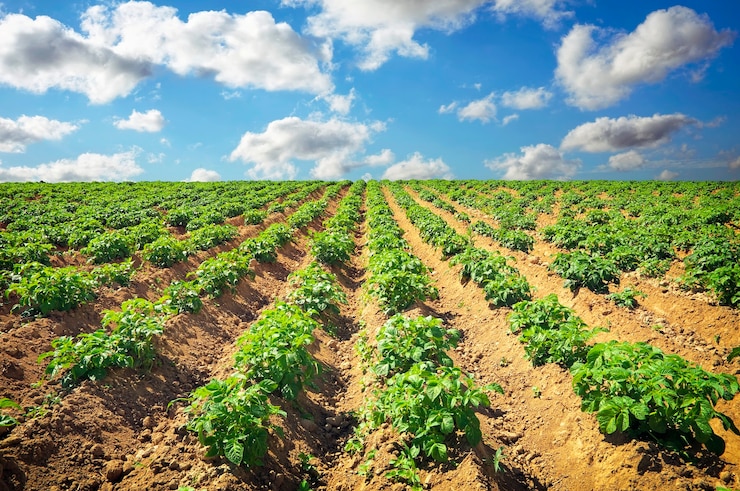
Potato farming is one of the most profitable agricultural activities in South Africa when it is managed correctly. Potatoes are a staple food found in households, restaurants, supermarkets and food processing industries across the country, which creates strong and consistent demand throughout the year. They are used to produce fresh vegetables, frozen chips, crisps and many other food products, making them an important commercial crop. For beginners, potato farming offers an opportunity to enter the agricultural sector with a crop that has well-established markets and proven production methods. Success, however, depends on careful planning, choosing the right location, maintaining healthy soil and protecting crops from pests and diseases. Understanding the complete production process before planting is the first step toward building a productive and profitable potato farming business.
South Africa has several potato-producing regions that benefit from different climatic conditions, allowing potatoes to be grown throughout the year. Provinces such as Limpopo, Free State, Mpumalanga, North West, Gauteng, Eastern Cape and the Western Cape all contribute significantly to national potato production. The ideal temperature for potato growth ranges between 15°C and 20°C, while excessive heat can reduce tuber formation and lower yields. Potatoes require sufficient sunlight during the growing season, but they also need adequate soil moisture to develop properly. Areas with reliable rainfall or access to irrigation provide the best conditions for consistent production, especially during dry periods.
Choosing suitable land is one of the most important decisions a beginner can make. Potatoes grow best in well-drained sandy loam or loamy soils that allow the tubers to expand without becoming waterlogged. Heavy clay soils can restrict tuber growth and increase the risk of disease because they retain excessive moisture. Before planting, farmers should conduct a soil test to determine pH levels and nutrient availability. A soil pH between 5.0 and 6.5 is generally considered ideal for potato production. Soil testing also helps determine the correct fertilizer requirements, preventing unnecessary costs while improving crop performance.
Preparing the land properly creates a strong foundation for healthy potato plants. The field should be cleared of weeds, crop residues and stones before cultivation begins. Deep ploughing loosens compacted soil and improves drainage, while harrowing creates a fine seedbed that allows uniform planting. Organic matter such as compost or well-rotted manure can improve soil structure, increase water retention and supply additional nutrients. Proper land preparation also encourages healthy root development and makes harvesting easier at the end of the growing season.
Selecting quality seed potatoes is essential because they determine the health and productivity of the crop. Farmers should purchase certified disease-free seed potatoes from reputable suppliers instead of using potatoes from supermarkets or previous harvests that may carry diseases. Certified seed provides better germination, uniform growth and improved yields. Different potato varieties are suited to different markets, climates and growing conditions. Some varieties are preferred for fresh consumption, while others are specifically bred for chip or crisp production. Beginners should choose varieties that perform well in their local area and have strong demand from nearby buyers.
Planting should be carried out at the correct time for the region to maximize crop performance. Seed potatoes are usually planted in rows with enough spacing to allow good air circulation and healthy tuber development. The planting depth is generally between 10 and 15 centimeters, depending on soil type and environmental conditions. Rows should be spaced widely enough to allow machinery or workers to move comfortably during crop management and harvesting. Proper spacing reduces competition between plants and helps produce larger, higher-quality potatoes.
Water management plays a major role in potato production because the crop has relatively high water requirements. Inconsistent watering can result in small tubers, poor quality and reduced yields. Drip irrigation and sprinkler systems are commonly used in South African potato farming because they provide controlled water application. The soil should remain consistently moist but never saturated, as excessive moisture increases the risk of fungal diseases. Monitoring weather conditions and soil moisture helps farmers apply irrigation efficiently while conserving water.
Fertilization is another critical factor that influences potato yields. Potatoes require adequate amounts of nitrogen, phosphorus and potassium throughout their growing cycle. Nitrogen encourages leafy growth during the early stages, while phosphorus supports root development and potassium improves tuber size, quality and storage life. Micronutrients such as magnesium, calcium and zinc may also be necessary depending on soil conditions. Fertilizers should be applied according to soil test recommendations to prevent nutrient deficiencies or excessive applications that could harm the crop or the environment.
Weed control should begin early because weeds compete with potato plants for nutrients, water and sunlight. Mechanical cultivation, hand weeding and herbicides can all be used depending on the farming system. Maintaining clean fields throughout the growing season improves crop growth and simplifies harvesting. Mulching can also help suppress weeds while conserving soil moisture. Effective weed management contributes directly to higher yields and better-quality potatoes.
Pests and diseases present significant challenges for potato farmers in South Africa. Common pests include aphids, potato tuber moths and cutworms, while diseases such as early blight, late blight and bacterial wilt can cause severe losses if left uncontrolled. Regular field inspections help identify problems before they spread throughout the crop. Integrated pest management combines crop rotation, resistant varieties, biological controls and responsible pesticide use to reduce damage while protecting the environment. Following recommended spray programs and maintaining good field hygiene are essential parts of successful disease management.
Crop rotation is one of the simplest and most effective methods of maintaining healthy potato fields. Planting potatoes on the same land every season increases the buildup of pests, diseases and soil nutrient imbalances. Farmers should rotate potatoes with crops such as maize, beans or other non-host crops to break pest and disease cycles. Rotation also improves soil health and reduces dependence on chemical treatments. A well-planned crop rotation program contributes to sustainable potato production over the long term.
Harvesting usually takes place when the potato plants have matured and the foliage begins to die back. Farmers should avoid harvesting when the soil is excessively wet because this increases the risk of bruising and disease during storage. Potatoes should be handled carefully to minimize cuts and physical damage that can reduce their market value. After harvesting, the potatoes are cleaned, sorted and graded according to size and quality. Proper curing before storage allows minor skin injuries to heal, improving shelf life and reducing post-harvest losses.
Storage conditions are important because potatoes remain a living product even after harvest. They should be kept in cool, dark and well-ventilated storage facilities to prevent sprouting and spoilage. Exposure to sunlight causes potatoes to turn green and produce compounds that make them unsuitable for consumption. Good ventilation helps control humidity and reduces the development of storage diseases. Farmers who maintain proper storage conditions can sell their potatoes over an extended period instead of rushing to market immediately after harvest.
Marketing is an important part of running a profitable potato farming business. South African farmers can sell their produce through fresh produce markets, supermarkets, wholesalers, restaurants, processors and direct sales to consumers. Establishing reliable buyers before planting reduces marketing risks and provides better income stability. Some farmers also increase profits by washing, packaging and branding their potatoes for retail sales. Understanding local demand, pricing trends and seasonal supply helps farmers make informed marketing decisions.
Potato farming in South Africa offers excellent opportunities for beginners who are willing to invest time in learning modern production practices. Careful planning, proper soil preparation, quality seed selection and effective crop management all contribute to successful harvests. Consistent irrigation, balanced fertilization and strong pest and disease control further improve productivity and profitability. Farmers who focus on quality production and develop reliable marketing channels place themselves in a stronger position to succeed in the competitive agricultural industry. With dedication, continuous learning and sound management, potato farming can become a sustainable and rewarding agricultural enterprise that supplies one of South Africa’s most important food crops while creating long-term income opportunities.
Join 'Farmers Mag' WhatsApp Channel
Get the latest Farming news and tips delivered straight to your WhatsApp
CLICK HERE TO JOIN