

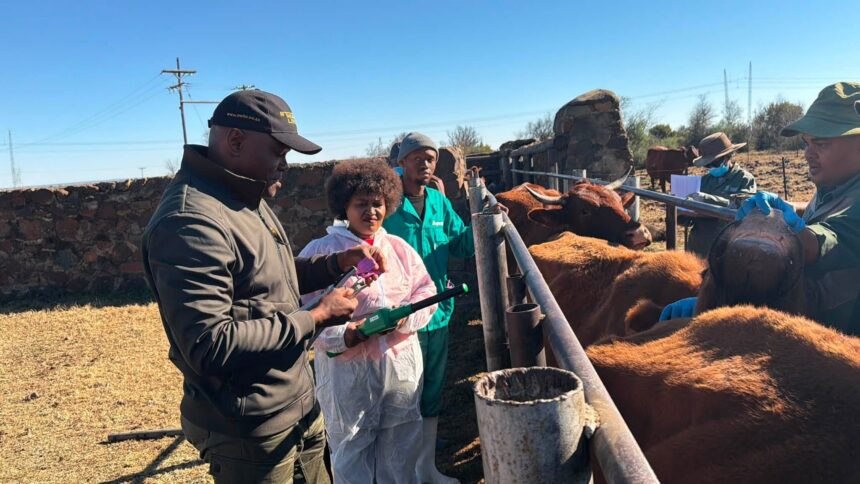
The North West Department of Agriculture and Rural Development (DARD) has continued its commitment to strengthening livestock health, improving traceability and supporting food security through a successful vaccination drive in Leeudoringstad, Maquassi Hills Local Municipality. The initiative was led by Head of Department Dr Hans Kekana, Chief Director for Agricultural Development Services Arlene Dikolomela and Veterinary Services Director Dr Langa Madyibi, together with Animal Health Technicians and DARD officials. The team visited Wildebeeskantoor Farm, where cattle received essential animal health services aimed at protecting livestock and improving disease management. The programme forms part of broader efforts to support farmers, strengthen agricultural systems and promote responsible livestock production. By combining veterinary services with community food security initiatives, DARD continues to address key challenges affecting rural communities and farming enterprises.
At Wildebeeskantoor Farm, cattle were ear-tagged, recorded on the Livestock Identification and Traceability System (LITS) and vaccinated against Foot-and-Mouth Disease (FMD). These activities play an important role in improving livestock management by ensuring that animals can be accurately identified and monitored throughout their production journey. Traceability systems help farmers, government officials and industry stakeholders respond more effectively to disease outbreaks by providing reliable information about animal movements and health records. Vaccination remains one of the most important tools for preventing the spread of FMD, a highly contagious disease that can negatively affect livestock productivity and agricultural markets. Through these interventions, the department is helping farmers maintain healthier herds while supporting the sustainability of the livestock sector.
Foot-and-Mouth Disease continues to be a major concern for livestock producers because outbreaks can create serious economic challenges for farming communities. The disease affects cloven-hoofed animals, including cattle, sheep, goats and pigs, and can lead to reduced production, movement restrictions and market disruptions. For farmers who depend on livestock for income and household needs, maintaining healthy animals is essential for protecting their livelihoods. Vaccination programmes provide farmers with an important defence against disease outbreaks while improving overall herd health. The involvement of veterinary officials and Animal Health Technicians ensures that farmers receive professional support and that disease prevention measures are implemented effectively.
The use of the Livestock Identification and Traceability System represents an important step towards improving livestock management and strengthening South Africa’s agricultural value chain. Accurate animal records allow authorities to track livestock movements, manage disease risks and support food safety standards. For farmers, traceability can improve access to formal markets because buyers increasingly require reliable information about animal health and production practices. Proper identification also assists with record keeping, herd management and long term planning. By encouraging farmers to participate in traceability programmes, DARD is helping producers become more prepared for commercial opportunities while supporting national disease control efforts.
The vaccination drive also highlighted the importance of collaboration between government officials, farmers and agricultural professionals in building a stronger livestock sector. The participation of senior DARD leadership demonstrated the department’s commitment to addressing agricultural challenges directly within farming communities. Animal Health Technicians played a vital role by providing practical veterinary services and ensuring that vaccination and identification procedures were carried out correctly. These partnerships create stronger support networks for farmers and improve access to essential agricultural services. Continued cooperation between government and farming communities remains critical for achieving sustainable livestock production.
In addition to supporting animal health, the DARD team extended its outreach efforts to promote food security and nutrition at Koketso Primary School in Kgakala Township. The department donated seeds, seedlings, fertilisers and garden tools to support the school’s existing vegetable garden. The garden has already produced crops such as kale, cabbage, spinach, carrots and beetroot, providing learners with access to fresh and nutritious vegetables. School gardens play an important role in teaching children about agriculture while encouraging healthier eating habits. By supporting these initiatives, DARD is helping create awareness about food production and the importance of nutrition from an early age.
The support provided to Koketso Primary School demonstrates the connection between agriculture, education and community wellbeing. Vegetable gardens provide practical learning opportunities where learners can develop skills related to food production, environmental responsibility and sustainable practices. They also help schools supplement nutrition programmes by providing fresh produce that can benefit learners. Access to healthy food is essential for children’s development, concentration and overall wellbeing. Through partnerships with schools and communities, agricultural programmes can contribute to improved food security beyond traditional farming operations.
The combined focus on livestock protection and school food gardens reflects a broader approach to agricultural development that addresses both production and community needs. Healthy livestock supports economic activity and rural livelihoods, while productive gardens contribute to improved nutrition and local food availability. These initiatives demonstrate how agricultural interventions can create benefits across different sectors of society. By supporting farmers, schools and communities, DARD is strengthening resilience and encouraging sustainable practices. The department’s approach highlights the importance of agriculture as a tool for economic growth, food security and social development.
The Leeudoringstad vaccination drive and community support activities show the value of integrated agricultural programmes that combine veterinary services, farmer support and nutrition initiatives. Protecting livestock from diseases such as Foot-and-Mouth Disease helps safeguard farming operations and strengthens the agricultural economy. Improving traceability through LITS registration creates a more organised and reliable livestock sector that can respond effectively to future challenges. Supporting school gardens ensures that agricultural benefits reach younger generations while promoting healthier communities. Together, these efforts contribute to a stronger and more sustainable agricultural future for the North West Province.
The successful vaccination drive led by Dr Hans Kekana, Arlene Dikolomela and Dr Langa Madyibi, alongside Animal Health Technicians and DARD officials, demonstrates the department’s ongoing commitment to protecting livestock and supporting rural development. Through cattle vaccination, ear-tagging and LITS registration, farmers are receiving essential tools to improve animal health and strengthen market readiness. The donation of seeds, seedlings, fertilisers and garden equipment to Koketso Primary School further extends the impact of the programme by promoting food security and better nutrition among learners. These combined efforts show how agricultural initiatives can address multiple challenges while creating lasting benefits for communities. By continuing to invest in animal health, traceability and sustainable food production, DARD is helping build stronger farmers, healthier communities and a more resilient agricultural sector.
Join 'Farmers Mag' WhatsApp Channel
Get the latest Farming news and tips delivered straight to your WhatsApp
CLICK HERE TO JOIN




