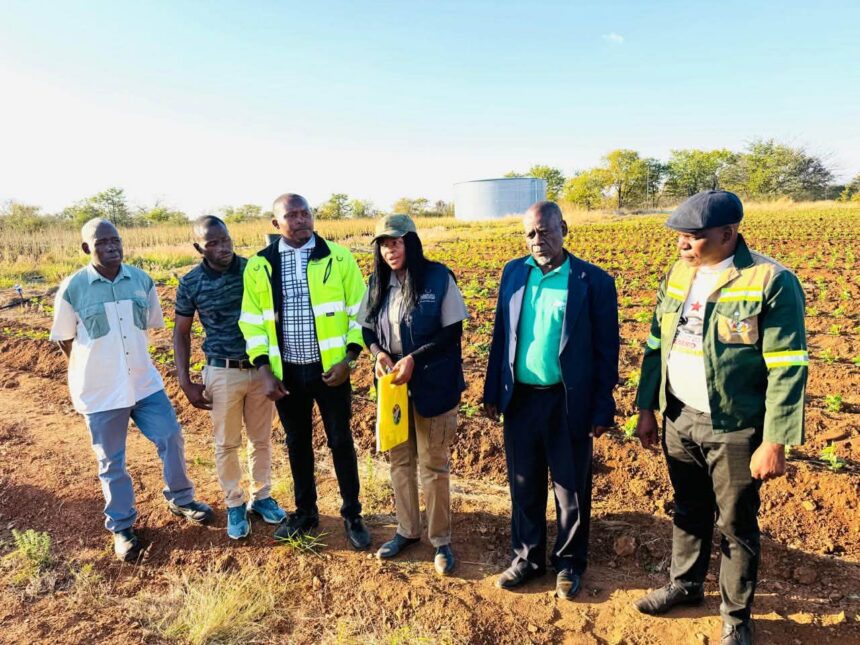
Service Delivery Week continues to bring meaningful support to farming communities across Limpopo as the Department of Agriculture and Rural Development expands its efforts to strengthen food production and improve rural livelihoods. On Day 2 of the programme, the department, led by MEC Nakedi Grace Kekana, visited Madikhabishi Farm in Selwana Village to deliver important agricultural infrastructure that will benefit local farmers for years to come. The highlight of the visit was the official opening of a newly completed irrigation project designed to improve water access, increase crop production and promote sustainable farming practices. The investment demonstrates the provincial government’s commitment to empowering rural communities through practical agricultural development. By combining modern technology with renewable energy solutions, the project represents a significant step towards building a stronger and more resilient agricultural sector in Limpopo.
The official launch attracted farmers, community members and government officials who gathered to witness the unveiling of infrastructure expected to transform farming operations at Madikhabishi Farm. MEC Nakedi Grace Kekana officially opened the state-of-the-art irrigation project, describing it as an important investment in the future of local agriculture. Reliable water supply remains one of the biggest challenges facing many farmers in rural South Africa, particularly during periods of low rainfall and drought. By addressing this challenge, the project aims to improve productivity while helping farmers become more self-sufficient. The initiative also reflects the department’s ongoing commitment to ensuring that government programmes directly benefit communities through sustainable agricultural development.
One of the most impressive features of the project is its focus on renewable energy and efficient water management. The facility includes solar panels that generate clean energy to operate the irrigation system, reducing dependence on conventional electricity while lowering operating costs. A borehole supplies water that is stored in a large 300,000-litre reservoir, ensuring a reliable source of irrigation throughout the growing season. This combination of solar technology and groundwater storage provides farmers with greater resilience against water shortages and rising energy costs. Sustainable infrastructure such as this plays a vital role in helping farming communities adapt to changing environmental conditions while maintaining stable food production.
The irrigation project also includes a one-hectare shade net, providing a controlled environment where crops can be protected from harsh weather conditions and excessive sunlight. Shade net farming has become increasingly popular because it helps improve crop quality, reduces water loss through evaporation and creates favourable growing conditions for high-value vegetables and fruits. Farmers using protected cultivation techniques often experience improved yields and more consistent harvests throughout the year. These benefits contribute directly to increased household incomes and stronger local food supply chains. By introducing modern farming infrastructure, the department is equipping local producers with the tools needed to compete more effectively in agricultural markets.
Another important addition to the project is the newly constructed modern pack house. This facility provides farmers with a dedicated space to clean, sort, grade and package produce before it is transported to markets. Proper post-harvest handling helps reduce food waste while improving the quality and appearance of agricultural products. Better packaging and storage also allow farmers to access larger retail markets and secure improved prices for their produce. The inclusion of a pack house demonstrates that the project is designed not only to increase production but also to strengthen every stage of the agricultural value chain.
The completion of the irrigation project is expected to make a meaningful contribution to rural food security across the area. Consistent access to irrigation allows farmers to grow crops throughout the year instead of relying entirely on seasonal rainfall. Increased production can improve food availability within local communities while creating opportunities to supply nearby towns and commercial buyers. Higher production levels may also lead to job creation as farms expand their operations to meet growing demand. These outcomes support the broader objectives of rural development by creating economic opportunities while reducing poverty in farming communities.
Service Delivery Week is about more than launching infrastructure projects because it also focuses on providing practical support directly to farmers. Government officials continue working closely with agricultural producers by delivering technical assistance, veterinary services and development programmes that address the everyday challenges faced by rural communities. These initiatives help improve farming knowledge, animal health and crop management while encouraging sustainable agricultural practices. By engaging directly with communities, the department gains a better understanding of local needs and can respond with targeted interventions. This approach strengthens partnerships between government and farmers while ensuring that public resources are invested where they are needed most.
The programme will continue as officials travel to Mashishimale R2 and R3 for another important phase of Service Delivery Week. The focus will shift towards livestock inspections and dipping services, which play a critical role in maintaining healthy animal populations. Regular livestock inspections help identify diseases early, allowing veterinary officials to respond before infections spread through herds. Dipping services protect cattle and other livestock from ticks and parasites that can reduce productivity and threaten animal health. These preventative measures are essential for protecting the livelihoods of livestock farmers and maintaining the overall health of the province’s agricultural sector.
Livestock health programmes remain one of the foundations of successful rural farming because healthy animals produce better results and generate higher incomes for farming households. Effective disease control reduces financial losses while improving meat and milk production. Farmers also benefit from improved breeding outcomes and stronger market confidence when livestock health standards are maintained. Government-supported veterinary programmes ensure that even smaller farming communities have access to essential animal healthcare services. Continued investment in these services strengthens food security while supporting sustainable agricultural growth across Limpopo.
Day 2 of Service Delivery Week has demonstrated the Limpopo Department of Agriculture and Rural Development’s commitment to delivering meaningful support that creates lasting benefits for rural communities. The successful opening of the modern irrigation project at Madikhabishi Farm marks an important milestone in improving agricultural infrastructure, promoting renewable energy and strengthening food security. Combined with the upcoming livestock inspections and dipping services in Mashishimale R2 and R3, the programme reflects a comprehensive approach to rural development that addresses both crop production and animal health. These initiatives provide farmers with the resources, infrastructure and technical support needed to improve productivity and build more sustainable agricultural businesses. As Service Delivery Week continues, the department’s ongoing efforts are expected to contribute to stronger rural economies, improved livelihoods and a more resilient agricultural sector throughout Limpopo.
Join 'Farmers Mag' WhatsApp Channel
Get the latest Farming news and tips delivered straight to your WhatsApp
CLICK HERE TO JOIN