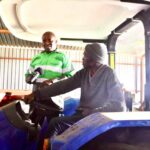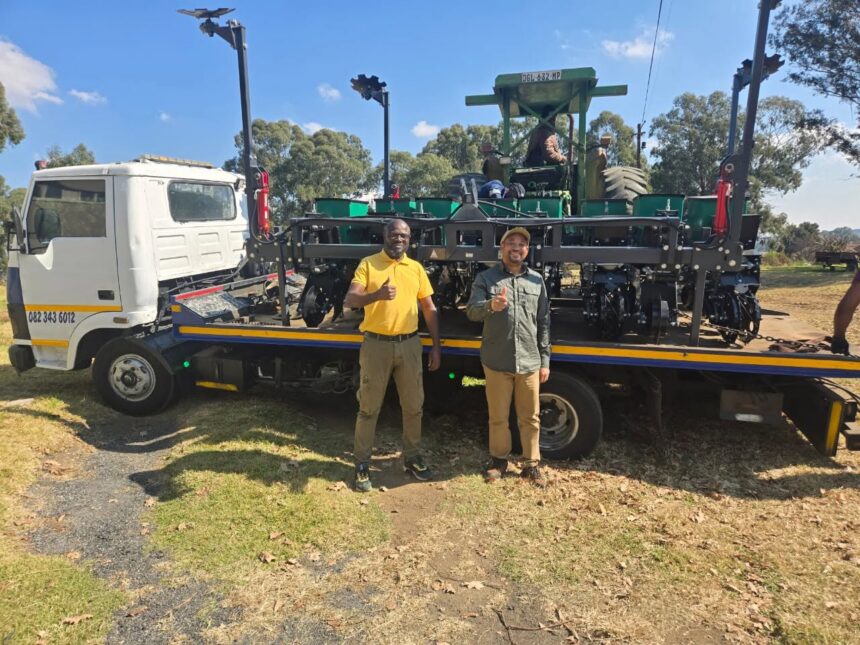
Access to the right farming equipment can be the turning point that transforms a farmer’s business and unlocks new opportunities for growth. For many developing farmers, practical support is just as important as technical training because it allows them to put new skills into action. This was evident when Mr. Nkambule, an advanced farmer participating in the PGP Farmer Development Programme and a member of the Emakhazeni Study Group, received a four-row no-till planter from the Mpumalanga Department of Agriculture’s Land Care Section through its Soil Conservation initiative. The handover represented more than the delivery of modern agricultural equipment. It symbolized a commitment to helping farmers build resilient, productive and sustainable farming enterprises.
Mr. Nkambule has steadily developed his farming operation through active participation in the PGP Farmer Development Programme, which focuses on equipping farmers with the skills and knowledge needed to succeed in commercial agriculture. As a member of the Emakhazeni Study Group, he has benefited from continuous learning, collaboration and the sharing of practical farming experiences with fellow producers. These study groups create valuable opportunities for farmers to improve production methods, solve common challenges and adopt innovative agricultural practices. The addition of modern equipment now gives him the ability to implement those lessons more effectively. This combination of knowledge and practical support creates a stronger foundation for long-term success.
The four-row no-till planter is expected to play a significant role in expanding Mr. Nkambule’s farming operation. Modern planting equipment improves efficiency by allowing larger areas to be planted within shorter timeframes while maintaining consistent planting depth and spacing. Greater efficiency can lead to improved crop establishment, better yields and reduced production costs over time. With this equipment, Mr. Nkambule will be better positioned to increase production and meet growing market opportunities. The planter therefore represents an investment not only in machinery but also in the future growth of his farming business.
No-till planting technology is widely recognized for its environmental and economic benefits. Unlike conventional tillage methods, no-till systems minimize soil disturbance during planting, helping to preserve soil structure and reduce erosion. The practice also improves moisture retention, which becomes increasingly important during periods of limited rainfall. Healthier soils support stronger crop development while reducing the need for excessive cultivation that can degrade farmland over time. By adopting conservation agriculture techniques, farmers can improve productivity while protecting natural resources for future generations.
The support provided by the Mpumalanga Department of Agriculture’s Land Care Section demonstrates the importance of government initiatives that promote sustainable farming practices. Soil conservation remains a critical priority as farmers face challenges such as land degradation, climate variability and declining soil fertility. By providing equipment that supports conservation agriculture, the department is helping farmers improve both productivity and environmental stewardship. These interventions contribute to stronger agricultural systems that are better equipped to withstand changing climate conditions. They also encourage wider adoption of farming methods that balance economic growth with responsible land management.
The PGP Farmer Development Programme recognizes that successful farmer development extends far beyond classroom training and technical workshops. While education remains an essential part of agricultural development, practical opportunities often determine whether farmers can successfully implement new knowledge. Providing access to equipment, infrastructure and strategic partnerships enables farmers to move from learning to action. This approach helps strengthen farming businesses by giving producers the tools they need to improve efficiency and competitiveness. It also creates greater confidence among farmers as they expand their operations.
Farmer development programs become even more effective when they are supported by meaningful partnerships between government institutions, agricultural organizations and farming communities. The collaboration that resulted in Mr. Nkambule receiving the no-till planter highlights the value of coordinated efforts to support emerging and developing commercial farmers. Such partnerships allow resources, expertise and opportunities to be directed where they can have the greatest impact. They also create pathways for farmers to access additional support as their businesses continue to grow. Strong partnerships remain essential for building a more inclusive and sustainable agricultural sector.
The equipment handover also serves as an inspiration for other farmers participating in development programs. It demonstrates that dedication, continuous learning and active participation can lead to valuable opportunities that strengthen farming enterprises. Farmers who invest time in improving their skills are better positioned to benefit from initiatives designed to accelerate commercial growth. Success stories such as Mr. Nkambule’s encourage others to embrace innovation and adopt sustainable farming practices. They also highlight the importance of perseverance in building a successful agricultural business.
As agriculture continues to evolve, the integration of training, technology and institutional support will remain essential for developing competitive commercial farmers. Access to modern equipment allows producers to improve productivity while adopting environmentally responsible farming methods that preserve natural resources. The combination of conservation agriculture and business development creates opportunities for long-term sustainability and profitability. Programs that provide both knowledge and practical support help farmers overcome barriers that might otherwise limit their growth. This integrated approach contributes to stronger rural economies and improved food production.
The handover of the four-row no-till planter to Mr. Nkambule represents far more than the delivery of agricultural machinery. It reflects a shared commitment to empowering farmers through practical support, sustainable farming practices and meaningful collaboration. By combining training with access to modern equipment, the PGP Farmer Development Programme and the Mpumalanga Department of Agriculture are helping farmers translate knowledge into measurable progress. The initiative demonstrates how strategic partnerships can create lasting opportunities that strengthen individual farming businesses and the agricultural sector as a whole. For farmers like Mr. Nkambule, one opportunity has the potential to shape a more productive, sustainable and commercially successful future.
Join 'Farmers Mag' WhatsApp Channel
Get the latest Farming news and tips delivered straight to your WhatsApp
CLICK HERE TO JOIN