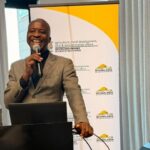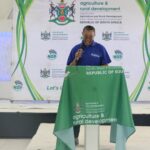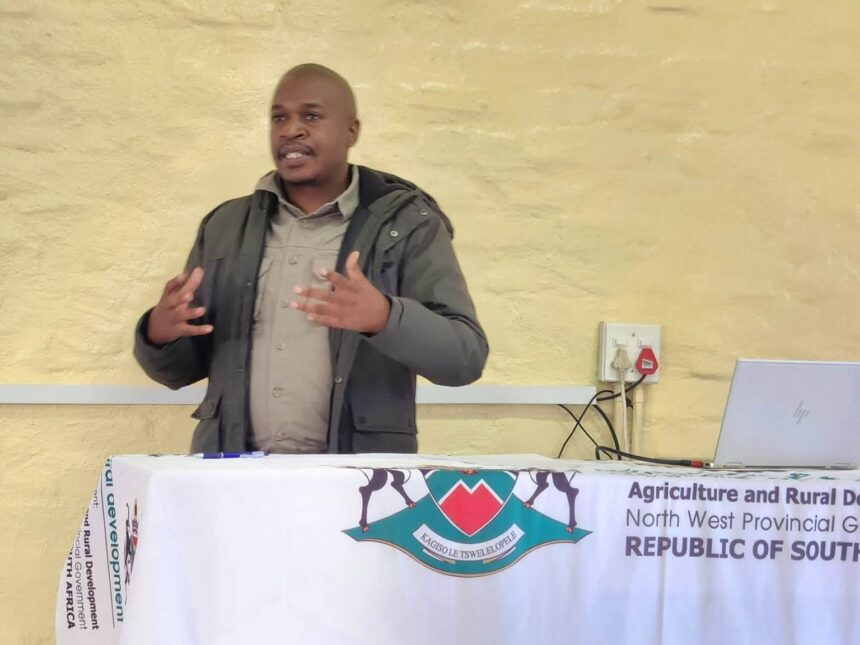
The Sustainable Resource Use and Management Unit is currently hosting a Climate Change Workshop for Extension Practitioners at Taung Agricultural College in the North West Province. The programme brings together extension practitioners and key stakeholders to strengthen knowledge and practical understanding of climate change and its impact on agriculture. It focuses on building stronger support systems for farmers who are already experiencing shifting weather patterns and increasing climate risks. The workshop is designed to improve how agricultural advice is delivered at community level. It also aims to ensure that extension officers are better equipped to guide farmers toward sustainable and climate-resilient practices.
The training session places strong emphasis on climate change awareness and how it affects agricultural production systems. Participants are engaging with scientific projections that explain how temperature changes, rainfall variability and extreme weather events are expected to evolve over time. These projections are directly linked to farming outcomes, including crop yields, livestock health and soil productivity. By understanding these patterns, extension practitioners can better prepare farmers for future risks. The discussions also highlight the importance of early warning systems and seasonal forecasts in planning agricultural activities.
A key focus of the workshop is climate-smart agriculture, which includes both adaptation and mitigation practices. Adaptation strategies help farmers adjust their production methods to cope with changing conditions, such as drought-resistant crops, improved water management and soil conservation techniques. Mitigation practices focus on reducing agriculture’s contribution to greenhouse gas emissions through methods like efficient fertiliser use and sustainable land management. Extension practitioners are being trained to communicate these approaches in simple and practical ways to farming communities. The goal is to ensure that climate-smart agriculture becomes part of everyday farming decisions rather than a technical concept.
Another major discussion area involves strategies to support farmers in responding effectively to climate-related challenges. Extension practitioners are learning how to assist farmers in managing risks such as droughts, floods and unpredictable growing seasons. The training also explores how access to timely information can improve decision-making at farm level. Stakeholders are sharing insights on how collaboration between government, research institutions and farming communities can strengthen resilience. The emphasis is on building a support network that ensures farmers are not left vulnerable when climate shocks occur.
The workshop also highlights the importance of integrating climate knowledge into existing agricultural extension services. Practitioners are being encouraged to use updated tools, data and communication methods to reach farmers more effectively. This includes the use of digital platforms, community engagement and field-based demonstrations. By improving how information is shared, the department aims to increase adoption of climate-smart practices across rural communities. The training recognises that extension officers play a critical role in bridging the gap between research and practical farming.
Taung Agricultural College provides a suitable environment for this type of specialised training due to its strong focus on agricultural education and practical learning. The institution serves as a hub for knowledge exchange between experts and field practitioners. Hosting the workshop at TAC allows participants to engage in both classroom-based learning and practical demonstrations. This combination helps reinforce key concepts and ensures that extension practitioners can apply what they learn in real farming environments. It also strengthens collaboration between educational institutions and government agricultural programmes.
The department’s ongoing investment in training extension practitioners reflects its broader commitment to building climate-resilient agricultural systems. Agriculture remains highly vulnerable to climate change, particularly in regions that depend on rainfall for production. By equipping extension officers with up-to-date knowledge, the department aims to improve farmer preparedness and reduce vulnerability. This approach supports long-term sustainability while also promoting food security across rural communities. It also ensures that agricultural support services remain responsive to emerging environmental challenges.
The Climate Change Workshop at Taung Agricultural College continues to serve as an important platform for knowledge sharing and skills development. It reinforces the need for practical, science-based approaches to agricultural extension work in a changing climate. By strengthening the capacity of extension practitioners, the programme aims to improve how farmers are supported at grassroots level. The expected outcome is a more resilient agricultural sector that can adapt to climate pressures while maintaining productivity. Through initiatives like this, the department continues to promote sustainable agriculture and long-term resilience for farming communities across the region.
Join 'Farmers Mag' WhatsApp Channel
Get the latest Farming news and tips delivered straight to your WhatsApp
CLICK HERE TO JOIN