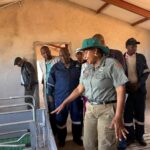
The Limpopo Department of Agriculture and Rural Development (LDARD) has welcomed an international delegation focused on strengthening smallholder farming through the Smallholder Horticulture Empowerment and Promotion (SHEP) approach. The visit, led by the Acting Capricorn District Director, brought together officials from the National Department of Agriculture and the Japan International Cooperation Agency (JICA). The delegation includes Mr Ren Kamioka and Mr Matsuno Masato from JICA’s Agricultural and Rural Development Programme. Their engagement in Limpopo forms part of a broader national assessment of how the SHEP model is transforming agricultural productivity and rural livelihoods. The visit reflects growing interest in practical, market-driven farming systems that improve income for small-scale producers.
Limpopo was selected as one of the key provinces for the SHEP assessment due to its active role in piloting and implementing the programme. The Smallholder Horticulture Empowerment and Promotion approach focuses on shifting farmers from production-only thinking to market-oriented agriculture. Instead of growing crops without clear demand, farmers are trained to first understand market needs and then plan production accordingly. This method is designed to improve profitability and reduce post-harvest losses caused by oversupply or poor market timing. The assessment team aims to measure how effectively these principles are being applied and what impact they have had on farmer livelihoods and agricultural productivity in the province.
As part of the visit, the delegation is touring two youth-owned farming enterprises in the Capricorn South Agro-Ecological Zone, namely ZB Plantation and Zwoda Farming in Zebediela. These enterprises have integrated the SHEP methodology into their daily farming operations and serve as practical examples of how the approach can be applied successfully. The farms demonstrate how young farmers are using market information to guide crop selection, production planning, and sales strategies. The delegation is also engaging with a broader group of farmers in the area to promote awareness of SHEP principles and encourage wider adoption. These interactions are designed to strengthen knowledge sharing between farmers, government officials, and international partners working in agricultural development.
The Capricorn District has set a target to train 35 farmers under the SHEP programme during the current financial year. The goal is to equip these farmers with the skills needed to access formal and sustainable markets. Training focuses on improving decision-making, understanding market demand, and developing production systems that align with consumer needs. The programme also supports farmers in building confidence to engage directly with buyers and participate in structured value chains. By strengthening these capabilities, LDARD aims to create a more competitive and resilient smallholder farming sector in the district.
The expected outcomes of the SHEP programme for smallholder farmers include increased farm income, improved confidence in business decision-making, and more intentional production planning. Farmers are also expected to adopt high-value crops that respond directly to market demand, rather than relying on traditional or subsistence-only farming practices. The approach encourages farmers to think of agriculture as a business, where planning and market research are essential for success. Over time, this shift is expected to improve household incomes and strengthen rural economies in Limpopo. The integration of youth-owned enterprises into the programme further supports long-term sustainability by encouraging innovation and generational renewal in farming communities.
The visit by JICA and national agricultural representatives to Limpopo highlights the importance of international cooperation in advancing smallholder farming systems. The SHEP approach continues to demonstrate strong potential in transforming how farmers produce and sell their crops in the Capricorn District. Through targeted training, market-focused production, and direct engagement with successful farming enterprises, the programme is building a more informed and commercially aware farming community. The commitment to train additional farmers in the current financial year reinforces the province’s dedication to agricultural development and rural empowerment. LDARD’s continued partnership with international stakeholders reflects a shared vision of improving livelihoods and strengthening sustainable agriculture in South Africa.
Join 'Farmers Mag' WhatsApp Channel
Get the latest Farming news and tips delivered straight to your WhatsApp
CLICK HERE TO JOIN