

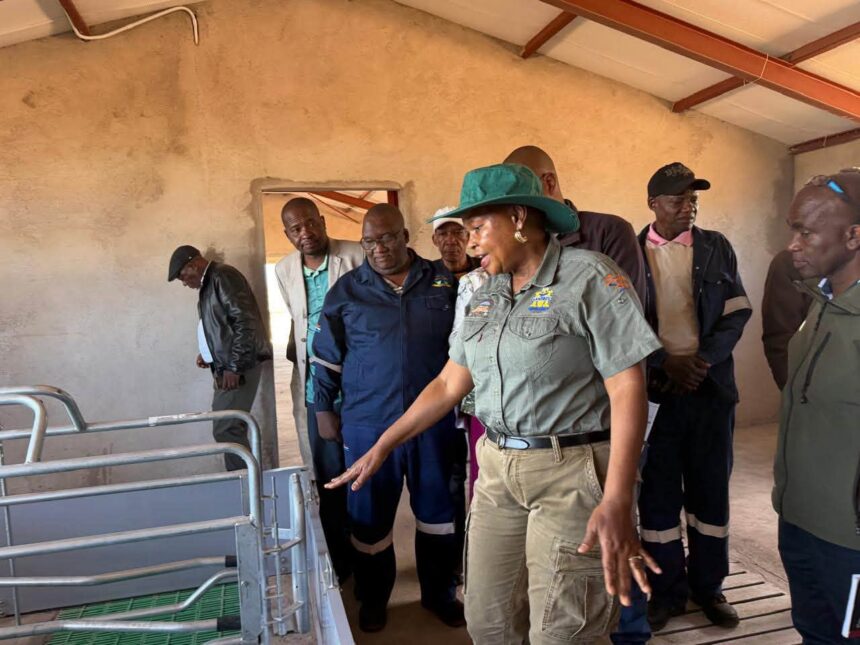
An agricultural oversight team has arrived in Fetakgomo Tubatse to conduct an on-site evaluation of infrastructure development at Seimela Piggery. The visit is led by Limpopo Department of Agriculture and Rural Development MEC Ms Nakedi Kekana, alongside Head of Office Mr Jonathan Mpe and District Director Mr Harry Maboa. The delegation is also joined by Acting Mayor Cllr Mabelane Morussia, Cllr Mokgotho Lisbeth and Kgoṣ̌i Phelane, highlighting the importance of cooperation between provincial government, local authorities and traditional leadership in supporting agricultural development. Before beginning the physical inspection, the team is holding a briefing with contractors and project recipients to discuss the project and establish a shared understanding of the assessment process. The engagement provides an opportunity to examine progress on the ground, identify challenges and assess whether the infrastructure being developed is aligned with the needs of the agricultural project.
The inspection of Seimela Piggery is significant because agricultural infrastructure can determine whether a farming project can operate efficiently and sustainably. A piggery requires suitable housing, reliable water, appropriate waste management systems, secure facilities and adequate space for animal handling and production activities. Infrastructure must also support animal health, biosecurity and effective farm management. If facilities are poorly designed, incomplete or not maintained properly, farmers may face higher operating costs and increased risks to animal welfare and production. An on-site evaluation allows officials to assess these issues directly and determine whether the project is developing in a way that can support productive pig farming.
The briefing with contractors and project recipients is an important part of the oversight process because it creates an opportunity for all parties to discuss the work before the physical inspection begins. Contractors can provide information about the progress of construction and explain any technical or logistical challenges encountered during implementation. Project recipients can also share their experiences and explain whether the infrastructure being developed meets their operational needs. Government officials can use this information alongside their observations during the site walk-about to form a more complete assessment. Open communication at this stage can help identify problems early and create opportunities for corrective action where necessary.
The involvement of MEC Nakedi Kekana demonstrates the importance of monitoring agricultural development projects at provincial level. Site visits allow political and departmental leadership to see the progress of projects first-hand rather than relying only on written reports or administrative updates. Direct inspections can reveal practical issues that may not be immediately apparent from project documentation. They also give officials an opportunity to engage with beneficiaries and understand how infrastructure investments are affecting agricultural activities. Regular oversight can strengthen accountability and help ensure that agricultural projects deliver the intended benefits to farmers and surrounding communities.
The participation of local government leaders and traditional leadership further strengthens the collaborative nature of the engagement. Agricultural projects operate within communities and can have an impact on employment, local economic activity and opportunities for small businesses. Local municipalities can contribute through coordination and support while traditional leaders can help connect development initiatives with community interests and local realities. Bringing these different forms of leadership together can improve communication and create stronger partnerships around agricultural development. It also reinforces the idea that successful farming projects require cooperation across government structures and the communities where those projects are located.
Seimela Piggery has the potential to contribute to the development of livestock agriculture in the Fetakgomo Tubatse area if the necessary infrastructure is completed and managed effectively. Pig production can create opportunities for income generation and employment while supporting other parts of the agricultural value chain. A functioning piggery can generate demand for animal feed, veterinary services, equipment, transportation and other agricultural inputs. It can also provide opportunities for producers to participate in local markets and potentially expand their operations over time. Strong infrastructure is therefore an important foundation for turning agricultural investment into sustainable production and economic activity.
Animal health and biosecurity will be particularly important as the project develops. Pig farming requires careful management of disease risks because outbreaks can cause serious losses and disrupt production. Proper housing, controlled movement of people and animals, hygiene measures, waste management and appropriate veterinary support all contribute to maintaining healthy livestock. Infrastructure assessments can help determine whether facilities are suitable for implementing these measures effectively. Ensuring that biosecurity is considered during the development stage can reduce future risks and help producers establish sound farm management practices from the beginning.
The physical walk-about of the site will provide an opportunity for the agricultural oversight team to assess infrastructure against the project’s operational requirements. Officials can examine the condition and progress of buildings, production areas, water systems, access routes and other facilities that support the piggery. They can also identify areas that require additional work, maintenance or technical attention. For project recipients, the inspection can provide clarity about priorities and help them understand what may be required before the facilities can operate at full capacity. Such assessments are important because infrastructure should not only look complete but must also be functional, safe and appropriate for the intended agricultural activities.
Infrastructure development also needs to consider long-term sustainability rather than focusing only on the completion of construction. Agricultural projects must be able to operate within realistic budgets and maintain their facilities after development support has ended. Project recipients need the skills, resources and management systems required to keep infrastructure functional and productive. Regular maintenance of buildings, water systems, equipment and animal facilities can prevent small problems from becoming costly failures. The oversight process can therefore help establish whether the project has the foundations needed for continued operation beyond the initial development phase.
The engagement at Seimela Piggery also highlights the importance of accountability when public resources support agricultural development. Farmers and project beneficiaries need infrastructure that provides genuine value and enables them to undertake productive agricultural activities. Government departments have a responsibility to monitor projects, assess progress and respond to challenges that could undermine their success. Contractors also need to deliver work that meets agreed requirements, while project recipients must use and maintain the infrastructure responsibly. Effective oversight brings these responsibilities together and can help protect investments made in agricultural development.
The visit to Seimela Piggery in Fetakgomo Tubatse represents an important step in monitoring agricultural infrastructure and strengthening support for local farming development. The involvement of MEC Nakedi Kekana, departmental officials, local government representatives and traditional leadership demonstrates a shared interest in ensuring that the project delivers meaningful benefits. The briefing with contractors and project recipients provides a platform for open discussion, while the physical site evaluation will offer a clearer picture of progress and remaining requirements. If the identified infrastructure needs are addressed and the project receives appropriate technical and management support, Seimela Piggery can contribute to livestock production, employment and local economic development. Continued monitoring and collaboration will remain essential to ensuring that agricultural investments translate into productive and sustainable opportunities for farmers and the wider Fetakgomo Tubatse community.
Join 'Farmers Mag' WhatsApp Channel
Get the latest Farming news and tips delivered straight to your WhatsApp
CLICK HERE TO JOIN




