

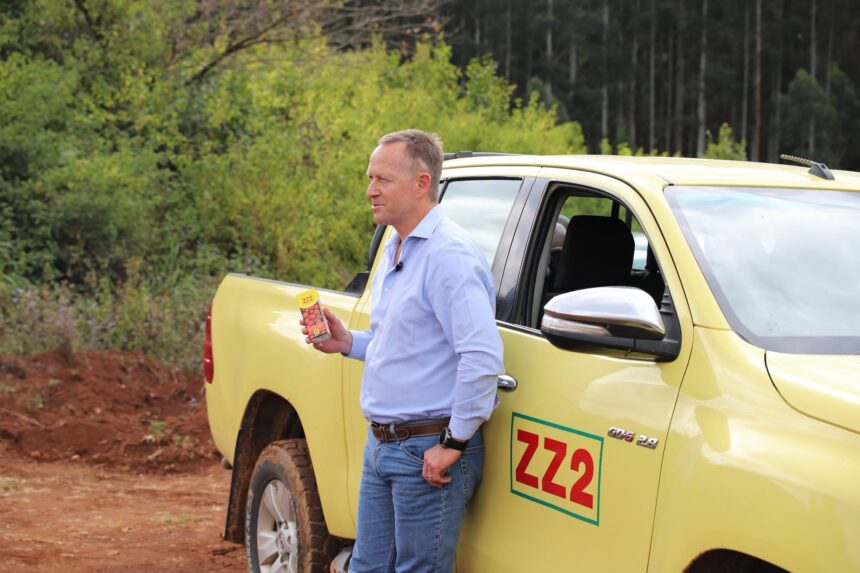
Access to finance can determine whether a promising agricultural project remains small or develops into a productive commercial enterprise. In Mooketsi near Tzaneen, Limpopo, the Makgoba Trust and ZZ2 agricultural project is demonstrating how partnerships between farmers, financial institutions and public-sector support agencies can help overcome some of the barriers to agricultural investment. The Small Enterprise Development and Finance Agency (SEDFA), through its subsidiary the Khula Credit Guarantee Scheme (KCG), recently visited the project to highlight how its credit guarantee model is working in practice. KCG provided a partial credit guarantee to FNB, enabling Makgoba Trust to access the financing needed to develop and grow its agricultural project. The initiative provides an important example for other farmers and agricultural enterprises that may have viable business opportunities but struggle to secure conventional finance because they lack sufficient collateral.
For many farmers, securing finance can be one of the biggest challenges when trying to expand production. Agricultural projects often require substantial investment in infrastructure, equipment, irrigation, inputs and other productive assets before they can generate sufficient returns. A farmer may have suitable land, a viable production plan and access to a potential market but still struggle to obtain a commercial loan because the business does not have enough assets to offer as security. This is where a credit guarantee can make a significant difference by helping reduce some of the risk faced by a lending institution. The KCG model provides a potential pathway for viable agricultural businesses to access finance while allowing commercial banks such as FNB to remain directly involved in funding productive enterprises.
The Makgoba Trust project provides a practical example of how this arrangement can work. KCG provided a partial credit guarantee to FNB, which then provided the financing required by Makgoba Trust. The guarantee does not mean that the farmer receives funding without meeting the bank’s lending requirements, nor does it remove the responsibility to repay the loan. Instead, it provides additional risk protection to the lender, making it easier to consider financing for a viable enterprise that may have limited collateral. For farmers, this can open an important conversation about alternative ways of strengthening their applications for agricultural finance when traditional security requirements become a barrier.
The role of ZZ2 adds another important element to the project because agricultural finance works best when it is supported by strong commercial opportunities. ZZ2 provides commercial and market support to the project, helping connect the agricultural enterprise with the knowledge and market experience needed to operate successfully. Farmers need more than capital to build sustainable businesses, as they also require access to markets, production knowledge, supply chains and reliable commercial relationships. An established agricultural business can provide valuable insight into market expectations and the standards required to participate in competitive agricultural value chains. The partnership therefore combines financial support with commercial expertise, creating a stronger foundation for the project’s growth.
The model is particularly relevant to emerging farmers and agricultural enterprises that have growth potential but face difficulties accessing conventional funding. Lack of collateral can prevent farmers from investing in productive infrastructure even when there is a clear business opportunity. A credit guarantee can help bridge part of this gap by providing the financial institution with additional assurance. However, farmers still need a credible business plan, realistic financial projections, sound management systems and a clear understanding of their markets. The Makgoba Trust example shows that successful agricultural finance can depend on bringing together several forms of support rather than relying on funding alone.
Agricultural investment can have a wide impact on a farming operation. Financing can help a farmer improve production infrastructure, increase capacity and introduce systems that make the business more efficient. Better infrastructure can also improve the quality and consistency of agricultural products, which can strengthen a farmer’s ability to meet market requirements. As production expands, the enterprise may create additional demand for farm inputs, transport, maintenance, equipment and other agricultural services. This means that investment in one farming project can contribute to economic activity across the wider agricultural value chain.
The project also demonstrates why farmers should view access to finance as part of a broader business development strategy. Taking on finance creates an obligation to manage money carefully and generate sufficient income to meet repayment commitments. Farmers therefore need to understand their production costs, expected yields, market prices and cash flow before taking on additional debt. A clear business plan can help identify how borrowed funds will be invested and how the resulting income will support repayment. Financial discipline, record keeping and good farm management remain essential even when a credit guarantee helps improve access to funding.
The involvement of FNB shows the important role commercial banks can play in agricultural development when appropriate risk-sharing mechanisms are available. Banks have the financial capacity to fund businesses, but agricultural lending can involve risks linked to production cycles, weather, market conditions and the availability of collateral. Credit guarantee schemes can help address some of these challenges by sharing part of the lending risk. This can encourage financial institutions to consider viable businesses that may otherwise struggle to meet conventional lending requirements. For farmers, stronger relationships between banks and agricultural support institutions could create additional opportunities to access finance for productive investment.
SEDFA’s involvement through KCG also highlights the role that public-sector financial support can play in strengthening the MSME sector. Micro, small and medium enterprises often face difficulties accessing appropriate funding despite their potential to create employment and contribute to local economies. Agricultural enterprises are no exception, particularly when they require substantial investment to establish or expand production. By supporting credit guarantees for viable businesses, KCG aims to help address some of the financing barriers that prevent enterprises from reaching their potential. The approach can be particularly valuable in rural areas where agricultural businesses are important sources of economic activity and employment.
For farmers in Limpopo, the Makgoba Trust project offers a useful example of what can happen when financial and commercial support are brought together. The project is located within an agricultural region with established production activity and market connections, creating opportunities for further development. Access to finance can help enterprises invest in the productive assets they need, while market support can help ensure that increased production has a viable commercial destination. Combining these elements reduces the risk of investing in production without having a clear route to market. It also shows why farmers should consider their entire value chain when planning expansion.
The partnership between Makgoba Trust, KCG, FNB and ZZ2 demonstrates the potential of public-private sector collaboration to unlock agricultural investment. Each partner brings a different capability to the project, from financial support and risk sharing to commercial knowledge and market connections. This type of collaboration can help address several challenges that farmers face when attempting to grow their enterprises. It also provides an example of how financial institutions and agricultural businesses can work alongside public support agencies to promote productive investment. When these relationships are structured around viable agricultural projects, they can contribute to stronger businesses and wider rural economic development.
The Makgoba Trust and ZZ2 agricultural project in Mooketsi shows that limited collateral does not necessarily have to prevent a viable agricultural enterprise from pursuing growth. The KCG partial credit guarantee enabled FNB to provide financing, while ZZ2’s commercial and market support provides an additional foundation for the project’s development. For other farmers, the example highlights the importance of developing viable business plans, understanding market opportunities and exploring available financial support mechanisms. Access to finance remains only one part of the equation, as successful agricultural enterprises also require sound management, productive investment and reliable markets. The partnership ultimately demonstrates how a well-structured credit guarantee can help turn agricultural potential into investment, production and economic opportunity while providing farmers with another pathway towards sustainable growth.
Join 'Farmers Mag' WhatsApp Channel
Get the latest Farming news and tips delivered straight to your WhatsApp
CLICK HERE TO JOIN




