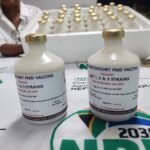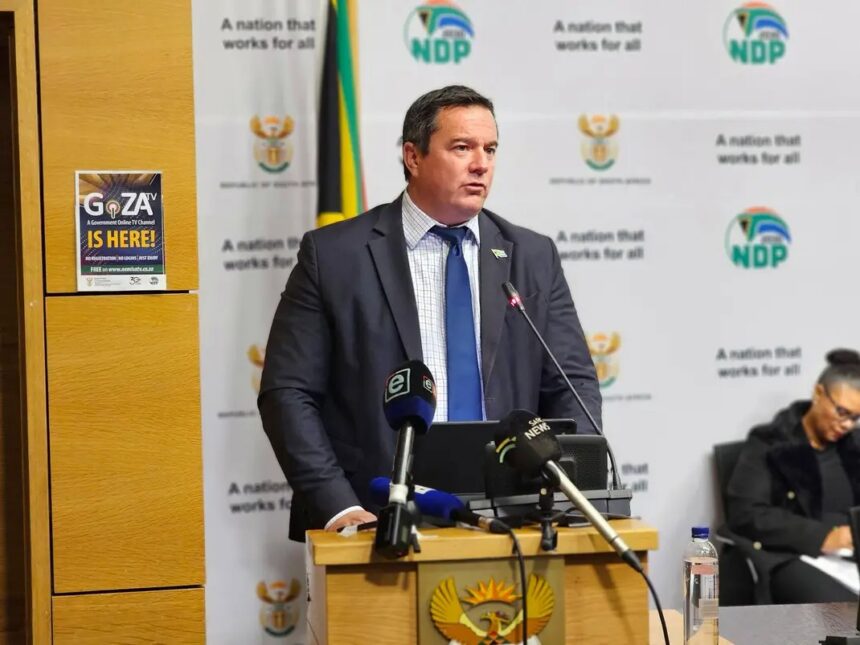
South Africa’s agricultural sector has received a significant boost in its fight against Foot and Mouth Disease following the arrival of a new batch of vaccines aimed at strengthening national biosecurity and protecting livestock. The Minister of Agriculture, , confirmed that 2 million Dollvet vaccines have landed at to support the ongoing national vaccination drive. This development comes at a critical time when farmers are working under pressure to contain outbreaks and safeguard the country’s cattle population. The government has positioned vaccination as a central strategy to stabilise the livestock sector and prevent further economic losses. Strong coordination between public institutions, provinces and private stakeholders continues to shape the response as the country pushes for faster coverage and wider protection.
In addition to the imported vaccines, local production efforts have also shown progress through the work of the , which has begun increasing its contribution to national vaccine supply. Officials confirmed that 20 000 vaccines were bottled on 12 June 2026, with another 20 000 expected before the end of the month, bringing total local production to 40 000 for June. This marks an important step in reducing reliance on external supply chains and strengthening domestic capacity. A consistent vaccine supply remains a priority for authorities as demand continues to rise across affected provinces. The expansion of local production is also seen as a long term investment in biosecurity resilience and emergency response readiness. It supports the broader goal of ensuring that South Africa can respond faster and more independently to future outbreaks.
Government data shows that vaccination efforts are gaining momentum across the country, with 5 486 860 cattle vaccinated to date. This figure reflects a coordinated national push involving veterinary teams, provincial departments and farming communities working under tight timelines. The Minister highlighted that faster vaccination rates are essential to break transmission chains and stabilise livestock production systems. Farmers are being urged to continue cooperating with vaccination campaigns to ensure that coverage expands evenly across all high risk areas. The scale of the operation demonstrates the seriousness of the outbreak and the level of mobilisation required to control it. Authorities have also stressed that sustained progress will depend on maintaining supply consistency and logistical efficiency.
Provincial performance data reveals varying levels of progress, with some regions advancing faster than others in vaccination coverage. The Free State has recorded 1 015 020 vaccinations, followed by KwaZulu Natal with 1 163 193 and the Eastern Cape with 891 924. Other provinces include Gauteng with 351 945, Limpopo with 357 045, Mpumalanga with 531 096, North West with 753 522, Northern Cape with 114 071 and Western Cape with 309 044. The Minister commended the Free State’s performance and acknowledged the leadership of provincial officials for accelerating their rollout. He also emphasised the importance of ensuring that all provinces maintain consistent momentum so that no region becomes a weak point in the national containment strategy. These figures highlight both progress and the need for continued improvement in slower moving areas.
Steenhuisen also called on feedlots to fully utilise their vaccine allocations in order to keep the agricultural value chain stable and functioning. He confirmed that discussions are underway within the department to expedite the Section 9 Report, which is expected to provide additional support measures for farmers. Collaboration between government and the private sector remains a key pillar of the response strategy, with veterinarians and industry partners playing a central role in vaccination delivery. The Minister expressed appreciation for these partnerships, noting that their combined efforts are essential to scaling up operations effectively. The overarching objective remains to vaccinate as many cattle as possible in the shortest time frame in order to bring the outbreak under control. Continued coordination, strong supply chains and rapid deployment are expected to determine how quickly South Africa can move toward recovery and long term disease prevention.
Join 'Farmers Mag' WhatsApp Channel
Get the latest Farming news and tips delivered straight to your WhatsApp
CLICK HERE TO JOIN