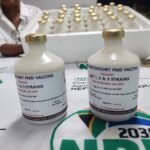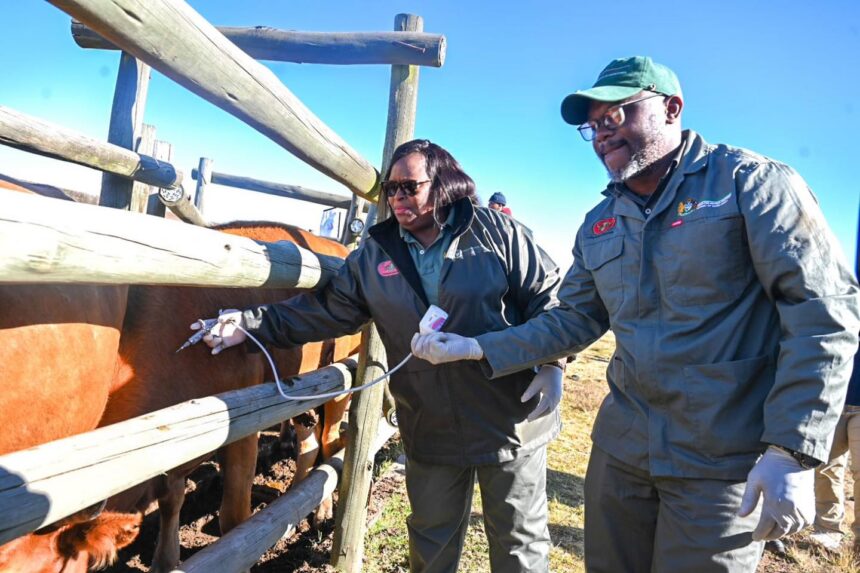
The vaccination campaign against foot-and-mouth disease in the uMgungundlovu District has reached completion, marking a major step in protecting livestock and stabilising the region’s agricultural economy. State veterinary services have confirmed that the programme has now achieved full coverage across the district before moving operations toward the eThekwini Metropolitan area. The campaign targeted cloven-hoofed animals, mainly cattle, which are highly vulnerable to the disease and play a key role in local farming livelihoods. Authorities have prioritised this rollout due to the high risk of rapid transmission and the potential impact on both commercial and small-scale farming systems. The completion of this phase signals progress in a wider provincial effort to contain and manage outbreaks across KwaZulu-Natal.
Across uMgungundlovu, more than 84,000 cattle were vaccinated through structured operations conducted at 197 designated dip tanks. The programme spanned seven local municipalities, including Impendle, uMngeni, Mpofana, uMsunduzi, Mkhambathini, Richmond and uMshwathi, ensuring wide geographic coverage. This district becomes the fifth to complete the vaccination rollout, following earlier success in Ugu, Harry Gwala, uMkhanyakude and Zululand. Veterinary teams operated in coordinated field units to maintain consistency in vaccination records and coverage standards. The structured approach helped reduce gaps in access, especially in rural and hard-to-reach farming areas.
The campaign also included detailed animal identification work, with 29,364 cattle fitted with eartags during the process. This step strengthens traceability and supports long-term disease monitoring and control. A total of 77 commercial farms were also included, ensuring that both emerging and established agricultural operations received protection. In Impendle, 19,660 animals were vaccinated and 9,307 were tagged, making it one of the highest contributing areas. uMngeni recorded 7,234 vaccinations and 1,762 tags, while Richmond reported 7,951 vaccinations and 3,527 tags. Mkhambathini saw 7,142 animals vaccinated and 3,616 tagged, while uMshwathi recorded 10,217 vaccinations and 2,557 tags. uMsunduzi contributed 15,802 vaccinated animals and 4,719 tagged, and Mpofana reported 16,169 vaccinations and 3,876 tags, reflecting strong participation across all municipalities.
Veterinary-led teams are now preparing to extend the programme eastward into the eThekwini Metropolitan area, where operations are scheduled to begin on 9 June 2026. The next phase is expected to cover around 70 dip tanks within the metro, with vaccination efforts planned to run until 16 June 2026. Officials aim to maintain the same level of coverage and record keeping achieved in uMgungundlovu, while adapting to the higher density and logistical demands of the urban-rural interface in eThekwini. The focus will remain on preventing new outbreaks and protecting livestock movement networks that connect rural supply areas with larger markets. This transition marks a continuation of the broader strategy to strengthen animal health systems across the province and reduce the risk of future foot-and-mouth disease disruptions.
Join 'Farmers Mag' WhatsApp Channel
Get the latest Farming news and tips delivered straight to your WhatsApp
CLICK HERE TO JOIN