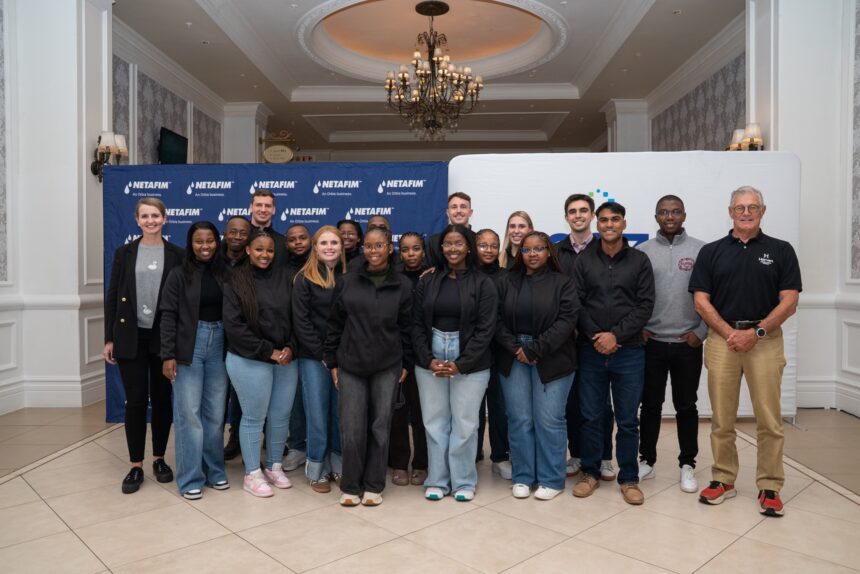
The future of South African agriculture is being shaped by a new generation of thinkers, innovators and problem-solvers who are stepping forward to address some of the industry’s most pressing challenges. As the theme of Agbiz Congress 2026, “Embracing Collaboration,” continues to guide discussions across the agricultural sector, a strong emphasis has been placed on investing in young talent. One of the most significant initiatives supporting this goal is the Agbiz Congress 2026 Student Case Competition, proudly sponsored by Netafim Southern & East Africa. The competition brings together some of the country’s brightest agricultural students and challenges them to develop practical solutions to real-world industry issues. By encouraging collaboration, innovation and strategic thinking, the initiative is helping to prepare future leaders for the complexities of modern agriculture.
The competition has attracted participation from leading universities across South Africa, creating a platform where academic knowledge meets industry realities. Students from Stellenbosch University, University of Pretoria, University of KwaZulu-Natal, University of the Free State, North-West University and University of Fort Hare are participating in this year’s challenge. These institutions represent some of the country’s strongest agricultural education programmes and have produced many professionals who now contribute to farming, agribusiness and agricultural research. The competition provides students with an opportunity to apply classroom learning to practical industry scenarios. It also exposes them to the decision-making processes that influence agricultural development at farm, industry and policy levels.
Facilitated by Prof Johann van Rooyen and Dr Melissa van der Merwe, the 2026 case study focuses on a topic of major importance to South African agriculture. Titled “Protected but Pressured: Strategic Decision-Making in South Africa’s Wheat Value Chain,” the case study examines the challenges and opportunities facing the country’s wheat industry. Students are required to evaluate complex economic, production and policy factors that influence wheat farming and grain supply chains. They must then develop practical recommendations that can improve sustainability, profitability and competitiveness. This process mirrors the type of strategic planning that agricultural leaders and policymakers undertake when responding to industry challenges.
South Africa’s wheat industry plays a critical role in national food security and rural economic development. Wheat is one of the country’s most important staple crops, supporting farmers, processors, retailers and consumers across the value chain. However, producers continue to face pressure from fluctuating input costs, changing climate conditions, global market competition and evolving trade dynamics. The case study challenges students to think critically about these realities and identify solutions that can strengthen the industry’s resilience. By focusing on real agricultural issues, the competition ensures that participants gain valuable insights into the practical challenges affecting farmers and agribusinesses.
One of the most valuable aspects of the competition is its emphasis on collaboration. Agriculture is increasingly dependent on partnerships between producers, researchers, policymakers and private sector stakeholders. The case competition encourages students to develop solutions that consider the interests of multiple participants within the wheat value chain. This collaborative approach reflects the realities of modern agriculture, where sustainable growth often depends on coordinated action rather than isolated efforts. Students are learning that effective leadership requires both technical expertise and the ability to work across different sectors.
The competition also highlights the importance of innovation in addressing agricultural challenges. South African farmers operate in an environment that demands continuous adaptation to changing conditions. New technologies, improved production practices and smarter policy frameworks are essential for maintaining competitiveness. Through the case study process, students are encouraged to develop fresh perspectives and creative strategies that can support long-term industry growth. These ideas may ultimately contribute to future discussions about agricultural development and policy reform. Encouraging innovative thinking at an early stage helps build a pipeline of leaders capable of driving progress throughout the sector.
Beyond the immediate competition, the initiative provides valuable professional development opportunities for participants. Students gain experience in research, data analysis, strategic planning and public presentation. These skills are highly relevant to careers in farming, agribusiness management, agricultural economics and policy development. The competition also allows participants to engage with industry experts and better understand the expectations of the professional agricultural environment. Such exposure can play an important role in bridging the gap between academic study and industry practice.
The Agbiz Congress 2026 Student Case Competition demonstrates how investment in young people can strengthen the future of South African agriculture. By challenging students to address real-world issues within the wheat value chain, the initiative promotes practical learning, innovation and collaboration. The participation of leading universities and the support of industry partners underline the importance of developing future agricultural leaders. As students prepare their recommendations and strategies, they are gaining skills that will help shape the sector in the years ahead. The competition serves as a powerful reminder that the future success of South African agriculture depends not only on current industry leaders but also on the talented young professionals preparing to take the industry forward.
Join 'Farmers Mag' WhatsApp Channel
Get the latest Farming news and tips delivered straight to your WhatsApp
CLICK HERE TO JOIN