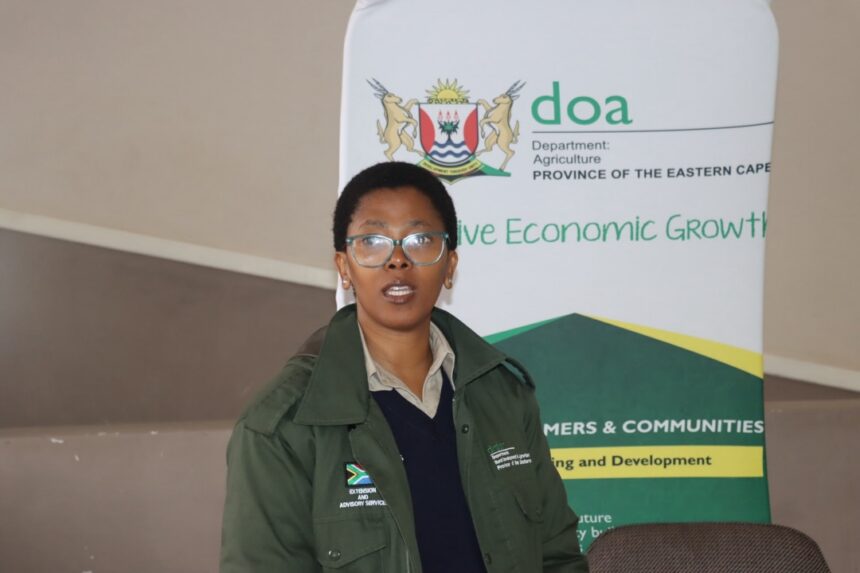
Local farmers from the Sakhisizwe Local Municipality gathered at Cala Hall for a successful agricultural awareness campaign hosted by the Eastern Cape Department of Agriculture. The programme formed part of ongoing efforts to empower farming communities through access to information, practical support, and government agricultural services. Farmers from different areas within the district attended the session to engage directly with departmental officials and gain a better understanding of available development opportunities. The campaign focused on strengthening agricultural productivity while promoting sustainable farming practices across rural communities. It also reinforced the importance of collaboration between government institutions and local farmers in improving food production and economic participation.
Officials from several departmental directorates participated in the awareness campaign and delivered presentations on key agricultural issues affecting farmers within the region. Representatives from Extension and Advisory Services, PIMS, and Engineering departments shared information aimed at improving farming operations and access to support programmes. Discussions covered crop production methods, animal identification systems, and the importance of agricultural infrastructure development. Farmers were also educated on compliance requirements when applying for government assistance and agricultural development support. These presentations helped create greater awareness around the procedures and responsibilities involved in accessing public agricultural services.
The session created an interactive platform where farmers could openly engage with officials and discuss practical challenges affecting their operations. Facilitator Vuyo Bottoman encouraged active participation throughout the programme, helping ensure that farmers felt comfortable sharing their concerns and experiences. Participants raised questions related to production difficulties, infrastructure needs, and livestock management within their communities. The engagement allowed officials to better understand local farming conditions while giving farmers direct access to technical guidance and departmental expertise. This open exchange of information strengthened communication between agricultural authorities and rural farming communities.
Addressing attendees during the programme, Xolani Dwashu provided detailed guidance on infrastructure application processes and procedures. Farmers received clarity on how to apply for departmental support related to agricultural infrastructure development projects. He also emphasized the importance of protecting and safeguarding government assets made available to communities for farming development. This message highlighted the shared responsibility between government and beneficiaries in ensuring that agricultural resources remain functional and sustainable. Protecting infrastructure such as fencing, irrigation systems, and farming equipment is considered essential for long term agricultural success in rural areas.
The campaign also highlighted the value of continued participation in agricultural awareness programmes and information sharing sessions. Closing the event, Nocwaka Mbaru encouraged farmers to maintain close working relationships with the Department in order to access future opportunities and improve agricultural production. She stressed that knowledge sharing remains one of the most effective ways to strengthen farming communities and support rural development. Farmers were reminded that attending such programmes can help them stay informed about funding opportunities, training initiatives, and modern farming practices. Continued engagement with agricultural support structures is expected to improve both productivity and sustainability across the district.
The awareness campaign concluded on a positive note, with appreciation extended to all stakeholders, officials, and farmers who contributed to the success of the programme. The event represented another important step toward building stronger cooperation between government departments and local agricultural communities in Sakhisizwe. By providing farmers with direct access to information and support services, the programme strengthened efforts aimed at improving food production and rural livelihoods. It also reinforced the role of agricultural education and community participation in driving sustainable growth within the sector. As more awareness campaigns are introduced across the province, farming communities are expected to become better equipped to overcome challenges and expand agricultural opportunities in their areas.
Join 'Farmers Mag' WhatsApp Channel
Get the latest Farming news and tips delivered straight to your WhatsApp
CLICK HERE TO JOIN