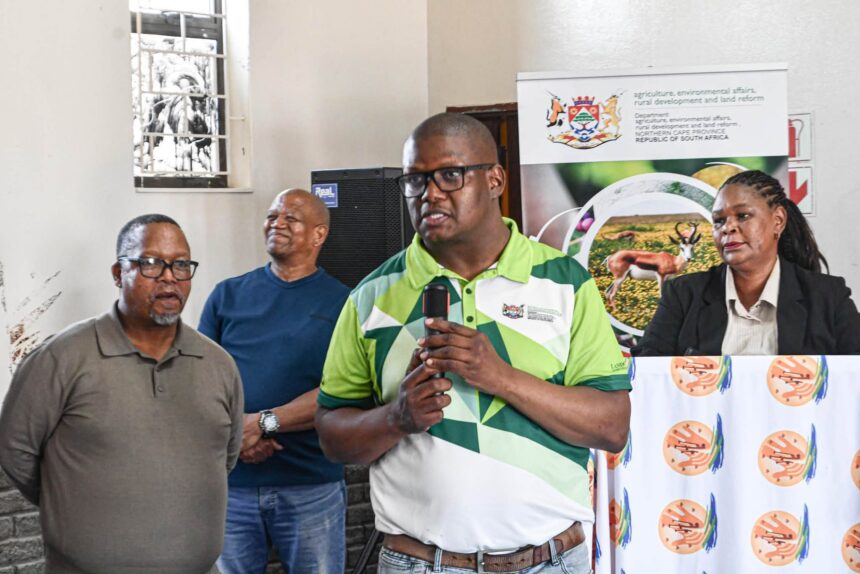
Fishermen in Port Nolloth have taken their concerns directly to government as part of an engagement aimed at understanding the challenges affecting fishing livelihoods in the coastal community. MEC for Agriculture, Environmental Affairs, Rural Development and Land Reform, Newrene Klaaste, accompanied by HOD Zolile Monakali, Cllr Cornel Knoph and departmental officials, met with fishermen to hear about the conditions they face in the fishing sector. The engagement gave fishermen an opportunity to explain how challenges within the sector affect their ability to work and support their households. It also allowed them to put forward practical suggestions for addressing some of the difficulties they experience. For a community such as Port Nolloth, where fishing provides income for households and supports other economic activities, maintaining a productive and sustainable fishing sector is closely linked to local livelihoods.
Fishing provides more than an income for many people in Port Nolloth. It supports households directly through the earnings of fishermen while also contributing to a wider network of people whose work depends on fishing activity. People involved in handling, processing, transporting and selling fish can also be affected when fishing activities face challenges. MEC Klaaste highlighted this wider importance during her opening remarks, describing fishing as a source of dignity as well as income for many households. This broader livelihood connection means that challenges affecting fishermen can have consequences beyond individual fishing operations and can affect economic activity within the surrounding community.
The stakeholder engagement created a space for fishermen to speak about the realities they experience in their daily work. Direct discussions with producers and workers can give government a clearer understanding of challenges that may not always be apparent from administrative information or formal reports. Fishermen are able to explain how particular difficulties affect their ability to operate, earn an income and plan for their households. They can also suggest practical changes based on their experience of working within the local fishing environment. Bringing these perspectives into government discussions can help ensure that future interventions take account of the conditions experienced by people who depend directly on the sector.
MEC Klaaste emphasised that government needs to listen to people working in the sector if it is to develop workable responses to their challenges. This approach is important because fishing communities can face a combination of economic, operational, environmental and administrative issues. Addressing these matters requires an understanding of how different challenges interact and how they affect fishermen at community level. Consultation also provides an opportunity for government officials to explain existing processes and clarify which institutions are responsible for particular matters. A continued exchange of information can help build a clearer understanding of what support is available and where additional intervention may be required.
Not every concern raised by fishermen falls within the direct mandate of the Department of Agriculture, Environmental Affairs, Rural Development and Land Reform. MEC Klaaste stressed that such matters should nevertheless be properly recorded, referred to the relevant institutions and followed up through appropriate intergovernmental structures. This is important for fishermen because challenges that affect their livelihoods may involve more than one government department or level of government. Clear referral and follow-up processes can help ensure that issues are directed to the institutions with the appropriate responsibility. It can also give fishing communities a clearer understanding of where their concerns have been taken and which structures are expected to consider them.
The engagement also highlights the importance of treating fishermen as active stakeholders in the development of their sector. People who work directly in fishing have practical knowledge of the conditions affecting their operations and the changes they believe could improve their livelihoods. Their participation can help identify challenges early and provide useful information for officials responsible for planning and service delivery. Government engagement should therefore extend beyond simply communicating decisions to creating opportunities for communities to contribute to discussions that affect them. Continued consultation can help strengthen cooperation between fishermen, government and other organisations involved in supporting coastal livelihoods.
The sustainability of fishing livelihoods also depends on responsible management of the resources on which the sector relies. Fishermen need conditions that allow them to continue earning an income while ensuring that marine resources are managed responsibly for future generations. This requires cooperation between fishing communities, government authorities and other stakeholders with responsibilities related to the coastal environment and fishing activities. Practical knowledge from fishermen can contribute to these discussions because they experience changes and challenges within the sector directly. Maintaining open communication can help create a stronger basis for balancing livelihood needs with the long-term sustainability of fishing resources.
For the Port Nolloth community, the value of the engagement will ultimately depend on what happens after the discussions. Concerns raised by fishermen need to be properly documented, referred where necessary and followed up through the appropriate government structures. Farmers, fishermen and other rural producers often depend on consistent engagement with government to raise challenges that affect production and household livelihoods. Regular stakeholder platforms can help ensure that these concerns remain visible while giving officials an opportunity to assess whether interventions are addressing practical needs. The process can also help strengthen accountability by creating a clearer connection between issues raised by communities and the institutions responsible for responding to them.
The engagement between MEC Newrene Klaaste and Port Nolloth fishermen has highlighted the important role that fishing plays in supporting local households and the wider coastal economy. By providing fishermen with a platform to raise concerns and propose practical solutions, the engagement brought community experience directly into discussions about the future of the sector. The commitment to record and refer matters outside the Department’s mandate also recognises that many livelihood challenges require cooperation between different government structures. Continued communication and follow-up will be important if the concerns raised are to translate into practical improvements for fishing communities. For Port Nolloth fishermen, maintaining this dialogue can help strengthen the relationship between government and the people whose daily work contributes to local livelihoods and the broader coastal economy.
Join 'Farmers Mag' WhatsApp Channel
Get the latest Farming news and tips delivered straight to your WhatsApp
CLICK HERE TO JOIN