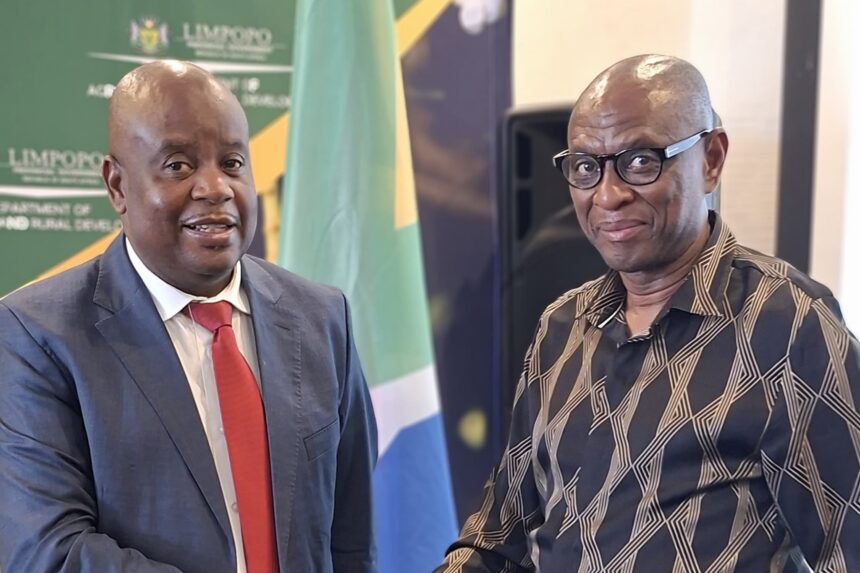
The Limpopo Department of Agriculture and Rural Development is reviewing its current performance and planning for the next financial year as the province works to strengthen agricultural production, food security and rural development. MEC for Agriculture and Rural Development Basikopo Makamu officially addressed the opening of the Departmental Strategic Performance Review and Planning Session, which is taking place from 21 to 23 September 2026 at the Euphoria Golf Estate. The high-level session brings together senior departmental officials and key stakeholders to assess progress and determine priorities for the period ahead. For farmers, strategic planning at departmental level matters because it influences how agricultural services, programmes and resources are delivered to farming communities. The review therefore provides an opportunity to examine whether current support is reaching farmers effectively and where improvements are needed.
The session is attended by the Head of Department, Chief Directors and Directors from various line functions within the department. Officials from the Provincial Treasury have also been welcomed as part of the province’s commitment to cooperative governance. Their participation provides an opportunity for financial and agricultural planning to be considered together, particularly because the implementation of farmer support programmes depends on effective planning and responsible use of public resources. Agricultural programmes need clear objectives, appropriate budgets and effective monitoring if they are to deliver practical benefits on farms and in rural communities. Bringing senior officials from different structures together can help strengthen coordination and ensure that departmental priorities are linked to available resources and implementation capacity.
MEC Makamu emphasised that the department has a dual responsibility towards the people of Limpopo. The first responsibility is to honestly assess Year-to-Date performance for the 2026/2027 financial year and determine whether the department is meeting the commitments contained in its current plans. This requires officials to look closely at progress, identify areas where targets may not be on track and consider what corrective measures are needed. For farmers, such reviews can have practical implications because departmental performance affects the delivery of agricultural services, infrastructure projects, farmer development programmes and other forms of support. A realistic assessment of current performance can help the department identify weaknesses before they become larger obstacles to agricultural development.
The second responsibility highlighted by MEC Makamu is the need to lay a strong foundation for the 2027/2028 Annual Performance Plan. Planning for the next financial year gives the department an opportunity to use lessons from current implementation when setting future priorities. This can help officials identify which programmes require greater attention and where changes may be needed to improve service delivery. For farmers, effective planning should translate into clearer support programmes, better coordination and more predictable access to agricultural services. A forward-looking approach is particularly important in agriculture because production decisions are affected by seasonal cycles, weather conditions, animal health risks, market conditions and access to infrastructure.
The review is also relevant to food security in Limpopo, where farmers across different production systems contribute to food production and rural livelihoods. Strengthening agricultural productivity requires more than setting targets, as farmers need access to suitable inputs, technical support, infrastructure, markets and reliable agricultural services. Departmental planning can help determine how available resources are directed towards programmes that support these needs. It can also help officials identify gaps affecting smallholder, emerging and commercial producers and consider how agricultural interventions can be better aligned with conditions on the ground. Strong planning and monitoring can therefore provide a foundation for improving the contribution of agriculture to household food security and local economic activity.
Rural development is another important part of the department’s mandate and has a direct connection to the sustainability of farming communities. Agricultural projects can support livelihoods when farmers have the resources and support needed to produce consistently and participate in viable markets. Rural development programmes also need to consider infrastructure, access to services, skills development and opportunities for people living in agricultural communities. The strategic session provides senior officials with an opportunity to consider these issues as part of a broader approach to provincial development. Better coordination between agricultural and rural development initiatives can help ensure that farming projects are not treated separately from the wider needs of the communities in which they operate.
Accountability is an important part of the performance review process because agricultural programmes need to demonstrate whether planned activities are producing meaningful results. Looking at Year-to-Date performance allows the department to compare actual progress with the targets established for the 2026/2027 financial year. Where implementation is behind schedule, officials can consider the reasons and identify practical steps to improve delivery during the remainder of the financial year. Where programmes are progressing as planned, the department can also examine which approaches are contributing to that progress and whether they can be strengthened or expanded. For farmers, this focus on performance can help create greater confidence that agricultural support programmes are being monitored and adjusted when necessary.
The involvement of Provincial Treasury officials further highlights the importance of linking strategic priorities with financial planning. Agricultural development programmes require funding for infrastructure, equipment, inputs, technical services and other activities that support farmers. Effective budgeting can help ensure that available resources are directed towards priorities that have clear objectives and measurable outcomes. Financial planning also needs to account for the practical costs and timelines involved in delivering agricultural programmes across a province with diverse farming communities. Cooperation between agricultural and financial officials can therefore support better planning and improve the department’s ability to implement its priorities.
The Departmental Strategic Performance Review and Planning Session at Euphoria Golf Estate provides an important opportunity for Limpopo’s agricultural leadership to assess current performance while preparing for the year ahead. MEC Basikopo Makamu’s emphasis on both accountability and forward planning places the department’s existing commitments and future priorities within the same strategic process. For farmers, the value of this exercise will ultimately depend on how the decisions taken during the session translate into improved agricultural services, stronger productivity and more effective support in farming communities. Continued monitoring will be important to ensure that the priorities identified during the planning process are implemented and measured throughout the next financial period. By combining an honest assessment of current performance with practical planning for 2027/2028, the department can strengthen its approach to food security, agricultural development and sustainable rural livelihoods across Limpopo.
Join 'Farmers Mag' WhatsApp Channel
Get the latest Farming news and tips delivered straight to your WhatsApp
CLICK HERE TO JOIN