The National Department of Agriculture hosted a Farmer Capacity Building Workshop and Traditional Seed and Food Fair at the Sterkspruit Community Seed Bank, bringing renewed focus to indigenous farming systems and community-led agricultural development. The event gathered farmers, seed custodians, agricultural officials, and local community members in one space to share knowledge and practical farming experience. It also created a platform for showcasing traditional crops that have sustained rural households for generations. The workshop was designed to strengthen food production systems at community level while supporting long term agricultural resilience. It highlighted the growing importance of reviving local seed knowledge in the face of changing climate conditions and rising food insecurity.
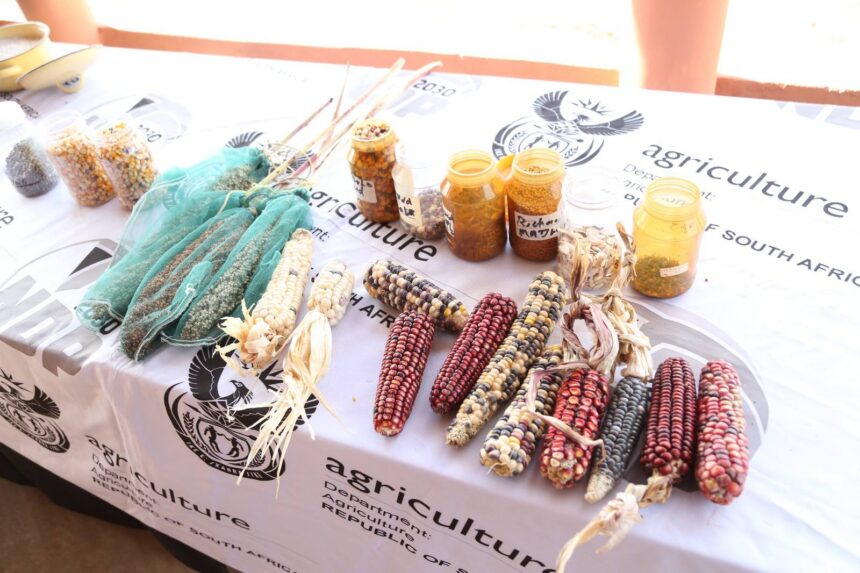
The programme placed strong emphasis on community seed systems and the role they play in protecting agricultural biodiversity. Farmers and seed custodians presented and exchanged indigenous seeds, demonstrating how traditional practices remain central to rural livelihoods. The event showcased a range of neglected and underutilized crops that are often overlooked in modern commercial agriculture. These included sorghum, millet, cassava, taro, cowpeas, and bambara groundnuts, along with other indigenous varieties promoted during the workshop. Participants engaged in discussions and demonstrations focused on seed preservation, crop rotation, and sustainable farming practices. The Sterkspruit Community Seed Bank served as a practical hub for learning and exchange, reinforcing its role in safeguarding local seed heritage.
The initiative also highlighted the nutritional and economic value of indigenous crops in improving household food security. These crops were presented as climate resilient alternatives that can withstand drought conditions and poor soil quality more effectively than many commercial varieties. Farmers were encouraged to adopt and expand the cultivation of indigenous foods to reduce dependence on external inputs and strengthen self sufficiency. The programme emphasized how crops such as millet and sorghum can support both dietary diversity and income generation in rural communities. It further demonstrated that preserving traditional agricultural knowledge is essential for building stable and sustainable food systems. Community participation showed strong interest in reviving these crops as part of everyday farming practice.
The workshop and food fair at Sterkspruit reflected a broader national effort to strengthen agricultural resilience through indigenous knowledge systems and community empowerment. By bringing together stakeholders at grassroots level, the initiative helped bridge the gap between policy support and practical farming needs. It reinforced the importance of seed sovereignty and the protection of traditional food sources for future generations. The event also showed that sustainable agriculture depends on local participation, shared knowledge, and continued investment in community seed banks. As interest in climate smart agriculture grows, programmes like this position indigenous crops as a key solution for long term food security and rural development across farming communities.
Join 'Farmers Mag' WhatsApp Channel
Get the latest Farming news and tips delivered straight to your WhatsApp
CLICK HERE TO JOIN