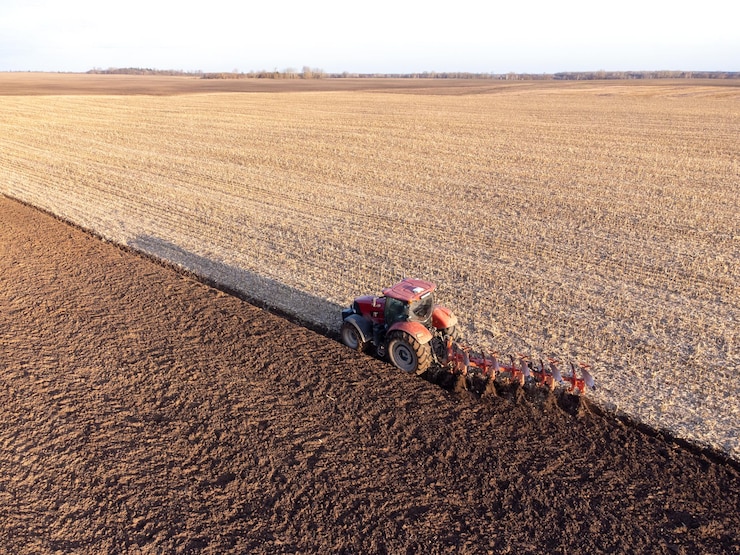
Farm mechanisation in South Africa plays a major role in improving agricultural productivity, reducing labour pressure, and increasing efficiency across both small and large farming operations. As farming conditions become more challenging due to climate change, rising input costs, and labour shortages, mechanisation has become an essential part of modern agriculture. It involves the use of machines and equipment to perform tasks such as planting, irrigation, harvesting, and soil preparation. These tools help farmers complete work faster and with greater accuracy compared to manual labour. Mechanisation also supports commercial farming by increasing output per hectare and improving consistency in production. For many South African farmers, adopting the right level of mechanisation can determine long-term success.
Choosing the right type of machinery is the first step in effective farm mechanisation. Common equipment includes tractors, ploughs, planters, sprayers, and harvesters, each designed for specific farming tasks. Small-scale farmers may start with basic equipment such as hand-held sprayers or small tractors, while commercial farms use advanced machinery for large-scale production. The choice depends on farm size, crop type, and budget. It is important to select machines that match the specific needs of the farm to avoid unnecessary costs. Proper selection improves efficiency and reduces operational breakdowns.
Tractors are the backbone of most mechanised farms in South Africa. They are used for a wide range of activities including ploughing, planting, and transporting goods. Modern tractors come with different horsepower levels to suit different farm sizes. Smaller farms may use compact tractors, while large commercial farms rely on high-powered models. Tractors also reduce the time needed for land preparation, which is critical during planting seasons. Regular maintenance is necessary to ensure long-term performance and reduce repair costs.
Planting machinery is another important component of farm mechanisation. Seed planters and drills help ensure accurate seed placement and spacing, which improves crop germination and yield. These machines reduce seed wastage and save time compared to manual planting. Precision planting equipment also allows farmers to optimise land use and improve crop uniformity. This leads to better harvests and higher profitability. Proper calibration of planting machines is essential for achieving consistent results.
Irrigation systems are a key part of mechanised farming, especially in water-scarce regions of South Africa. Systems such as drip irrigation, sprinkler systems, and pivot irrigation help farmers manage water more efficiently. Drip irrigation delivers water directly to plant roots, reducing evaporation and wastage. Pivot systems are commonly used for large-scale crop production and allow even water distribution across fields. Efficient irrigation improves crop growth and reduces dependence on rainfall. It also helps farmers maintain productivity during dry seasons.
Harvesting machinery significantly improves efficiency during the most labour-intensive stage of farming. Combine harvesters are widely used for crops such as maize, wheat, and soybeans. These machines cut, thresh, and clean crops in a single process, reducing the need for manual labour. Harvesting equipment helps farmers reduce crop losses and improve grain quality. It also speeds up the harvesting process, allowing farmers to manage large fields within short time frames. Proper timing and machine maintenance are essential for successful harvesting operations.
Mechanisation also includes spraying equipment used for pest and disease control. Sprayers help farmers apply fertilisers, herbicides, and pesticides evenly across crops. This improves crop health and reduces the risk of infestation. Manual spraying methods are often inconsistent and time-consuming, while mechanised sprayers provide better coverage and efficiency. Boom sprayers and knapsack sprayers are commonly used depending on farm size. Correct application rates are important to avoid crop damage and environmental harm.
Cost is one of the biggest challenges in farm mechanisation. Machinery requires significant investment, which may be difficult for small-scale farmers. However, shared equipment systems and cooperatives help reduce these costs by allowing multiple farmers to use the same machines. Leasing and rental options are also available in many farming areas. This makes mechanisation more accessible without requiring large upfront capital. Proper financial planning is essential before investing in farm machinery.
Maintenance and training are critical for successful mechanisation. Machines require regular servicing to prevent breakdowns and extend their lifespan. Farmers and workers must also be trained to operate equipment safely and efficiently. Poor maintenance can lead to costly repairs and reduced productivity. Understanding how to use machinery correctly improves performance and reduces accidents. Technical support from suppliers and agricultural service providers is also important for long-term success.
Farm mechanisation in South Africa continues to transform agricultural production by improving efficiency, reducing labour demands, and increasing output. From tractors and planting equipment to irrigation and harvesting systems, machinery plays a central role in modern farming. While costs can be high, solutions such as cooperatives, leasing, and shared equipment make mechanisation more accessible. Farmers who invest in the right tools and proper training can significantly improve productivity and profitability. With the right approach, mechanisation becomes a powerful driver of sustainable and competitive agriculture in South Africa.
Join 'Farmers Mag' WhatsApp Channel
Get the latest Farming news and tips delivered straight to your WhatsApp
CLICK HERE TO JOIN