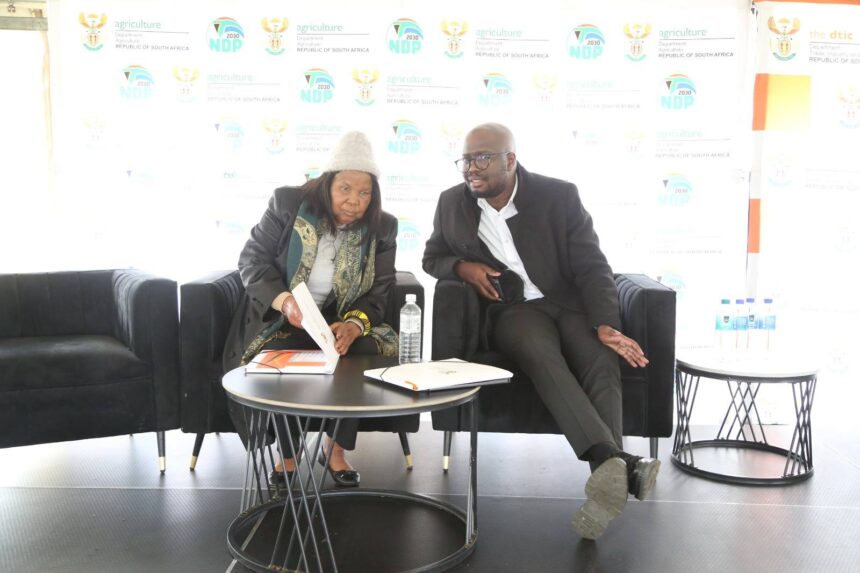
A major milestone in South Africa’s agricultural and industrial transformation is unfolding as Deputy Minister Nokuzola Capa and Deputy Minister of Trade, Industry and Competition Zuko Godlimpi recognise 33 black-owned poultry businesses from all nine provinces at the Poultry Masterplan Executive Oversight Committee meeting in Bronkhorstspruit. The gathering highlights the growing impact of the Poultry Masterplan in reshaping participation within one of the country’s most important food production sectors. The event brings together entrepreneurs who operate across different parts of the poultry value chain, showing how coordinated policy support can unlock real economic participation. It also reflects government efforts to build an inclusive agricultural economy that supports both production and industrial growth. The recognition of these businesses signals a shift toward stronger transformation and long term sustainability in the sector.
The 33 black-owned poultry businesses being recognised represent a wide and integrated presence across the entire poultry value chain. Their operations include broiler production, feed milling, hatcheries, abattoirs and processing facilities, which are all essential components of a functioning poultry industry. This full chain participation is significant because it reduces dependency on external suppliers and strengthens local production systems. It also allows small and medium enterprises to capture more value at different stages of production rather than remaining confined to primary farming alone. By supporting businesses across the chain, the Poultry Masterplan is helping to create a more balanced and competitive industry structure.
The Poultry Masterplan has been central in driving transformation within South Africa’s poultry sector by addressing barriers that previously limited black-owned participation. Through targeted interventions, the programme has provided support in areas such as access to finance, infrastructure development and market entry. These measures are designed to help emerging businesses compete in a sector that has historically been dominated by large established producers. The recognition event in Bronkhorstspruit reflects progress made through these interventions and highlights the practical outcomes of policy implementation. It also demonstrates how structured government programmes can create measurable change when supported by industry collaboration.
Deputy Minister Nokuzola Capa and Deputy Minister Zuko Godlimpi are leading efforts to ensure that transformation in the poultry sector is not only symbolic but economically meaningful. Their engagement with entrepreneurs at the Executive Oversight Committee meeting reinforces the importance of continuous monitoring and support. The presence of both departments responsible for agriculture and trade shows a coordinated approach to industrial development. This alignment is critical in ensuring that production capacity is matched with market access and industrial competitiveness. It also strengthens the link between agricultural growth and broader economic development objectives.
A key focus of the meeting is the consideration of Phase 2 of the Poultry Masterplan, which is expected to deepen transformation and accelerate growth within the sector. Phase 2 aims to build on existing achievements by expanding support mechanisms and improving integration across the value chain. It also seeks to strengthen partnerships between government, industry stakeholders and emerging black-owned businesses. The adoption of this next phase signals a commitment to long term inclusion and sustainable industry development. It is designed to ensure that progress achieved so far is not only maintained but expanded to reach more participants across the country.
The recognition of partners within the poultry value chain also forms an important part of the Executive Oversight Committee agenda. These partners include institutions and stakeholders who have contributed to the success of the programme through technical support, investment and collaboration. Their involvement has helped create an enabling environment for emerging businesses to grow and operate more effectively. By acknowledging their role, the programme reinforces the importance of collective effort in transforming complex industries. It also highlights that sustainable change requires coordination between government, private sector and development partners.
The recognition of 33 black-owned poultry businesses at Bronkhorstspruit marks a significant moment in the ongoing transformation of South Africa’s agricultural economy. It reflects real progress in building inclusive participation across the poultry value chain and strengthening local production systems. The continued implementation of the Poultry Masterplan demonstrates how targeted policy interventions can create opportunities for emerging entrepreneurs. With Phase 2 under consideration, the sector is positioned for further expansion and deeper inclusion. This development reinforces a clear direction toward a more competitive, inclusive and sustainable poultry industry that supports economic growth and food security across the country.
Join 'Farmers Mag' WhatsApp Channel
Get the latest Farming news and tips delivered straight to your WhatsApp
CLICK HERE TO JOIN