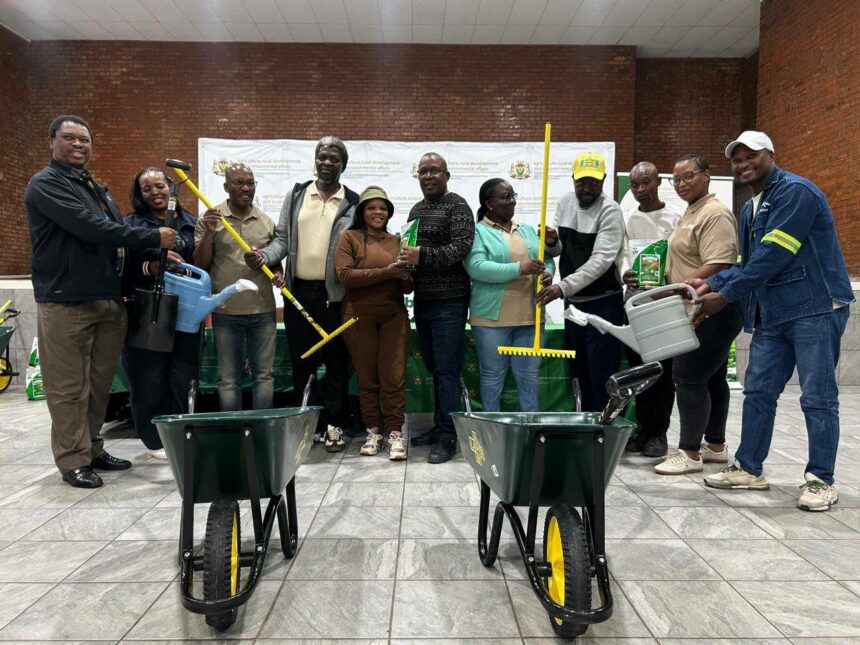
The Free State Department of Agriculture, Rural Development and Environmental Affairs has taken another step toward strengthening food security in local communities through a targeted support programme held in Sasolburg. The initiative, led by MEC Elzabe Rockman, focused on empowering households and small scale growers with practical resources to improve food production at household level. The programme forms part of ongoing efforts to reduce poverty by encouraging self reliance through agriculture. Access to seeds and basic gardening tools can make a direct difference for families that depend on small food gardens for daily meals. The event highlighted the department’s continued focus on practical interventions rather than short term relief. Communities in Metsimaholo Municipality attended the distribution with strong interest and participation. The approach reflects a wider strategy of building sustainable food systems across the province.
During the Sasolburg programme, beneficiaries received seed packs and essential garden tools designed to support home food production. These tools included items that help prepare soil, plant crops, and maintain small gardens effectively. The distribution was structured to ensure that participants could immediately begin using the resources without additional costs. Many households in the area rely on subsistence farming, making access to quality inputs a key barrier to food production. By removing this barrier, the department aims to improve food availability at household level. The programme also encouraged participants to grow a variety of crops to improve nutrition and dietary diversity. Practical support of this kind helps communities move from dependency toward self sufficiency.
The initiative aligns with MEC Elzabe Rockman’s broader commitment to strengthening agricultural development across the Free State. Similar programmes have been implemented in other towns where communities received support aimed at improving farming capacity. These efforts focus on empowering emerging farmers and household gardeners to increase productivity using available land. The department continues to prioritise interventions that can deliver measurable impact in rural and semi urban areas. By focusing on accessible tools and seeds, the programme ensures that even small scale growers can participate in food production. This consistent approach builds continuity across different regions in the province. It also reinforces the importance of agriculture as a foundation for local economic stability.
Ward 12 Councillor Lebohang Makhefu, who also serves as MMC for Finance and IDP in Metsimaholo Municipality, acknowledged the importance of the programme in addressing food insecurity. He highlighted that initiatives like this contribute directly to poverty alleviation by giving households the means to produce their own food. According to local leadership, food security programmes play a key role in reducing pressure on vulnerable families. When communities are equipped with resources to grow food, they gain more control over their daily nutrition needs. This reduces reliance on external assistance and strengthens household resilience. The programme was viewed as a practical response to ongoing economic challenges faced by many residents. Local leadership support also helps ensure that such initiatives reach the right beneficiaries.
Beneficiaries of the programme expressed optimism about the opportunity to start or expand their home gardens. Many households see gardening as a way to supplement income and reduce grocery expenses. Access to seeds allows families to plant crops that can be harvested within a short period, providing quick food returns. Garden tools make it easier to manage soil preparation and ongoing maintenance, which improves long term productivity. The support also encourages knowledge sharing among community members who are engaged in similar activities. Over time, these small gardens can develop into reliable sources of food security for households. The impact of such programmes often grows gradually as skills and experience improve.
The broader agricultural strategy in the Free State continues to focus on building resilient communities through practical support and targeted interventions. By investing in small scale agriculture, the department aims to address both food insecurity and unemployment challenges. Programs like the one in Sasolburg form part of a long term vision that integrates rural development with environmental sustainability. Supporting household food production also reduces pressure on formal food supply systems. This helps create a more balanced and locally driven approach to food access. Continued collaboration between government officials, local municipalities and communities is essential for sustained impact. The department’s efforts show a clear commitment to building stronger agricultural foundations across the province.
The Sasolburg seed and garden tool distribution programme represents a meaningful step toward improving food security in the Free State. Through the leadership of MEC Elzabe Rockman, the initiative has provided practical resources that empower households to produce their own food. The involvement of local leadership, including Ward 12 Councillor Lebohang Makhefu, reinforces the importance of coordinated efforts in addressing poverty and hunger. The programme demonstrates how simple agricultural inputs can create lasting benefits when placed in the hands of motivated communities. It also reflects a broader strategy aimed at strengthening resilience through self sufficiency. As similar initiatives continue across the province, they are expected to contribute to stronger, more food secure communities.
Join 'Farmers Mag' WhatsApp Channel
Get the latest Farming news and tips delivered straight to your WhatsApp
CLICK HERE TO JOIN