

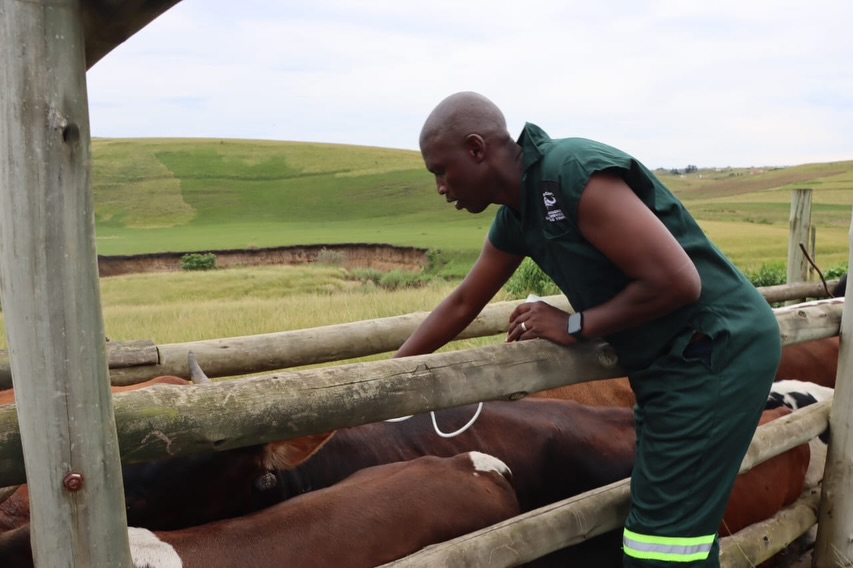
The Eastern Cape is strengthening its fight against livestock disease through expanded vaccination campaigns aimed at protecting rural economies and food security. On Friday, the Eastern Cape Department of Agriculture vaccinated more than 1,300 cattle at Ngobozana Administrative Area in Lusikisiki, located within the OR Tambo District. The effort is part of ongoing measures to curb the spread of Foot and Mouth Disease, which continues to pose a serious threat to cattle farming in the province. This targeted intervention reflects the urgency of controlling outbreaks before they disrupt livestock trade and household livelihoods. The vaccination drive also demonstrates coordinated action between provincial and national agricultural structures. Farmers in the area welcomed the intervention as a critical step in protecting their herds. The campaign continues to be rolled out in high-risk and densely populated livestock areas.
The vaccination programme forms part of a broader provincial strategy that has already seen more than 302,000 cattle vaccinated since the arrival of the Foot and Mouth Disease vaccine in South Africa. This large-scale effort aims to build herd immunity and reduce the spread of infection across communal and commercial farming areas. Vaccination teams are focusing on districts where livestock density is high and where disease transmission risks are greater. The OR Tambo District remains a key priority due to its strong reliance on cattle farming for income and food production. By increasing coverage, the department is working to stabilize rural economies that depend heavily on livestock. Each vaccinated animal contributes to reducing the overall risk within the region. This cumulative approach is central to long-term disease control.
The vaccination operation in Ngobozana was led by the Department of Agriculture’s veterinary leadership team, ensuring strong technical oversight on the ground. The initiative was guided by Veterinary Services Chief Director Dr Cebisa Mnqeta, who worked closely with OR Tambo regional director Zamile Madyibi. Animal health technicians played a critical role in handling livestock, administering vaccines and ensuring proper recording of data. Their presence in the field allowed for smooth coordination between farmers and government officials. The teams worked under challenging rural conditions to ensure that cattle were safely gathered and vaccinated. Proper handling and documentation are essential for tracking disease control progress. This structured approach improves both efficiency and accountability in the programme.
The campaign also received high-level support from national government leadership. Zoleka Capa joined the vaccination drive and commended the efforts of the department in containing the disease. She emphasized the importance of coordinated interventions between national, provincial and local structures. According to her, protecting livestock is directly linked to safeguarding rural livelihoods and strengthening food security. Her presence highlighted the significance of the programme at a national level. It also reinforced the message that Foot and Mouth Disease control requires joint responsibility across all levels of government. Strong leadership involvement helps ensure sustained focus on disease containment efforts.
Farmers in the Ngobozana Administrative Area benefited directly from the vaccination drive, as many rely on cattle for income, food and cultural value. Foot and Mouth Disease can severely disrupt livestock production, leading to financial losses and trade restrictions. Vaccination helps reduce these risks by preventing infection and limiting the spread of the virus. The involvement of veterinary teams on the ground also provided farmers with valuable information on animal health and disease prevention. Many farmers expressed appreciation for the accessibility of the service and the direct engagement with officials. This type of outreach strengthens trust between communities and government institutions. It also encourages farmers to report symptoms early and participate in future interventions.
The ongoing vaccination programme in the Eastern Cape is expected to continue across other high-risk areas in the province. Authorities are prioritizing districts with large cattle populations and active livestock movement. The goal is to ensure widespread coverage that will reduce the likelihood of future outbreaks. Continued monitoring and follow-up vaccinations will also be necessary to maintain immunity levels. The department is working to ensure that logistical support, vaccine supply and field teams remain in place for sustained operations. This long-term strategy is designed to protect both commercial and communal farming systems. It also supports broader agricultural stability in the province.
The vaccination of more than 1,300 cattle in Ngobozana represents a focused and practical step in the fight against Foot and Mouth Disease. When combined with the broader provincial total of over 302,000 vaccinated cattle, it shows the scale of commitment to livestock health in the Eastern Cape. The collaboration between veterinary leadership, regional management and national government highlights the strength of coordinated action. With continued support and sustained implementation, the province aims to reduce disease pressure and protect rural livelihoods. This effort reinforces the importance of proactive animal health management in maintaining a resilient agricultural sector.
Join 'Farmers Mag' WhatsApp Channel
Get the latest Farming news and tips delivered straight to your WhatsApp
CLICK HERE TO JOIN




