

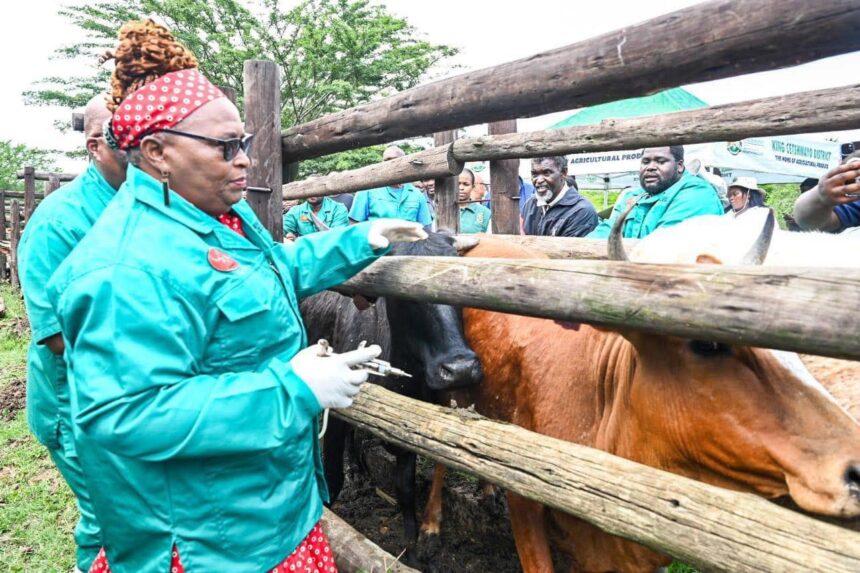
The KwaZulu-Natal Department of Agriculture and Rural Development has reached a major milestone in its response to the foot-and-mouth disease outbreak by completing a large scale vaccination campaign in the uMkhanyakude District. This effort marks one of the most significant interventions in recent years aimed at protecting livestock and stabilising rural economies. Foot-and-mouth disease poses a serious threat to cattle, trade, and food security, making rapid and effective response critical. The province moved quickly to contain the spread through coordinated veterinary action and strong field operations. This campaign focused on protecting one of the largest communal cattle populations in the region. The results show a clear commitment to both animal health and farmer livelihoods. The success also sets a strong example for future disease control efforts across South Africa.
The uMkhanyakude District includes four key local municipalities, namely uMhlabuyalingana, Jozini, Inkosi Mtubatuba, and Big 5 Hlabisa. This region is known for its large communal cattle herd, with an estimated population of about 200 thousand animals. Such a high concentration of livestock increases the risk of rapid disease spread if not managed properly. Veterinary teams had to cover wide and often remote areas to reach farmers and their animals. The scale of the operation required careful planning, resource allocation, and coordination with local communities. Each municipality presented unique logistical challenges, including access to dip tanks and private farms. Despite these conditions, the teams maintained a steady pace and achieved strong coverage across the district.
The vaccination campaign exceeded national expectations by achieving over 86 percent coverage, surpassing the target of 80 percent. This level of coverage is critical in controlling outbreaks because it reduces the chances of the virus spreading between herds. A total of 20 veterinary teams were deployed to carry out the operation across the district. These teams administered 172 649 vaccine doses, reaching cattle at 180 dip tanks and 24 private beef production farms. The vaccines used were produced by Dollvet from Turkiye and targeted the FMD SAT 1, 2, and 3 strains that are common in the area. This targeted approach ensured that the most relevant threats were addressed effectively. The high vaccination rate reflects both efficient planning and strong execution on the ground.
Detailed figures from the municipalities show the scale and reach of the campaign. Jozini recorded the highest number of vaccinated cattle at 74 359, which highlights its large livestock base. uMhlabuyalingana followed with 56 448 cattle vaccinated, showing strong participation from local farmers. Big 5 Hlabisa accounted for 25 191 vaccinated cattle, while Mtubatuba recorded 18 304. These figures demonstrate consistent coverage across different areas, regardless of size or location. The distribution of vaccinations also shows that resources were allocated effectively based on herd size and risk levels. This balanced approach helped ensure that no major area was left vulnerable.
In addition to vaccinations, the campaign also focused on improving livestock tracking and security through the Livestock Identification and Traceability System. Nearly 42 thousand animals were fitted with green ear tags, which indicate their proximity to wildlife reserves. These tags form part of a system that assigns each animal a unique identification chip. This allows authorities and farmers to track important details such as breed, origin, and ownership. The system also plays a key role in reducing stock theft, which remains a major concern in rural areas. By linking disease control with traceability, the province strengthens both animal health management and agricultural security. This integration adds long term value beyond the immediate vaccination campaign.
The completion of vaccinations in uMkhanyakude marks a transition to the next phase of the provincial response. Veterinary teams are now preparing to move into the Zululand District, where they will begin vaccinations across five local municipalities. This step is important in preventing the spread of the disease into new areas and maintaining control over the outbreak. The experience gained in uMkhanyakude will likely improve efficiency in the next phase. Teams can apply lessons learned in logistics, community engagement, and resource management. Continued momentum is essential to ensure that the disease is contained fully. Expanding the campaign also reinforces the province’s commitment to protecting its livestock sector.
This vaccination campaign shows what can be achieved through coordinated planning, skilled teams, and strong community involvement. By exceeding vaccination targets and introducing effective tracking systems, KwaZulu-Natal has taken a decisive step in controlling foot-and-mouth disease. The protection of over 86 percent of the cattle population significantly reduces the risk of further outbreaks. Farmers benefit directly through healthier livestock and improved economic stability. The integration of technology such as the traceability system adds a modern layer of control and accountability. As the campaign moves into new districts, the foundation built in uMkhanyakude will guide future efforts. Sustained action and vigilance will be key to securing long term success in managing livestock diseases across the province.
Join 'Farmers Mag' WhatsApp Channel
Get the latest Farming news and tips delivered straight to your WhatsApp
CLICK HERE TO JOIN




