

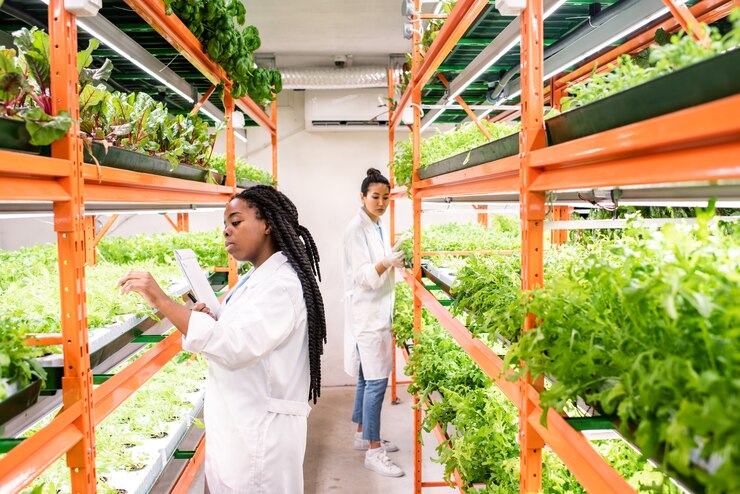
Vertical farming is emerging as a key solution to urban food insecurity and sustainability challenges in South Africa. By growing crops in vertically stacked layers, often integrated into buildings or controlled-environment facilities, this method maximizes space, reduces water usage, and allows year-round production regardless of climate conditions.
Urban centers in South Africa face increasing pressure from population growth, limited arable land, and climate variability. Traditional farming methods struggle to meet local food demands, particularly for fresh vegetables and leafy greens. Vertical farming addresses these challenges by bringing food production closer to consumers, reducing transportation costs, and ensuring fresher produce in city markets.
Technology plays a central role in vertical farming. LED lighting, hydroponics, aeroponics, and automated climate control systems allow precise monitoring of plant growth, nutrient delivery, and water usage. This reduces waste and increases yields per square meter compared to conventional farming. South African innovators are increasingly adopting these systems to produce high-value crops in urban environments, such as Johannesburg, Cape Town, and Pretoria.
The economic potential of vertical farming is significant. Urban farmers can cultivate high-demand crops in limited spaces, creating employment opportunities while reducing reliance on rural supply chains. Startups and established agribusinesses are exploring rooftop farms, container farms, and modular vertical farming units to serve supermarkets, restaurants, and local communities.
Sustainability is another key advantage. Vertical farms use up to 95% less water than traditional fields and eliminate the need for chemical pesticides. Controlled environments also mitigate the risks associated with extreme weather events, pests, and soil degradation, making urban agriculture more resilient and reliable.
Challenges remain in scaling vertical farming across South African cities. High initial setup costs, energy consumption, and technical expertise requirements are barriers for small-scale farmers. However, partnerships between government, research institutions, and private investors are helping to provide training, funding, and infrastructure support. Programs that integrate vertical farming into schools, community centers, and local cooperatives are proving effective in promoting adoption.
The future of vertical farming in South Africa depends on integrating technology, policy support, and community engagement. As urban populations grow, sustainable solutions like vertical farming will play a critical role in ensuring food security, reducing environmental impact, and creating economic opportunities in city environments.
By leveraging innovation and urban space efficiently, South African cities can transform how food is produced, distributed, and consumed, making vertical farming a cornerstone of the country’s sustainable urban food systems.
Join 'Farmers Mag' WhatsApp Channel
Get the latest Farming news and tips delivered straight to your WhatsApp
CLICK HERE TO JOIN




