

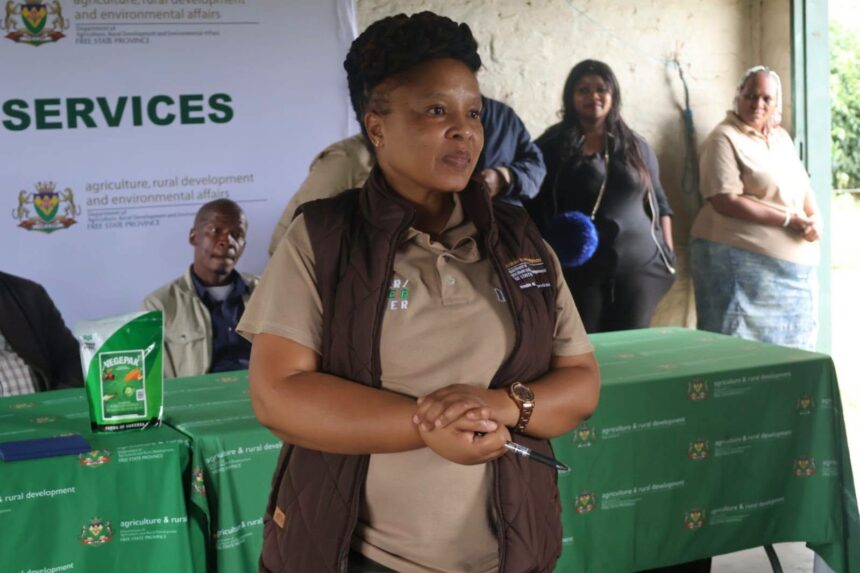
The Department of Agriculture, Rural Development and Environmental Affairs is strengthening its presence in rural communities through an ongoing outreach programme that focuses on food security and household support. The initiative recently reached the community of Swaartfontein Farm, near Viljoenskroon in the Fezile Dabi District, where residents received direct assistance aimed at improving daily living conditions. This intervention forms part of a wider strategy to respond to community needs raised in earlier engagements. The programme is driven under the leadership of Elzabe Rockman, who has prioritised practical support for vulnerable households. The department’s approach combines immediate relief with long-term development thinking. By working closely with rural communities, the department aims to strengthen self-reliance and improve food access. The outreach reflects a growing commitment to inclusive development in farming areas.
During the latest visit, 29 households at Swaartfontein Farm received essential support packages designed to address both nutrition and household needs. These included seed packs to encourage small-scale food production, along with soya mince and instant maize porridge to support daily meals. Hygiene packages were also distributed to improve basic health and sanitation conditions within households. The selection of these items reflects a focus on both food security and overall well-being. Families in rural farming areas often face limited access to affordable and nutritious food options. By providing seed packs, the department also encourages households to grow their own produce. This creates a practical pathway toward greater independence and sustainability.
The outreach programme is not a once-off intervention but part of a structured response to earlier community consultations. The support delivered to Swaartfontein Farm followed direct feedback gathered during previous engagements with residents. This approach ensures that assistance is aligned with real community needs rather than general assumptions. It also strengthens trust between government and rural households. When communities see their concerns translated into action, participation in development programmes increases. The department uses these engagements to refine its support strategies and improve delivery. This cycle of consultation and response helps build more effective rural development systems.
One of the beneficiaries, Dipuo Sekwati, expressed gratitude for the support provided to her community. She highlighted the positive impact of the assistance on households that often struggle with limited resources. Her response reflected a strong sense of appreciation for the department’s continued presence in the area. Beyond expressing thanks, she also encouraged fellow residents to organise themselves into a structured group or NGO. She believes that collective organisation would make it easier for the department to provide support in a more coordinated way. Such a structure would also help the community access future development opportunities more effectively. Her message emphasized unity as a key factor in community growth.
The idea of forming a local organisation aligns with broader rural development strategies that encourage community participation. When households work together under a formal structure, they can better manage resources and communicate with government departments. This also allows for more targeted support that can benefit not just individual families but entire surrounding areas. Organised groups are often better positioned to initiate agricultural projects, manage shared gardens and coordinate training programmes. In rural farming communities, collective action often leads to stronger outcomes than isolated efforts. The department has consistently supported initiatives that encourage local organisation and self-management. This approach helps extend the impact of government programmes beyond immediate relief.
The outreach at Swaartfontein Farm demonstrates how targeted support can make a meaningful difference in rural communities. By combining food assistance, agricultural inputs and hygiene support, the department addresses multiple layers of household need. At the same time, it encourages long-term thinking through seed distribution and community organisation. Under the leadership of MEC Elzabe Rockman, the programme continues to focus on practical interventions that respond directly to community realities. The involvement of residents like Dipuo Sekwati shows that community voices are an important part of shaping development efforts. As the programme continues across the province, it strengthens both food security and community resilience. This integrated approach supports the long-term goal of building stronger and more self-sufficient rural communities.
Join 'Farmers Mag' WhatsApp Channel
Get the latest Farming news and tips delivered straight to your WhatsApp
CLICK HERE TO JOIN




