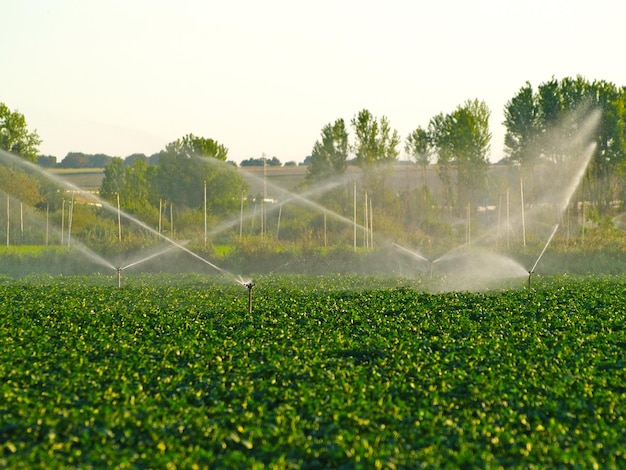
Water is one of the most expensive inputs in agriculture. Rising demand and unpredictable weather make efficient irrigation essential. Internet of Things (IoT) sensors give you precise control over how much water your crops or landscape receive. This saves water, reduces costs, and improves yields.
IoT sensors connect soil, weather, and irrigation data to automated systems. You no longer need to rely on guesswork or fixed schedules. Instead, your irrigation reacts to real conditions in the field.
Soil moisture sensors measure the exact water level in the root zone. Traditional irrigation often leads to overwatering or underwatering. IoT sensors send real-time data to your phone or central dashboard. This allows you to irrigate only when the soil is dry enough. Studies show that smart irrigation can cut water use by up to 30 percent compared to manual scheduling.
IoT systems integrate local weather forecasts. If rain is expected, irrigation schedules are delayed or skipped. Evapotranspiration data, which measures how much water plants lose to the atmosphere, helps fine-tune watering. This ensures plants receive the right amount of water at the right time.
Smart flow sensors track how much water your irrigation system uses. If a pipe bursts or a valve sticks, the system alerts you immediately. Leaks can waste thousands of liters per day. Early detection prevents high bills and keeps your crops or lawns from being damaged.
IoT-enabled controllers let you divide fields or landscapes into zones. Each zone receives the exact amount of water it needs based on soil type, crop variety, and slope. For example, sandy soil may need shorter but more frequent watering compared to clay soil. Precision irrigation prevents waste and improves plant health.
Some systems connect water sensors with fertilizer injectors. This process, known as fertigation, ensures nutrients are applied with water in the right dosage. You save not only water but also fertilizer.
IoT platforms store historical data on soil moisture, weather patterns, and water usage. Over time, you can analyze trends and make smarter planting and irrigation decisions. This reduces risk and improves sustainability.
Initial installation costs for IoT irrigation systems can be high, but the savings are measurable. A farm that spends thousands on water each season can recover costs in two to three years through reduced water use and higher yields. For landscapers and golf courses, the return comes from lower water bills and healthier turf.
In California vineyards, IoT soil moisture sensors cut water use by 25 percent while maintaining grape quality. In Kenya, smallholder farmers using smart drip irrigation increased yields by 20 percent while reducing water use. These examples show that technology is not only for large-scale operations but also for smaller farms and urban landscapes.
IoT sensors give you the power to manage irrigation based on real-time data. By monitoring soil, adjusting for weather, detecting leaks, and analyzing usage, you save water and money while improving plant health. If you want to future-proof your irrigation system, IoT technology is one of the most effective solutions available today.
Join 'Farmers Mag' WhatsApp Channel
Get the latest Farming news and tips delivered straight to your WhatsApp
CLICK HERE TO JOIN