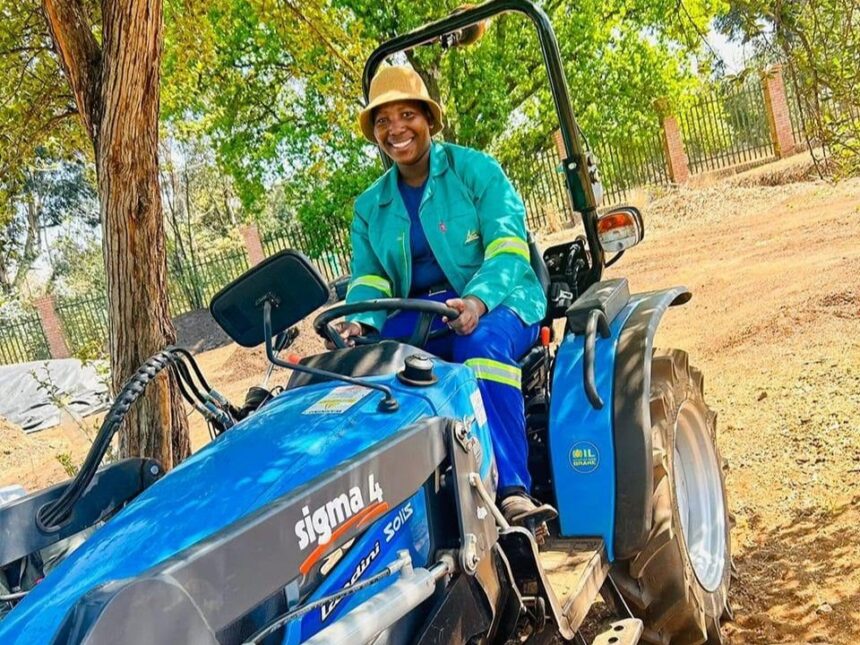
Young people are playing an increasingly important role in shaping the future of agriculture in South Africa, bringing fresh ideas, knowledge and entrepreneurial ambition into the sector. Among them is Thandiwe Articia Nqotheni, a young female agripreneur from Mpumalanga who is turning her agricultural education into a growing business through fish farming and vegetable production. As the founder of Jonnitaloyi Trading Enterprise, Thandiwe is building an integrated agricultural business that produces Mozambique tilapia and vegetables, including spinach and cabbage, while also supplying tilapia fingerlings to emerging fish farmers. Her journey demonstrates how education, determination and access to business development support can help young entrepreneurs establish opportunities in agriculture. With a clear vision for sustainable farming, rural employment and food security, she is working towards building a business that benefits both her community and the wider agricultural sector.
Thandiwe’s journey into agriculture is supported by her academic background in Plant Production, which she completed at the University of Mpumalanga. Her qualification provided her with knowledge of crop production and agricultural practices that she could apply when establishing her farming enterprise. Rather than limiting her ambitions to traditional crop farming, she identified opportunities to combine vegetable production with aquaculture. This approach allows her business to serve different areas of the agricultural market while contributing to local food production. Her work with Mozambique tilapia, spinach and cabbage reflects her interest in developing a diversified agricultural operation that can respond to food demand and create opportunities within the farming sector.
Through Jonnitaloyi Trading Enterprise, Thandiwe has also recognised the importance of supporting other farmers, particularly those entering the aquaculture industry. In addition to producing Mozambique tilapia, she supplies tilapia fingerlings to emerging fish farmers who want to establish or expand their own fish farming operations. Fingerlings are young fish that are raised before reaching market size, making them an essential input for many aquaculture businesses. Reliable access to quality fingerlings can help emerging producers establish their production cycles and plan their farming activities. By supplying fingerlings, Thandiwe is extending her contribution beyond her own business and helping create opportunities for other entrepreneurs interested in fish farming.
Building a successful agricultural business requires more than technical farming knowledge. Entrepreneurs must also understand business management, financial planning, marketing and the daily responsibilities involved in running an enterprise. Recognising the importance of developing these skills, Thandiwe attended a five-day Business Management Training programme offered by the Small Enterprise Development Agency (SEDA) in 2024. The programme provided an opportunity to strengthen her entrepreneurial knowledge and improve her understanding of business operations. This training formed an important part of her development as a young agripreneur, helping her build the business skills needed to manage and grow her farming activities. It also reinforced the value of continuous learning in an industry where successful production must be supported by sound business decisions.
Following the training, Thandiwe began applying for support through the National Youth Development Agency (NYDA) Grant Programme at the Secunda Branch. Access to financial resources is one of the challenges that many young entrepreneurs face when trying to establish and expand agricultural businesses. Farming requires investment in infrastructure, equipment, production inputs and protective systems, all of which can place pressure on businesses with limited financial capacity. For young farmers, grant funding can provide an important opportunity to address some of these barriers and improve their ability to operate. Thandiwe’s decision to pursue NYDA support demonstrated her commitment to strengthening her enterprise and taking practical steps towards achieving her agricultural ambitions.
Through the NYDA Grant Programme, Thandiwe received funding that enabled her to purchase protective netting for her vegetable production area and fish dam. This support addressed practical production challenges affecting both sides of her integrated farming operation. In vegetable production, protective netting helps reduce exposure to certain pests and excessive sunlight, depending on the type of netting and how it is installed. Protecting crops from environmental stress and pest damage can help farmers manage production risks and maintain healthier growing conditions. For a developing agricultural enterprise, such improvements can make an important contribution to the effective management of available resources.
The netting installed around her fish dam serves a different but equally important purpose. It helps protect the Mozambique tilapia from predators, reducing the risk of fish losses during production. Aquaculture requires careful management of water conditions, feeding, fish health and the surrounding environment. Protecting fish from predators is one of the practical measures that can help improve production security and reduce avoidable losses. By investing in protective infrastructure for both crops and fish, Thandiwe has been able to address challenges affecting different parts of her business. The NYDA funding therefore provided practical support that aligned directly with her production needs.
Thandiwe’s commitment to learning and professional development also extended beyond South Africa. In 2025, she travelled to China to attend a seminar focusing on climate change and marine sustainable development. This international experience exposed her to discussions and perspectives on environmental sustainability and the challenges facing aquatic production systems. Climate change is an important consideration for agriculture because changing weather patterns, temperature variations and water availability can affect both crop production and aquaculture. Farmers increasingly need to consider how environmental conditions influence their operations and how they can adapt their production practices to manage these risks. The knowledge gained through the seminar broadened Thandiwe’s understanding of sustainable agriculture and aquaculture, helping inform her vision for a more resilient farming business.
Her interest in combining fish farming and vegetable production reflects the potential of integrated agricultural systems. When carefully planned and managed, integrated farming can create opportunities to use resources more efficiently and diversify sources of farm income. Fish farming and vegetable production also allow entrepreneurs to serve different customer needs within the agricultural and food markets. However, each activity requires appropriate technical knowledge, infrastructure and management to remain productive. Water quality, fish health, crop nutrition and pest management must all receive attention to ensure that the different components of the business perform effectively. Thandiwe’s ambition to develop an integrated enterprise demonstrates her interest in building a farming model that balances production, environmental considerations and business sustainability.
Beyond growing her own enterprise, Thandiwe wants to contribute to food security and employment creation in rural communities. Agriculture offers opportunities for young people to participate in economic activity, develop practical skills and establish businesses that respond to local needs. By expanding Jonnitaloyi Trading Enterprise, she hopes to create employment opportunities for rural youth while supporting emerging farmers through access to tilapia fingerlings. These ambitions reflect the wider role that young agripreneurs can play in strengthening rural economies. When young people receive the right combination of education, mentorship, financial support and market opportunities, they can become active contributors to agricultural development. Their participation also helps bring new ideas and approaches into a sector that needs innovation and long-term investment.
The support provided by the NYDA has been an important part of Thandiwe’s entrepreneurial journey. Access to funding enabled her to invest in infrastructure that directly addresses production challenges, while her business management training helped strengthen her understanding of running an enterprise. Her experience highlights the value of combining financial assistance with skills development when supporting young entrepreneurs. Funding alone cannot guarantee business success, but when it responds to clearly identified needs and is supported by relevant knowledge, it can help businesses move forward. Thandiwe has expressed her sincere gratitude to the NYDA team for believing in her potential and providing practical assistance towards growing Jonnitaloyi Trading Enterprise. Her appreciation also reflects the importance of institutions that recognise the potential of young people and create opportunities for them to participate meaningfully in the economy.
Thandiwe Articia Nqotheni’s journey is an encouraging example of how young women can use agricultural education, entrepreneurial initiative and available development support to build businesses that contribute to South Africa’s agricultural future. From producing Mozambique tilapia, spinach and cabbage to supplying fingerlings to emerging fish farmers, she is developing an enterprise with a broader purpose than individual business growth. Her participation in SEDA’s Business Management Training and the international seminar in China demonstrates the value she places on continuous learning and adapting to changing agricultural conditions. With support from the NYDA, she has also been able to invest in practical improvements that protect her crops and fish. As she works towards building an integrated fish and vegetable farming enterprise, her vision remains focused on food security, sustainable agriculture, rural youth employment and support for emerging farmers. Her story sends an important message to aspiring young agripreneurs: with the right knowledge, commitment and access to opportunities, agriculture can provide a meaningful pathway to entrepreneurship and community development.
Join 'Farmers Mag' WhatsApp Channel
Get the latest Farming news and tips delivered straight to your WhatsApp
CLICK HERE TO JOIN