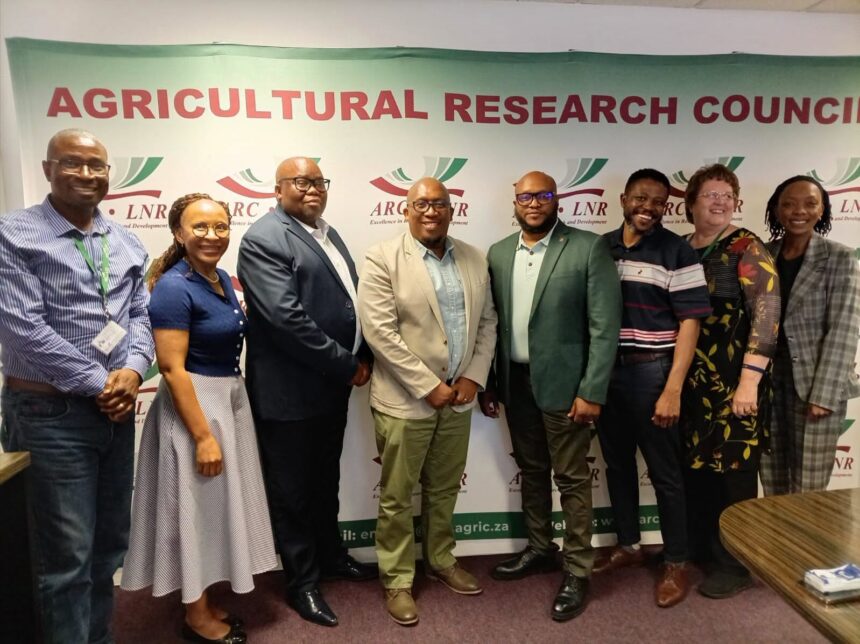
Agricultural research can play an important role in helping farmers improve production, strengthen their businesses and respond to changing challenges in the sector. However, research delivers greater value when scientific knowledge reaches farmers and addresses the practical needs of farming communities. This was the focus of an engagement between the Agricultural Research Council (ARC) and the Joe Gqabi Economic Development Agency, which explored opportunities to connect agricultural research with local economic development. The ARC President and CEO, Dr Litha Magingxa, together with members of the organisation’s Executive Management, hosted the Agency’s Acting CEO, Mr Zamikhaya Xalisa, for discussions on potential areas of collaboration. The engagement focused on using the ARC’s research, scientific expertise and innovation to support farmers, strengthen agricultural enterprises, improve food security and expand economic opportunities in rural communities. It also highlighted the importance of partnerships that turn agricultural knowledge into practical opportunities for producers and local businesses.
For farmers, access to relevant agricultural research can make a difference to everyday production decisions. Scientific knowledge can help producers understand crop and livestock challenges, improve farming practices and manage available resources more effectively. Research can also provide information that helps farmers assess production risks and identify approaches suited to their particular farming conditions. These benefits are important for smallholder and emerging farmers, who may need technical information to improve their operations and build sustainable agricultural businesses. By exploring cooperation with the Joe Gqabi Economic Development Agency, the ARC is looking at opportunities to connect its scientific capabilities with local agricultural development needs. This could help strengthen the relationship between agricultural research and the practical realities experienced by farmers.
The Agricultural Research Council has an important role in developing scientific knowledge and innovation for the agricultural sector. Its research can contribute to improved production practices, better resource management and solutions to challenges affecting farmers. However, research findings need to reach producers in forms they can understand and apply. Partnerships with local development agencies can help identify the needs of farming communities and create opportunities to connect research expertise with local priorities. This relationship is important because farmers operate under different conditions and face challenges that vary according to their location, production systems and available resources. Understanding these differences can help ensure that research-based support responds to the actual needs of agricultural producers.
The engagement also placed emphasis on strengthening agricultural enterprises. A productive agricultural sector depends on farmers being able to operate sustainable businesses, improve their production capacity and identify opportunities within agricultural markets. Research and innovation can support these objectives by providing knowledge that helps producers make informed decisions about their farming operations. Stronger agricultural enterprises can also create opportunities for businesses involved in supplying farm inputs, transporting produce, processing agricultural products and connecting farmers with markets. These activities contribute to the wider agricultural value chain and can support economic development in rural areas. Collaboration between the ARC and the Joe Gqabi Economic Development Agency could help explore ways to connect agricultural knowledge with opportunities for enterprise development.
Smallholder and emerging farmers are particularly important to local agricultural development. These producers contribute to food production and economic activity, but they may face barriers that limit the growth of their businesses. Access to technical knowledge, suitable production methods and opportunities to participate in markets can influence their ability to expand their operations. Agricultural research can help address some of these challenges by providing information and innovative approaches relevant to different farming activities. Local development agencies can contribute by identifying economic opportunities and supporting initiatives that respond to the needs of producers in their districts. Working together, these institutions can explore ways to make agricultural research more accessible and useful to farmers.
Food security was another key priority in the discussions. Reliable agricultural production is essential for ensuring that communities have access to sufficient food. Farmers play a central role in this process, but their ability to produce food depends on several factors, including suitable production practices, access to knowledge and the effective management of agricultural resources. Research can support food production by helping farmers understand challenges and consider improved approaches to their farming activities. Strengthening local agricultural enterprises can also contribute to food security by supporting production and economic opportunities within communities. The engagement recognised the potential of scientific research and innovation to contribute to these wider food security objectives.
Connecting research with local economic development can also help strengthen agricultural value chains. Farming does not end when a crop is harvested or livestock is sold. Producers depend on a wider network of services and businesses, including input suppliers, transport operators, storage facilities, processors and traders. When these activities develop, they can create additional opportunities for rural communities and support local employment. Research can contribute by helping improve agricultural production and informing innovation across different parts of the sector. Cooperation between the ARC and the Joe Gqabi Economic Development Agency could help identify opportunities where scientific expertise and local development priorities support one another. This broader approach recognises agriculture as both a source of food and an important contributor to rural economic growth.
The engagement also demonstrated why cooperation between research institutions and local development organisations matters. The ARC brings scientific expertise, research capacity and innovation, while the Joe Gqabi Economic Development Agency focuses on economic development opportunities within its area of responsibility. Combining these strengths could help identify agricultural challenges that require research-based solutions and opportunities where innovation can support local businesses. It could also create a stronger link between scientific institutions and the farmers who stand to benefit from their work. Effective collaboration requires a clear understanding of local needs and continued engagement between the organisations involved. The discussions provided an opportunity to explore how their respective roles could contribute to agricultural development in the Joe Gqabi District and beyond.
For farmers, the value of such a partnership will ultimately depend on whether it leads to practical support and accessible research-based knowledge. Producers need information that can help them make better decisions, improve their operations and respond to challenges affecting their businesses. Research becomes more useful when it addresses these needs and reaches farmers in ways they can apply. Stronger connections between agricultural researchers, development agencies and farming communities can help narrow the gap between scientific knowledge and practical farming. The engagement is therefore an important opportunity to explore how research can contribute more directly to agricultural development at local level. Any future initiatives arising from the discussions will need to translate these opportunities into meaningful benefits for producers and rural communities.
The engagement between the Agricultural Research Council and the Joe Gqabi Economic Development Agency highlights the importance of making agricultural research work for farmers and local economies. By exploring opportunities to apply scientific expertise and innovation, the organisations are seeking ways to support agricultural enterprises, improve food security and expand rural economic opportunities. The discussions also reinforce the need for partnerships that connect research institutions with the communities and businesses that depend on agriculture. Stronger links between research and farming can help producers access useful knowledge and identify opportunities to improve their operations. As collaboration develops, its greatest value will be measured by how effectively it supports farmers, strengthens agricultural businesses and contributes to sustainable rural development in the Joe Gqabi District and beyond.
Join 'Farmers Mag' WhatsApp Channel
Get the latest Farming news and tips delivered straight to your WhatsApp
CLICK HERE TO JOIN