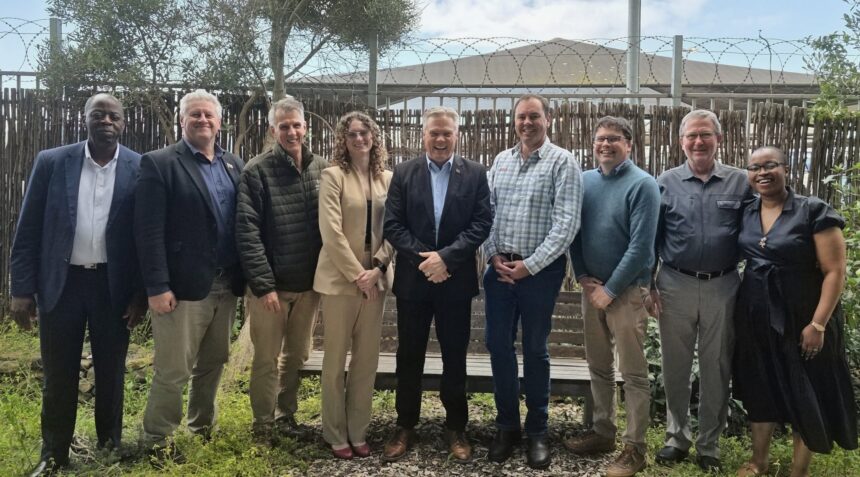
Cooperation between government and agricultural organisations is essential to protecting animal health, supporting livestock farmers and strengthening South Africa’s wool industry. Minister of Agriculture Willie Aucamp has highlighted the importance of this collaboration following a meeting in Cape Town focused on vaccines for animals in the wool industry. The meeting brought together veterinary expertise and representatives from several agricultural organisations to discuss matters relating to animal vaccination and the needs of livestock producers. Participants included Dr Danie Odendaal, Daniel Kriek of NWGA Communal Woolgrowers, Mohair South Africa, Cape Wools SA, National RPO, Nasionale RPO and Agri SA. The discussions reinforced the value of bringing together government, industry bodies and technical specialists to address animal health challenges and support the long-term sustainability of livestock farming in South Africa.
Minister Aucamp described the meeting as another demonstration of why the Department of Agriculture needs to work closely with stakeholders across the agricultural sector. He emphasised the valuable contribution that agricultural organisations make to their members by helping address industry challenges and supporting the interests of farmers. This cooperation allows government and industry representatives to exchange information, identify shared priorities and discuss practical approaches to problems affecting agricultural production. Animal health is an important area for this partnership because disease prevention can influence livestock productivity, farm operating costs and access to markets. By engaging with organisations that work directly with producers, the Department of Agriculture can strengthen communication with the farming community and better understand the issues requiring attention.
The focus on animal vaccines is particularly relevant to livestock production, where disease prevention plays a major role in maintaining healthy animals and protecting farm incomes. Vaccines help prepare an animal’s immune system to respond to specific infectious diseases, although their effectiveness depends on the disease involved, the vaccine used and correct administration. Appropriate vaccination programmes can form part of a broader animal health strategy that includes veterinary supervision, sound nutrition, good husbandry and effective biosecurity measures. Farmers need reliable technical advice to determine which vaccines are suitable for their animals and when they should be administered. Discussions between agricultural leaders and veterinary specialists can help ensure that animal health decisions consider scientific evidence alongside the practical realities of livestock farming.
South Africa’s wool industry depends on healthy sheep and effective livestock management. Sheep farmers must manage a range of production challenges, including animal diseases, changing weather conditions, feed availability and the costs associated with maintaining their flocks. Preventive animal health measures can help reduce avoidable losses and support consistent production when they are appropriate for the diseases and conditions involved. Veterinary guidance is important because vaccination needs can vary according to local disease risks, flock management practices and the animals’ health status. Greater cooperation between farmers, veterinarians and agricultural organisations can help producers access relevant information and make informed decisions about disease prevention.
The meeting also brought together organisations representing different interests within the broader fibre and livestock sectors. NWGA Communal Woolgrowers supports the interests of communal woolgrowers, while Cape Wools SA represents an important part of South Africa’s wool industry. Mohair South Africa is associated with the country’s mohair sector, which relies on the production of fibre from Angora goats. National RPO, also referred to as Nasionale RPO, represents interests within the red meat producer sector, while Agri SA is a broader agricultural organisation. The participation of these stakeholders reflects the value of engaging organisations with different areas of expertise and farmer representation when discussing animal health and agricultural development.
Veterinary expertise is also central to effective decision-making on vaccines and livestock disease prevention. Dr Danie Odendaal participated in the Cape Town meeting alongside representatives from the agricultural organisations involved. Technical specialists can help explain disease risks, vaccination principles and the practical considerations that producers should understand when managing animal health. Their input can help distinguish between measures supported by veterinary evidence and approaches that may require further investigation. Although the meeting focused on vaccines for animals in the wool industry, the broader need for sound veterinary advice applies across livestock farming in South Africa.
Communal woolgrowers and other smaller-scale producers can benefit from strong agricultural support networks. Farmers may face difficulties accessing veterinary services, obtaining reliable information or covering the costs of appropriate animal health interventions. Agricultural organisations can help connect members with technical guidance, raise shared concerns and communicate industry needs to government. Collaboration can also help identify gaps in support and highlight where additional engagement may be useful. Improving access to practical animal health information can support better livestock management and help farmers protect the productivity of their flocks.
The discussion also highlights the wider relationship between animal health and agricultural economic performance. Healthy livestock can help farmers maintain production and meet the expectations of buyers, while preventable disease outbreaks may lead to losses, additional costs and restrictions on animal movement or trade. For wool producers, flock health is an important part of maintaining a reliable supply of fibre. For the wider livestock sector, responsible disease management supports the stability of farming businesses and the supply chains that depend on them. Coordinated action between government, industry organisations and veterinary professionals can help strengthen preparedness and ensure that disease prevention remains an important part of agricultural planning.
The Cape Town meeting provides an example of how dialogue between government and agricultural stakeholders can bring different perspectives into discussions about shared challenges. The presence of industry organisations creates an opportunity to consider the needs of farmers alongside veterinary and policy concerns. However, the meeting announcement did not specify particular vaccines selected, new vaccination policies adopted or implementation decisions made. Its confirmed emphasis was on discussing animal vaccines relevant to the wool industry and demonstrating the value of cooperation between the Department of Agriculture and agricultural role players. Any future measures would need to be communicated through the relevant organisations or authorities once decisions and arrangements have been confirmed.
Minister Willie Aucamp’s message reinforces the importance of partnerships in building a resilient agricultural sector. Government departments provide policy direction and public-sector coordination, while agricultural organisations contribute industry knowledge, member representation and practical experience. Veterinary specialists add technical expertise that can inform animal health decisions and disease prevention strategies. When these contributions work together, farmers can benefit from better communication and more coordinated responses to the challenges affecting their operations. Continued engagement will be important in ensuring that discussions about animal vaccines lead to informed decisions that meet the needs of livestock producers.
The meeting in Cape Town highlights a shared commitment to strengthening animal health and supporting South Africa’s wool and livestock industries through collaboration. By bringing together Minister Willie Aucamp, Dr Danie Odendaal, Daniel Kriek and representatives of NWGA Communal Woolgrowers, Mohair South Africa, Cape Wools SA, National RPO and Agri SA, the discussion demonstrated the value of connecting government with organisations that serve the agricultural community. The focus on animal vaccines underlined the importance of veterinary knowledge and preventive livestock care in maintaining healthy flocks and sustainable farming operations. While the meeting announcement did not confirm specific vaccination decisions, it made clear that cooperation remains a priority for addressing industry challenges. Sustained partnerships between government, farmers, agricultural organisations and veterinary professionals can help protect animal health, strengthen producer support and contribute to the long-term growth of South African agriculture.
Join 'Farmers Mag' WhatsApp Channel
Get the latest Farming news and tips delivered straight to your WhatsApp
CLICK HERE TO JOIN