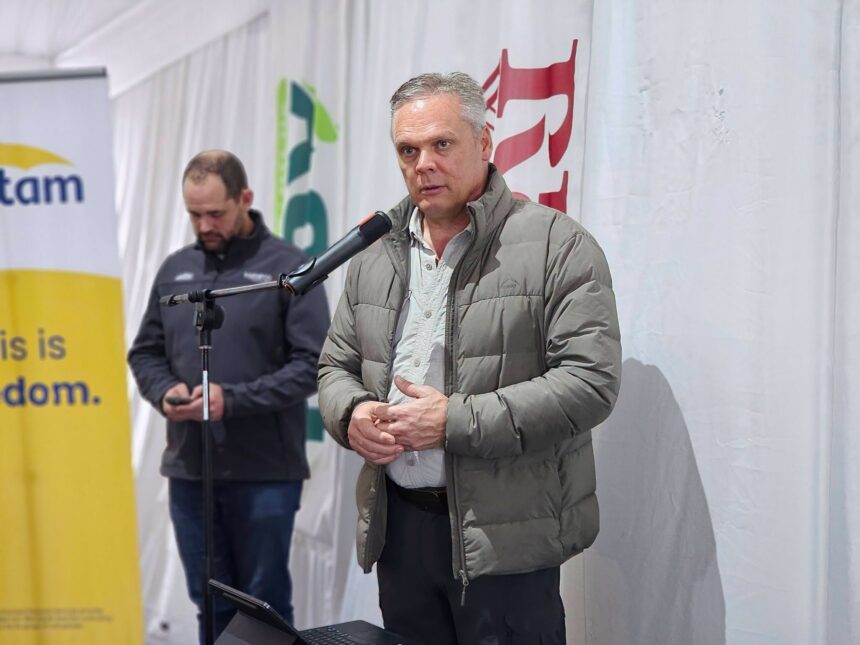
South African agriculture took centre stage at NAMPO Cape 2026 as government, farmers and industry leaders gathered to discuss the challenges and opportunities shaping the country’s agricultural future. Minister Willie Aucamp participated in the Grain SA and Agri Western Cape Wheat Industry Breakfast Session, which focused on issues affecting wheat production and the wider agricultural sector. The session provided an opportunity for key stakeholders to engage directly on the pressures facing farmers and the measures needed to strengthen agricultural production. Discussions centred on food security, farmer support, market access and the competitiveness of South African agriculture. The meeting also reinforced the importance of cooperation between government and the agricultural industry as the country works to build a stronger and more resilient food system.
Food security remained one of the key issues at the session, reflecting the important role agriculture plays in South Africa’s economy and the daily lives of millions of people. Wheat is particularly significant because it forms part of many staple foods consumed by households across the country. Maintaining reliable agricultural production therefore requires farmers to operate in an environment where they can access essential inputs, markets, infrastructure and appropriate support. Rising production pressures and changing market conditions can make it increasingly difficult for farmers to remain competitive while keeping food production sustainable. Engagements such as the Grain SA and Agri Western Cape session provide an important platform for identifying practical ways to address these challenges.
Farmer support was another important area of discussion as stakeholders considered what is needed to maintain productive and sustainable farming operations. Farmers face a range of pressures that can affect their ability to invest in their businesses and plan for future production. Access to markets, infrastructure, financing, agricultural services and reliable regulatory systems can all influence the performance of individual farming enterprises. Effective support also needs to take into account the different circumstances of commercial farmers, emerging farmers and smaller agricultural businesses. Stronger cooperation between government and industry can help ensure that support programmes respond to the practical realities farmers experience on the ground.
Market access and agricultural competitiveness are also critical to the long-term health of South African agriculture. Farmers need dependable markets where they can sell their produce at prices that allow them to cover production costs and continue investing in their operations. At the same time, South African producers operate within a broader global agricultural market where imports, international prices, exchange rate movements and production costs can influence competitiveness. Creating an environment that allows local farmers to compete effectively can support domestic production while contributing to food security and economic activity in rural communities. The discussions at NAMPO Cape highlighted why these issues require continued attention from both government and industry.
Animal health and biosecurity also featured among the broader concerns raised during the engagement, highlighting that agricultural resilience extends beyond crop production. Animal diseases can have serious consequences for farmers, agricultural businesses, food supply chains and rural economies. Effective biosecurity measures require cooperation between farmers, government departments, veterinarians, industry organisations and other stakeholders. Early reporting, effective disease management and strong preventative measures can help reduce the risks associated with outbreaks. Maintaining animal health is therefore an important part of protecting agricultural livelihoods and strengthening the overall resilience of South Africa’s food production system.
The participation of government and agricultural organisations in the wheat industry breakfast also demonstrated the value of direct engagement between policymakers and producers. Farmers bring practical experience of the conditions affecting production, while government has an important role in creating policies and systems that support a stable agricultural environment. Industry organisations can help connect these perspectives and ensure that challenges facing producers remain part of national agricultural discussions. Continued dialogue can also help stakeholders move beyond identifying problems towards developing practical solutions that can be implemented. This approach will become increasingly important as South African agriculture responds to economic pressures, climate risks, market changes and food security demands.
NAMPO Cape 2026 provided an important setting for these conversations because agricultural exhibitions and industry events bring together people from different parts of the value chain. Farmers, government representatives, agricultural organisations, suppliers and other stakeholders can use these platforms to exchange ideas and identify areas where cooperation can deliver better results. The wheat industry breakfast was therefore about more than a single commodity, as many of the issues discussed have implications for agriculture across South Africa. Strengthening production requires attention to the full agricultural value chain, from farmers and inputs to markets, infrastructure and consumers. The discussions reinforced the need for a coordinated approach to addressing these interconnected challenges.
The message emerging from the session was that South Africa’s agricultural future will depend heavily on collaboration and practical action. Government, farmers and industry stakeholders each have different responsibilities, but their efforts ultimately contribute to the same national goals of food security, sustainable production and economic resilience. Continued engagement can help identify barriers to growth while creating opportunities for farmers to improve productivity and remain competitive. Protecting agricultural livelihoods also requires long-term planning and consistent support rather than short-term responses to individual challenges. As South Africa looks ahead, stronger partnerships across the agricultural sector will remain essential to building a resilient food system that can support farmers, rural communities and consumers.
Join 'Farmers Mag' WhatsApp Channel
Get the latest Farming news and tips delivered straight to your WhatsApp
CLICK HERE TO JOIN