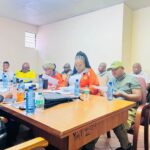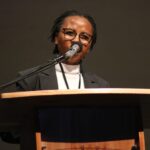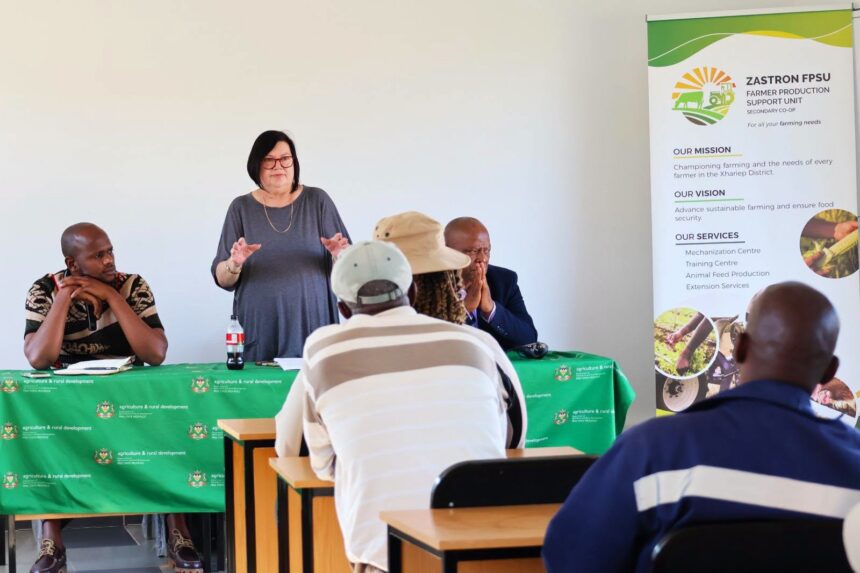
MEC Elzabe Rockman facilitated a meeting between Mohokare Municipality and the Mohokare Commonage Management Committee in Zastron to address challenges affecting commonage management, livestock control and the safety of communities. The engagement focused on finding practical solutions to the difficulties faced by farmers and the municipality in managing livestock and grazing areas. Commonage land plays an important role in supporting farmers who depend on available grazing resources for their livestock. However, challenges such as inadequate grazing land, damaged or stolen infrastructure and stray animals can create serious problems for farmers and surrounding communities. The meeting provided an opportunity for government, the municipality and commonage farmers to discuss these challenges and work towards arrangements that balance livestock management with the interests and safety of the wider community.
In her opening remarks, MEC Rockman indicated that the Department is in the process of finalising the Commonage Management and Support Framework. The framework is expected to provide stronger guidance on the management and support of commonage areas and the farmers who depend on them. Rockman also highlighted previous government investment in the Mohokare commonage, explaining that the Department invested R1.5 million in fencing and a borehole. However, the fencing was subsequently stolen, undermining efforts to secure the commonage and control livestock movement. The loss of infrastructure demonstrates the need for stronger cooperation between government, municipalities, farmers and communities to protect investments made to improve agricultural infrastructure.
Rockman encouraged farmers to consider practical alternatives where conventional fencing is not sustainable because of theft and other challenges. She suggested the use of natural borders such as hedges and rocks to help define grazing areas and limit livestock movement. While these measures may not replace proper fencing in every situation, they could provide additional ways of managing livestock and protecting commonage areas. Effective boundary management is important because uncontrolled livestock can move onto roads, private properties and other areas where they may create risks or cause damage. Farmers also have an important role to play in ensuring that their livestock remain under control and do not become a danger to other members of the community.
The issue of stray animals was a major concern during the meeting, particularly because of the risks they pose to motorists and other road users. The municipality is expected to provide an update on the status of its by-laws, while the South African Police Service is also experiencing difficulties in dealing with cases involving stray livestock. Rockman stressed that livestock roaming freely cannot be allowed to create situations that threaten human life. She pointed out that cattle can cause road accidents and that the shortage of grazing land also contributes to animals moving around in search of food. Addressing the problem therefore requires both improved livestock management and practical solutions to the shortage of suitable grazing resources.
The MEC also discussed the issue of impounding stray animals and indicated that she was continuing discussions with the municipality about suspending the impounding of animals for two weeks. The proposed arrangement would apply except on national roads, where immediate action may still be required because of the serious safety risks presented by livestock. The proposed suspension was intended to allow sufficient time for fair consultation on technical issues before the next engagement scheduled for 1 October 2026. This approach would give the affected parties an opportunity to consider the practical implications of livestock control measures and work towards an arrangement that is fair to farmers while protecting the public. The discussions also highlighted the importance of ensuring that animals held at the pound receive adequate feed and reliable access to water.
The conditions at the pound formed part of the broader discussion about responsible livestock management. If animals are impounded, proper care remains necessary while their ownership and other matters are being resolved. Reliable feed and water are essential to prevent additional hardship for livestock already removed from grazing areas. Ensuring that the pound has adequate resources can also support a more effective livestock management system and reduce disputes between farmers and authorities. The issue demonstrates that managing stray animals requires more than enforcement, as municipalities also need suitable facilities and resources to handle impounded livestock responsibly.
Chairperson of the Mohokare Commonage Management Committee, Thamsanqa Nyauka, said farmers were willing to take greater responsibility and ownership of their livestock. He explained that farmers were in the process of verifying livestock according to the correct and recognised brand marks. This process is intended to strengthen accountability by ensuring that livestock can be properly linked to their owners. Nyauka also stressed that animals should not be allowed to roam without supervision and that farmers need to take responsibility for keeping their livestock under control. Stronger livestock identification can help authorities and farmers determine ownership when animals are found roaming or become involved in incidents.
The verification of livestock also has the potential to improve accountability within the commonage farming community. Accurate identification can make it easier to establish ownership and encourage farmers to take greater responsibility for the animals under their care. It can also assist in addressing disputes that may arise when livestock are found outside designated grazing areas. For commonage management to work effectively, farmers need to understand their responsibilities alongside the rights and support available to them. The commitment expressed by the Commonage Management Committee indicates that farmers are prepared to participate in efforts to improve livestock control and strengthen the management of commonage areas.
Commonage farmers also requested lease agreements and grazing permits from the municipality to establish clearer systems for controlling access to commonage grazing areas. Such agreements could provide farmers with greater clarity about their rights, responsibilities and access to available grazing land. Grazing permits could also help the municipality monitor livestock numbers and determine how commonage resources are being used. Clear documentation can reduce uncertainty and create a more structured relationship between farmers and the municipality. These measures could also support better planning where grazing land is limited and help authorities identify pressures on commonage resources.
Executive Mayor of Mohokare Local Municipality, Councillor Teboho Mochechepa, agreed with the request to suspend the pound arrangements as discussed during the meeting. He also explained the interim arrangements that would apply while further consultations take place. The municipality’s position is important because it will need to work with farmers and other stakeholders to ensure that any temporary measures are properly understood and implemented. Continued engagement will also be necessary to address the status of municipal by-laws and the practical challenges surrounding livestock control. The planned engagement on 1 October 2026 provides another opportunity for the stakeholders to assess progress and consider longer-term solutions.
The challenges discussed in Zastron show why commonage management requires cooperation between government, municipalities, farmers and law enforcement agencies. Limited grazing land, stolen infrastructure, stray livestock and unclear management arrangements can place pressure on both farmers and communities. At the same time, farmers need access to grazing areas and clear agreements that allow them to manage their livestock responsibly. Government investment in infrastructure can only deliver lasting benefits if the infrastructure is protected and supported by effective management systems. The finalisation of the Commonage Management and Support Framework could provide an important foundation for addressing some of these challenges and improving support for commonage farmers.
The meeting facilitated by MEC Elzabe Rockman brought the different parties together to address problems that affect both agricultural livelihoods and public safety in Mohokare. The proposed temporary approach to impounding, the verification of livestock, calls for lease agreements and grazing permits and discussions around the condition of the pound all point to the need for practical and accountable livestock management. Farmers have indicated their willingness to take greater responsibility, while the municipality has committed to working on interim arrangements and further engagement. The continued cooperation of all stakeholders will be important in developing a commonage system that protects communities, supports farmers and makes responsible use of available grazing resources. As discussions continue towards the 1 October 2026 engagement, the focus will remain on finding workable solutions that improve livestock control while supporting the farmers who depend on Mohokare’s commonage areas.
Join 'Farmers Mag' WhatsApp Channel
Get the latest Farming news and tips delivered straight to your WhatsApp
CLICK HERE TO JOIN