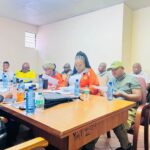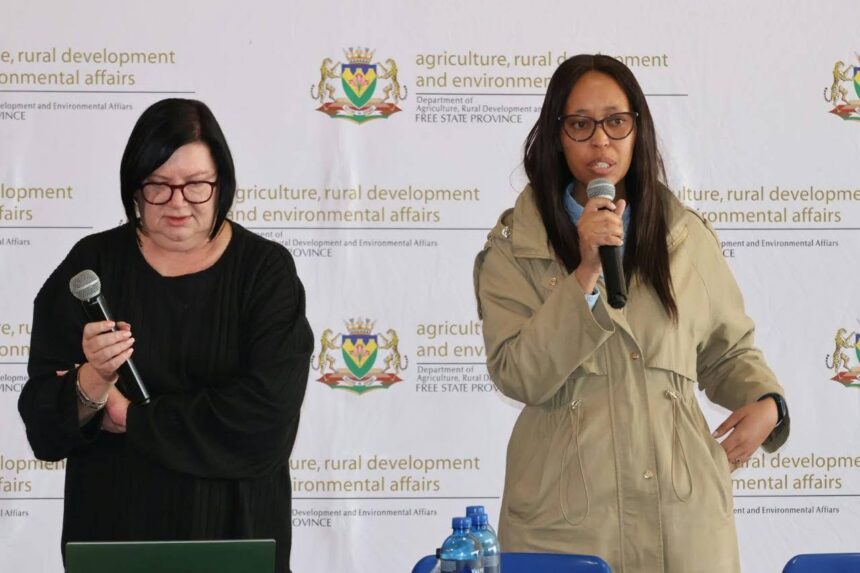
The Department of Agriculture, Rural Development and Environmental Affairs has held its first ever District Women in Agriculture Imbizo at Simon Sefuthi Hall in Botshabelo under Mangaung Metro Municipality. The gathering brought together women working across different areas of agriculture and rural development to discuss their experiences, challenges and opportunities. Women from crop and animal production, horticulture, wool production and Women in Agriculture and Rural Development participated in the engagement. The event created a platform for women farmers to raise concerns about issues affecting their agricultural businesses and livelihoods. Discussions focused on challenges including access to land, infrastructure and markets, while also highlighting the importance of support, skills development and cooperation among women in agriculture.
Executive Mayor Cllr Gregory Nthatisi welcomed the women to Botshabelo and reflected on the area’s historical significance. He said Botshabelo women have a rich history and that the community should be proud of its role in the country’s journey towards democracy. His remarks also encouraged women attending the event to enjoy the occasion and make the most of the opportunity to engage with one another. The Mayor also acknowledged MEC Rockman for maintaining what he described as her mandate to uplift black people and empower those who are willing to work the land. His message placed the women’s agricultural activities within the wider context of community development and economic participation.
The gathering gave women farmers an opportunity to speak directly about the realities they face in agriculture. Representatives from Women in Agriculture and Rural Development, Women in Crop and Animal Production, horticulture and wool production shared experiences from their respective sectors. Access to land emerged as one of the issues affecting women who want to establish or expand agricultural enterprises. Farmers also highlighted infrastructure challenges and difficulties accessing markets for their products. Addressing these issues is important because farmers require productive land, suitable infrastructure and reliable market opportunities to build sustainable agricultural businesses.
Access to markets remains an important consideration for women seeking to turn farming into viable enterprises. Producing crops, livestock products, wool or horticultural goods does not automatically guarantee a sustainable income if farmers struggle to reach buyers. Women therefore need information about market opportunities as well as support that can help them meet production and quality requirements. Better market connections can allow farmers to plan production around demand and develop stronger commercial relationships. The discussions at the Imbizo provided a space for these concerns to be raised while creating opportunities for stakeholders to better understand the challenges faced by women farmers.
Several women also shared positive experiences of departmental support and encouraged others to make use of available programmes. Dimakatso Modupe from Lesika Cooperative expressed gratitude to the department for the assistance received. Her experience highlighted the potential value of institutional support in helping agricultural cooperatives and individual farmers develop their operations. Support can take different forms, including access to programmes, information, infrastructure and opportunities for skills development. Sharing these experiences during a gathering of women farmers can help other participants understand the importance of engaging with agricultural development initiatives.
Me Dikonelo Motseki from Sidern Trading also used the event to explain the work of her business and encourage women to participate in programmes that can help them grow their enterprises. Her message focused on the importance of accessing guidance and support when developing a business. Agricultural entrepreneurs often need knowledge that extends beyond production, including business planning, financial management, marketing and understanding available development opportunities. Women who combine agricultural production with business skills can strengthen their ability to manage their enterprises over time. The call for women to join programmes that provide guidance therefore formed an important part of the broader discussion about building sustainable businesses.
Me Sophy from Modulaqhowa encouraged women to have a dream, desire, direction and determination. Her message highlighted the personal commitment required when building an agricultural enterprise in a challenging environment. Farming involves long-term planning and can require producers to continue working through difficulties related to production, markets, finance and resources. Having clear goals can help farmers remain focused on what they want to achieve while adapting their plans when circumstances change. Her contribution added a motivational element to the Imbizo while reinforcing the importance of purpose and persistence among women in agriculture.
The programme also included presentations from several stakeholders, including the Commission for Gender Equality, the Industrial Development Corporation and Mangaung Metro Municipality. Their participation broadened the discussion beyond farming and created an opportunity to connect women with organisations involved in gender equality, economic development and local government. Different institutions can play different roles in addressing barriers faced by women entrepreneurs and farmers. Engagements of this nature can help women understand where to seek information, support and possible opportunities for developing their enterprises. Bringing multiple stakeholders into one forum also allows agricultural concerns to be considered alongside broader social and economic challenges.
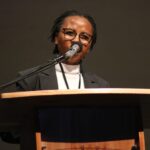
MEC Rockman addressed the women and reflected on issues that have repeatedly emerged during farmer engagements. She said many of the challenges raised by farmers are similar across different towns, showing that women in agriculture face common barriers despite operating in different communities. She also highlighted financial and social exclusion as continuing concerns. According to MEC Rockman, women and children are particularly affected by exclusion from capital and economic opportunities. Her remarks placed women’s participation in agriculture within the wider discussion about economic empowerment and access to resources.
MEC Rockman also highlighted the gender income gap and the broader economic role played by women. She stated that women still earn less than men for the same work and argued that empowering women remains critical in South Africa. She further pointed to the often underestimated role of women in supporting households and contributing to the wider economy. These remarks reinforced the need for programmes that help women gain access to productive resources, markets, finance and business development opportunities. For women farmers, economic empowerment is closely linked to the ability to establish viable enterprises and participate meaningfully in agricultural value chains.
The first District Women in Agriculture Imbizo therefore provided more than a platform for discussion. It created an opportunity for women from different agricultural sectors to connect, share experiences and raise challenges directly with government and other stakeholders. The discussions around land, infrastructure, markets, finance and business development highlighted areas that continue to require attention. At the same time, contributions from women who have benefited from support demonstrated the importance of creating opportunities for farmers to access programmes and development resources. The call for women to support and protect one another also provided an important message for strengthening cooperation and solidarity within the agricultural sector.
The gathering at Simon Sefuthi Hall in Botshabelo highlighted the contribution women make to agriculture, rural development and household livelihoods. It also showed the value of creating dedicated spaces where women farmers can discuss challenges and engage with institutions that can contribute to addressing them. Continued engagement can help ensure that concerns raised by farmers remain part of agricultural development discussions and that women have opportunities to access the resources and knowledge needed to grow their enterprises. The emphasis on land, infrastructure, markets, finance, skills and cooperation reflects the range of factors that influence agricultural success. As women continue to participate across crop production, livestock, horticulture and wool production, initiatives such as the District Women in Agriculture Imbizo can provide an important platform for strengthening their participation in the agricultural economy.
Join 'Farmers Mag' WhatsApp Channel
Get the latest Farming news and tips delivered straight to your WhatsApp
CLICK HERE TO JOIN