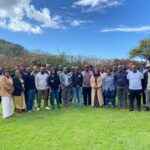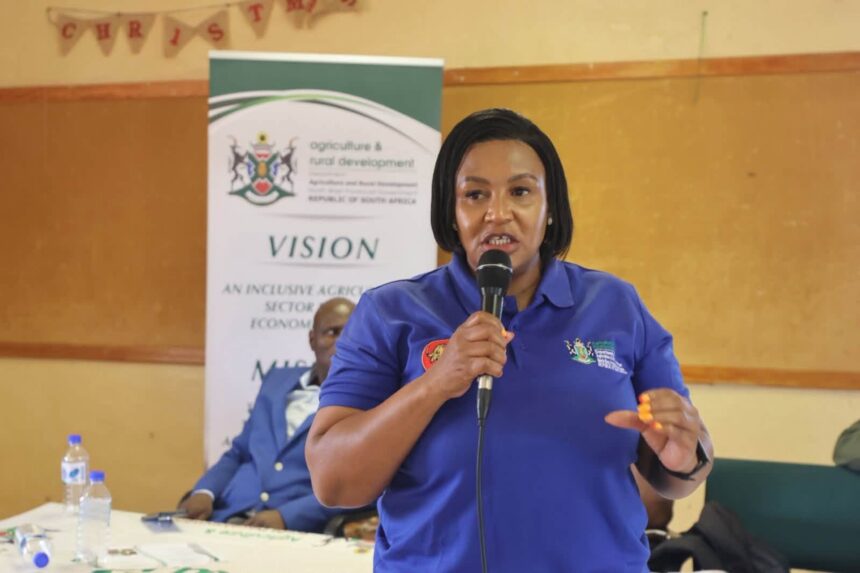
The Department’s Dr Ruth Segomotsi Mompati District Office, together with the Naledi Local Municipality, hosted a Farmers Day in Dithakwaneng Village to connect farmers with information and support available in the agricultural sector. The event focused on helping farmers understand the programmes, services and opportunities that can contribute to stronger agricultural production. It also created a platform where farmers could engage directly with government departments, agricultural institutions and other stakeholders. Through presentations and discussions, participants received information relevant to agricultural development, disaster management, land care and other areas that affect farming activities. The Farmers Day highlighted the importance of access to reliable information in helping farmers understand available resources and make informed decisions about their agricultural activities.
The programme brought together internal and external stakeholders to provide farmers with a broader understanding of the support available to them. Presentations included contributions from the National Department of Agriculture and the Agricultural Research Council, commonly known as the ARC. The involvement of these institutions provided an opportunity for farmers to learn more about agricultural programmes, research and services that can support production. The programme also included the Independent Electoral Commission, or IEC, which provided information relevant to its area of responsibility. By bringing different stakeholders together in one engagement, the Farmers Day gave farmers an opportunity to access information from several institutions without having to rely on a single source of support.
The Agricultural Research Council plays an important role in agricultural research and knowledge development in South Africa, making its participation relevant to farmers seeking information that can strengthen agricultural practices. Farmers need access to appropriate knowledge because agricultural production can be affected by factors such as environmental conditions, farming methods, available resources and changing circumstances. Engagements with agricultural research institutions can help create opportunities for farmers to learn about relevant research and information. The presence of the National Department of Agriculture also gave participants an opportunity to better understand government support within the agricultural sector. These engagements can help strengthen communication between farmers and institutions responsible for agricultural development and support.
The Farmers Day also addressed issues connected to disaster management and land care through presentations from the Department’s programmes. Disaster management is relevant to agricultural communities because farming activities can be affected by events and conditions that threaten production and livelihoods. Providing farmers with information about disaster management can help them understand the available support and the processes associated with agricultural challenges. Land Care is also important because productive agriculture depends on the responsible use and management of land and natural resources. Including these programmes in the Farmers Day helped broaden the discussion beyond production alone and highlighted the importance of protecting and managing the resources on which farming depends.
For farmers in Dithakwaneng Village and surrounding areas, the engagement provided an opportunity to ask questions, interact with stakeholders and gain a clearer understanding of available agricultural support. Direct engagement can be particularly useful when farmers need to clarify programme requirements, understand available services or identify the institutions responsible for particular areas of support. The Farmers Day also created space for farmers to share concerns and seek information directly from representatives involved in agriculture and related services. This type of interaction can improve communication between farming communities and the organisations that serve them. It can also help farmers become more aware of opportunities that may support the development and sustainability of their agricultural activities.
The involvement of the Naledi Local Municipality further strengthened the collaborative nature of the event. Agricultural development often involves several institutions because farmers may require different forms of information and support depending on their circumstances. A coordinated engagement allows stakeholders to present their respective roles while giving farmers a central opportunity to access information. Collaboration between government structures, agricultural organisations and local communities can also support better communication about programmes and services. The Farmers Day therefore served as an important engagement between farmers and stakeholders working within different areas connected to agriculture and community development.
Access to information remains an important part of supporting farmers and strengthening agricultural production. Farmers need to know where to obtain assistance, which programmes are available and which institutions can provide relevant information or services. Events such as the Farmers Day in Dithakwaneng Village provide a practical platform for sharing this information directly with the farming community. They also allow stakeholders to understand the questions and concerns that farmers may have regarding agricultural activities and available support. Continued engagement of this nature can help build stronger connections between farmers and the institutions responsible for supporting the agricultural sector.
The Farmers Day in Dithakwaneng Village demonstrated the value of bringing farmers and relevant stakeholders together in one forum. The programme provided information on agricultural support while also creating opportunities for engagement with the National Department of Agriculture, Agricultural Research Council, Independent Electoral Commission, Disaster Management and Land Care programmes. Farmers were able to access information, interact with stakeholders and learn more about services and opportunities available within the agricultural sector. The participation of different institutions also showed the range of areas that can influence agricultural production and rural farming communities. Through continued information sharing and meaningful engagement, initiatives such as this Farmers Day can contribute to better awareness of available support and stronger connections between farmers and the agricultural institutions serving their communities.
Join 'Farmers Mag' WhatsApp Channel
Get the latest Farming news and tips delivered straight to your WhatsApp
CLICK HERE TO JOIN