Aphid populations are building up in some wheat and barley fields in the Overberg and Swartland, prompting farmers to increase crop monitoring as the winter grain season progresses. Recent field surveys have identified colonies of Rose grain aphid and Oat aphid in some crops, highlighting the need for producers to pay close attention to aphid numbers and crop conditions. The presence of these pests can become a concern when populations increase to levels that may affect crop performance. However, the detection of aphids does not automatically mean that farmers should apply insecticides. Regular scouting and careful assessment of pest levels can help producers determine when intervention is justified while protecting beneficial organisms that naturally suppress aphid populations.
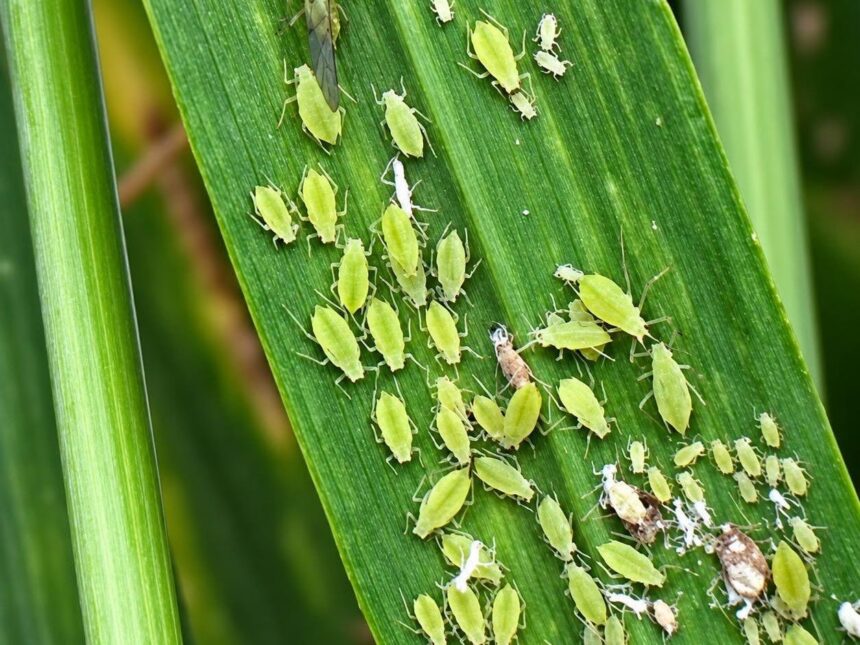
During surveys conducted in the last two weeks of August 2026, the Agricultural Research Council Small Grain Institute observed colonies of Rose grain aphid, Metopolophium dirhodum, and Oat aphid, Rhopalosiphum padi. The findings indicate that aphid populations are already establishing in some wheat and barley crops in the affected production areas. Aphids can reproduce rapidly under favourable conditions, which makes early detection and regular monitoring important for farmers. Population levels can also vary between fields, meaning producers should assess their own crops rather than assuming that all fields face the same level of risk. Field scouting provides farmers with the information needed to determine whether aphid numbers remain below intervention levels or require corrective action.
Producers are encouraged to scout their fields regularly, particularly as crops move through important growth stages. From the flag leaf stage to full awn appearance, corrective action should be considered when approximately 20 to 30% of tillers are infested and more than 10 aphids are present per tiller. These thresholds provide farmers with a practical basis for assessing whether aphid populations have reached a level where intervention may be justified. Farmers should therefore avoid making decisions based solely on the presence of individual aphids or small colonies. Consistent field observations can provide a clearer picture of population trends and help producers respond at the appropriate time.
The importance of monitoring becomes particularly clear because aphid numbers can change as crop and weather conditions change. A field with relatively low numbers during one inspection may require closer attention if populations increase during subsequent scouting. Producers can record aphid numbers across different areas of a field to establish whether infestations are isolated or becoming more widespread. Monitoring should also take into account the growth stage of the crop because the potential impact of aphids can vary as plants develop. A structured scouting approach allows farmers to base pest-management decisions on actual field conditions rather than applying treatments as a precaution.
Farmers should also consider the presence of natural enemies before deciding to spray. Parasitoid wasps, ladybird beetle larvae and entomopathogenic fungi can contribute significantly to keeping aphid populations under control. These natural enemies form an important part of the crop’s biological control system and can reduce aphid numbers without requiring insecticide applications. Protecting these beneficial organisms can therefore support a more balanced approach to pest management. Unnecessary insecticide applications may disrupt these natural control mechanisms and could result in farmers using chemical treatments when they are not needed.
The presence of ladybird beetle larvae, parasitoids or signs of fungal infection among aphids can provide an important indication that natural control is taking place. Farmers should therefore look beyond the number of aphids and assess what is happening within the wider insect population in their fields. Beneficial insects can play an important role in suppressing pest populations and may prevent an infestation from reaching economically damaging levels. This is one reason why regular scouting is more useful than relying on a simple decision to spray whenever aphids are detected. Understanding the balance between pests and natural enemies can help producers make more targeted and responsible crop protection decisions.
The recommended approach also supports the principles of integrated pest management, where farmers combine monitoring, thresholds, biological control and targeted chemical intervention when necessary. Integrated pest management can help producers protect crop yields while reducing unnecessary pesticide use. It requires farmers to understand the pest, monitor population levels and consider the wider conditions within the crop before taking corrective action. For wheat and barley producers in the Overberg and Swartland, this means paying close attention to aphid numbers during the relevant crop growth stages. Decisions should be based on field evidence and established thresholds rather than the simple observation that aphids are present.
Avoiding unnecessary insecticide applications can also have practical benefits for farming operations. Chemical treatments involve input costs, application requirements and the need to manage products responsibly. Applying insecticides when pest populations are below economically important levels may provide limited benefit while increasing production costs and potentially affecting beneficial organisms. Targeted intervention, when thresholds are reached, allows farmers to focus resources where they are most likely to provide a meaningful crop protection benefit. This approach can contribute to more efficient pest management and support the longer-term health of the cropping system.
Producers should remain particularly attentive to wheat and barley fields where aphid colonies have already been observed. Regular scouting can help farmers detect changes before populations become difficult to manage. Monitoring should continue through the relevant crop growth stages, with producers recording both aphid numbers and the presence of natural enemies. Where population levels approach or exceed the recommended thresholds, farmers can then consider appropriate corrective measures based on their production conditions and available guidance. Early and informed decisions can help prevent avoidable crop losses while reducing the risk of unnecessary treatments.
The current aphid activity in parts of the Overberg and Swartland is a reminder that effective grain production depends on consistent crop monitoring throughout the season. Rose grain aphid and Oat aphid populations should be watched closely, but their presence alone should not trigger automatic insecticide applications. Farmers can use regular scouting, infestation thresholds and observations of natural enemies to determine whether intervention is necessary. Protecting beneficial organisms while responding to economically significant pest populations can help producers manage crops more sustainably. By making informed pest-management decisions based on actual field conditions, wheat and barley producers can protect their crops while avoiding unnecessary insecticide use.
Join 'Farmers Mag' WhatsApp Channel
Get the latest Farming news and tips delivered straight to your WhatsApp
CLICK HERE TO JOIN