

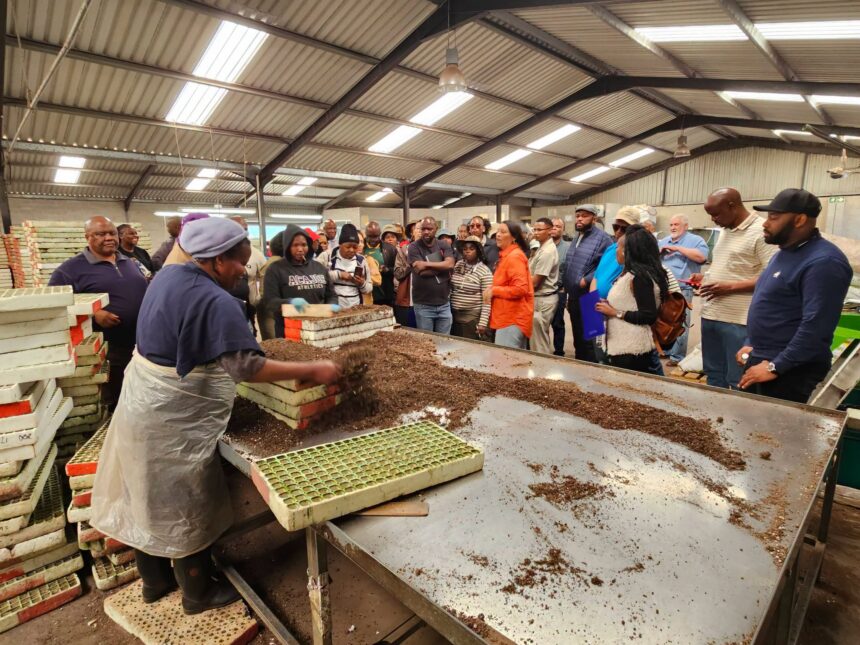
Participants in the 2027/28 Extension and Advisory Services Strategic Planning Session took their discussions beyond the meeting room yesterday by visiting agricultural projects in the Western Cape. The field visits gave participants an opportunity to connect strategic planning with the realities faced by agricultural enterprises on the ground. Rather than focusing only on plans, policies and targets, the session highlighted how effective extension and advisory services can influence the performance of farming and horticultural businesses. The visits also demonstrated the importance of practical support that responds to the needs of agricultural enterprises at different stages of development. By seeing successful projects firsthand, participants gained valuable insight into how government programmes can contribute to sustainable agricultural growth, job creation and economic opportunities.
One of the projects visited was Tri Toad (Pty) Ltd, a 100% black-owned nursery operating in the Cape Metropole and owned by Ms Sheena Paulus. The nursery has established itself within the horticultural sector and produces vegetable and herb seedlings, alongside other horticultural products. Its operations demonstrate the role that nurseries play in supporting agricultural production by providing growers with healthy and suitable planting material. Access to quality seedlings can influence crop establishment, productivity and the overall success of vegetable and herb production. The visit therefore provided participants with a practical example of how a focused agricultural enterprise can contribute to broader food production and value chain development.
Tri Toad (Pty) Ltd has received support through the Comprehensive Agricultural Support Programme, commonly known as CASP, which is designed to provide targeted assistance to agricultural beneficiaries. The support has contributed to the nursery’s ability to operate and develop within a competitive horticultural environment. For enterprises such as nurseries, appropriate support can help address operational needs while creating a stronger foundation for expansion and improved production. The experience of Tri Toad also highlights the importance of combining financial and programme support with technical guidance and effective extension services. When these forms of assistance work together, agricultural businesses have a greater opportunity to translate available resources into productive and sustainable operations.
The field visit also reinforced the importance of innovation in modern agriculture. Horticultural enterprises must respond to changing market requirements, production challenges and the need for reliable planting material. Extension and advisory services can help businesses access relevant information, improve production practices and identify opportunities for growth. The experience at Tri Toad showed participants how support can have a practical impact when it reaches an enterprise and responds to its specific circumstances. It also illustrated why strategic planning should remain connected to the experiences of farmers, producers and agricultural businesses rather than being limited to discussions at an institutional level.
The visit formed part of a broader effort to ensure that the 2027/28 Extension and Advisory Services Strategic Planning Session remains grounded in practical agricultural realities. Strategic planning provides an opportunity to identify priorities, strengthen service delivery and consider how extension services can better support agricultural enterprises. However, visits to operational projects provide valuable context by showing what happens after policies and programmes reach beneficiaries. They allow stakeholders to observe progress, identify challenges and consider where further support may be required. This approach can help improve the alignment between government agricultural programmes and the needs of producers working across different parts of the agricultural value chain.
Tri Toad’s development also carries significance beyond its own business operations because successful agricultural enterprises can create opportunities throughout the wider sector. A nursery that produces vegetable and herb seedlings supports growers who depend on reliable planting material for their own production activities. This creates connections between the nursery, farmers, markets and other agricultural service providers. Strong horticultural enterprises can therefore contribute to local economic activity while supporting food production and agricultural livelihoods. The example demonstrates how targeted support can produce benefits that extend beyond the immediate recipient when an enterprise is able to grow and participate effectively in its sector.
For the participants in the strategic planning session, the project visit provided an opportunity to reflect on what effective extension and advisory services should achieve. Agricultural support should not end when resources are provided to a beneficiary, because enterprises also need knowledge, guidance, monitoring and access to relevant opportunities. Extension practitioners can play an important role in helping producers apply new information, improve their operations and respond to emerging challenges. Strong relationships between agricultural enterprises and extension services can also help government understand changing needs within the sector. The lessons gathered from projects such as Tri Toad can therefore inform future planning and contribute to more responsive agricultural support programmes.
The Western Cape field visits ultimately demonstrated the connection between strategic planning and practical agricultural development. Tri Toad (Pty) Ltd provided a clear example of how black-owned agricultural enterprises can build productive businesses when they have access to appropriate support, innovation and effective advisory services. Its work in producing vegetable and herb seedlings shows how a focused horticultural enterprise can contribute to the wider agricultural value chain while creating opportunities for growth. For the 2027/28 planning process, such examples can help turn strategic priorities into actions that deliver measurable results for agricultural businesses and communities. From plans to practice, from seedlings to opportunity and from support to growth, the visit highlighted the importance of ensuring that agricultural strategies translate into meaningful outcomes on the ground.
Join 'Farmers Mag' WhatsApp Channel
Get the latest Farming news and tips delivered straight to your WhatsApp
CLICK HERE TO JOIN




