

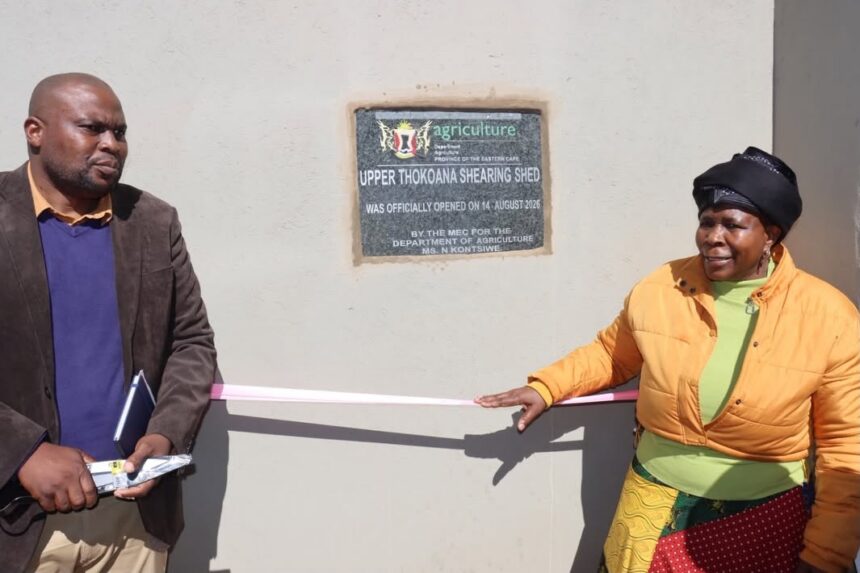
The Eastern Cape has taken another step towards strengthening livestock farming after MEC for Agriculture Ms Nonceba Kontsiwe officially opened the Upper Tokoana Shearing Shed in Elundini Local Municipality. The new facility is expected to improve shearing conditions for local farmers while helping them produce cleaner and higher-quality wool. The intervention comes as farmers prepare for the shearing season, making the timing of the facility particularly important for the local livestock sector. Better shearing infrastructure can help reduce contamination, improve the value of wool and create stronger opportunities for farmers to participate in formal markets. The project also reflects ongoing efforts by the provincial Department of Agriculture to provide practical infrastructure that can support farmers and contribute to sustainable rural livelihoods.
The opening of the Upper Tokoana Shearing Shed brings an important improvement to the infrastructure available to wool producers in the area. Wool quality can be affected by contamination during handling and shearing, which can reduce its market value and create challenges throughout the wool supply chain. A properly equipped shearing facility provides farmers with a more controlled environment where wool can be handled according to better production and quality standards. This can help farmers protect the value of their livestock products and strengthen their position when selling wool to buyers. For communities that rely on livestock farming as an important source of income, investments in facilities such as this can have a direct impact on household livelihoods.
Mr Phumlani Sawula from OVK welcomed the Department’s intervention and expressed his appreciation for the improvements being made to shearing infrastructure. He highlighted wool contamination as one of the challenges that farmers and the broader wool industry have faced, making improved facilities an important part of addressing the problem. Contamination can affect the quality of wool and influence how the product is assessed in the market. By providing a dedicated shearing environment, the new facility can support cleaner production practices and encourage farmers to maintain higher standards during the shearing process. The intervention therefore has significance beyond the physical structure because it can contribute to improving the quality and marketability of wool produced by farmers in the area.
Ms Masibidi Sekhamane of the Upper Tokoana Shearing Shed also welcomed the new facility and expressed excitement about what it could mean for local wool producers. She said the improved infrastructure would help farmers produce better-quality wool and ultimately increase their income. For farmers, improved wool quality can create opportunities to achieve better returns while strengthening the economic sustainability of their livestock operations. Higher-quality production can also help build confidence among buyers and strengthen the reputation of wool produced in the area. The expectations expressed by Sekhamane highlight the importance of ensuring that agricultural infrastructure delivers practical benefits that farmers can see through improved production and increased economic opportunities.
MEC Kontsiwe said she was pleased to officially hand over the facility during Women’s Month, particularly with the shearing season approaching. The timing places a strong focus on the role of women in agriculture and recognises their contribution to livestock production and rural economic activity. Women’s Month also provides an opportunity to highlight the importance of supporting women who participate in agricultural enterprises and community-based farming initiatives. Providing access to suitable infrastructure can help farmers operate more efficiently and create conditions for agricultural businesses to grow. The handover of the Upper Tokoana Shearing Shed therefore carries both practical and social significance as the province continues efforts to empower farmers and strengthen rural economies.
The improved facility is expected to play an important role in preparing local farmers for the demands of the wool production season. Proper shearing practices are essential because the process affects how wool is handled, stored and prepared for the market. Farmers who have access to suitable infrastructure can work in an environment designed to reduce contamination and support better handling of the final product. This can contribute to more consistent wool quality and improve the prospects of farmers seeking stronger market opportunities. Over time, improved production practices can help strengthen the local wool value chain and contribute to more sustainable livestock enterprises.
The Upper Tokoana Shearing Shed also demonstrates why agricultural infrastructure remains an important part of rural development. Livestock farmers need more than access to animals and grazing land to build sustainable businesses, they also require facilities that allow them to process and prepare agricultural products effectively. Investments in shearing infrastructure can support productivity while addressing specific challenges that affect the quality and value of wool. When combined with farmer training, market access and ongoing agricultural support, such facilities can contribute to stronger and more resilient livestock businesses. The benefits can extend beyond individual farmers by supporting local economic activity and creating opportunities within the wider agricultural value chain.
The new facility is particularly relevant as the wool sector continues to provide an important source of income for livestock farmers in rural communities. Improving wool quality can help farmers compete more effectively in markets where buyers consider factors such as cleanliness, consistency and overall fibre quality. Reducing contamination at the shearing stage can therefore help protect the value of the product before it enters the broader wool supply chain. Farmers can also benefit from better working conditions and more organised shearing operations. These improvements can contribute to a more productive livestock sector while supporting households that depend on farming for their livelihoods.
The opening of the Upper Tokoana Shearing Shed represents a practical investment in the future of livestock farming in Elundini Local Municipality. The facility is expected to help local farmers reduce wool contamination, improve product quality and strengthen their ability to access markets. The positive response from OVK and representatives of the shearing shed shows the value that stakeholders place on improved agricultural infrastructure. As the shearing season approaches, farmers now have an upgraded facility that can support better handling and production practices. With continued support from government and industry partners, the Upper Tokoana Shearing Shed can become an important asset in improving wool production, increasing farmer incomes and building sustainable livelihoods across the local livestock sector.
Join 'Farmers Mag' WhatsApp Channel
Get the latest Farming news and tips delivered straight to your WhatsApp
CLICK HERE TO JOIN




