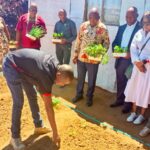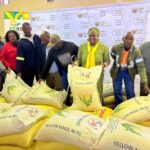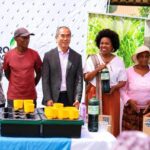
A Provincial and National Treasury delegation has conducted oversight visits to agricultural projects supported by the Department of Agriculture, Rural Development, Environment, Land and Agriculture (DARDLEA) in the Nkangala and Gert Sibande districts. The visits form part of ongoing government efforts to monitor projects receiving public funding and assess whether the support provided is delivering meaningful and sustainable results. The delegation focused on project progress, operational challenges, support requirements and the broader impact of agricultural initiatives on beneficiaries and surrounding communities. These oversight activities are important because government-funded projects need to demonstrate more than initial establishment, they must continue operating effectively and create lasting economic opportunities. By engaging directly with beneficiaries and examining operations on the ground, government can identify challenges early and determine where additional support may be required.
In Nkangala, the delegation visited Eggsellent by Lebo Layer Project in Kwaggafontein, one of the agricultural enterprises supported through government intervention. The project houses approximately 30 000 chickens and produces thousands of eggs every day, demonstrating the potential of commercial poultry production to contribute to local food production and economic activity. The scale of the operation also highlights the importance of maintaining strong production standards, particularly in poultry farming where disease outbreaks can have serious financial consequences. Due to strict biosecurity protocols at the facility, members of the delegation were unable to enter the production area during the oversight visit. The project is scheduled to be officially handed over to the beneficiary on Tuesday, 18 August 2026, marking an important step in the development of the enterprise and its transition into the hands of the beneficiary.
The visit to Eggsellent by Lebo Layer Project also provided an opportunity to assess how government investment can translate into productive agricultural assets and income-generating opportunities. A poultry operation of this size requires careful management of animal health, feed, egg production, labour, infrastructure and market access. Maintaining production levels will depend on the beneficiary’s ability to manage these areas effectively after the official handover. Continued monitoring can help determine whether the project remains financially viable and whether the support provided has created the conditions needed for long-term sustainability. The project also has the potential to contribute to the local economy through employment, procurement of goods and services and increased availability of locally produced eggs.
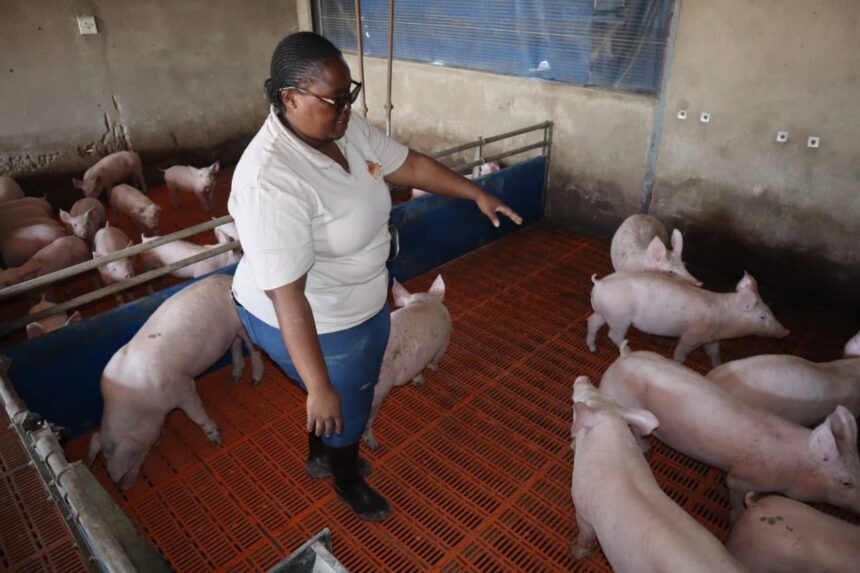
The delegation also visited Okuhle Piggery in Delmas, where the focus was on understanding the operational challenges facing the project and identifying the support required to strengthen its performance. Pig farming can create opportunities across the agricultural value chain, but producers must manage significant costs associated with feed, animal health, infrastructure and general farm operations. Understanding these challenges is essential for determining whether additional government intervention can help the project improve productivity and become more commercially sustainable. The visit also considered the contribution that Okuhle Piggery can make to local economic development through agricultural production and potential employment opportunities. Direct engagement with beneficiaries gives government officials a clearer understanding of the realities faced by agricultural enterprises beyond what can be captured in administrative reports.
In the Gert Sibande District, the delegation visited Optimist Agri Farming in Ermelo, a Masibuyele Esibayeni-supported piggery project operated by two beneficiaries. The beneficiaries have established a sustainable operation consisting of five sows and one boar, providing a foundation for expanding pig production over time. However, high input costs remain an important challenge for the enterprise, particularly the cost of feed, which can place pressure on the profitability of livestock farming. Plans are therefore underway to explore yellow maize cultivation as a way of producing feed for the project internally and reducing reliance on purchased inputs. If successfully implemented, this approach could lower production costs, strengthen the project’s resilience and demonstrate how integrated farming can improve sustainability.
The proposed yellow maize cultivation at Optimist Agri Farming reflects the importance of finding practical solutions to input costs within agricultural projects. Feed represents a major operating expense in livestock production, meaning that access to affordable feed can directly affect the ability of a farm to remain profitable. Producing part of its own feed could give the project greater control over an important production input while creating an additional agricultural activity for the beneficiaries. The approach could also provide an opportunity to develop a more integrated farming system where crop production supports livestock production. Government oversight can play an important role in assessing whether this type of intervention is feasible and identifying the technical or resource support that beneficiaries may need.
The delegation’s Gert Sibande programme also included a visit to Siqondekhaya Poultry, an agricultural project that has demonstrated significant growth in its production capacity. The poultry enterprise has increased its output from 200 chicks per cycle to 1 000 chicks per cycle, reflecting growing production capacity and demand for its products. As the project expands, infrastructure improvements are already underway to accommodate the increased scale of operations. The project is also introducing layer production as part of a strategy to diversify income and create additional revenue opportunities. This expansion shows how agricultural beneficiaries can respond to market demand while building more resilient enterprises through diversification.
The growth of Siqondekhaya Poultry also illustrates why government support needs to evolve as agricultural projects develop. A project that starts with a small production capacity can face different challenges once demand increases and operations expand. Infrastructure, production systems, animal health, feed supply, market access and financial management can all become more important as the enterprise grows. Introducing layer production could help the project establish an additional income stream while making better use of its infrastructure and market opportunities. Continued oversight can help ensure that expansion remains properly planned and that increased production does not create new operational pressures that could undermine the project’s sustainability.
The oversight visits across Nkangala and Gert Sibande underline the importance of accountability in government-supported agricultural development. Public funding creates an obligation to ensure that agricultural projects are properly implemented, effectively managed and capable of producing lasting benefits for beneficiaries and their communities. Monitoring also allows government departments and Treasury officials to understand which interventions are working, where challenges remain and what forms of support may improve outcomes. Projects such as Eggsellent by Lebo Layer Project, Okuhle Piggery, Optimist Agri Farming and Siqondekhaya Poultry operate at different stages and scales, but they share the need for appropriate support, sound management and access to sustainable markets. Their progress provides valuable insight into the opportunities and challenges involved in turning agricultural assistance into functioning enterprises.
The visits further demonstrate that successful agricultural development requires more than providing infrastructure or production assets. Beneficiaries need practical support that enables them to manage operating costs, maintain production, access markets and respond to changing demand. Initiatives such as producing yellow maize for livestock feed and expanding poultry production show how beneficiaries can identify practical ways to strengthen their businesses when they receive appropriate support. At the same time, projects must maintain strong financial and operational systems to ensure that growth translates into sustainable income. Government oversight therefore remains an important mechanism for connecting public investment with measurable economic and social outcomes.
The Provincial and National Treasury delegation’s assessment of DARDLEA-supported projects in Nkangala and Gert Sibande provides an important picture of agricultural development on the ground. From a 30 000-bird layer operation in Kwaggafontein to growing poultry and piggery enterprises in Delmas and Ermelo, the projects demonstrate the potential of government-supported agriculture to create productive businesses and strengthen local economies. Their continued success will depend on effective management, reliable infrastructure, sustainable input costs and access to markets. The planned handover of Eggsellent by Lebo Layer Project on 18 August 2026 and the expansion initiatives at Optimist Agri Farming and Siqondekhaya Poultry mark important milestones in the development of these enterprises. Continued monitoring and targeted support will remain essential to ensuring that government-funded agricultural projects become sustainable businesses that improve livelihoods and deliver lasting benefits to the communities they serve.
Join 'Farmers Mag' WhatsApp Channel
Get the latest Farming news and tips delivered straight to your WhatsApp
CLICK HERE TO JOIN