

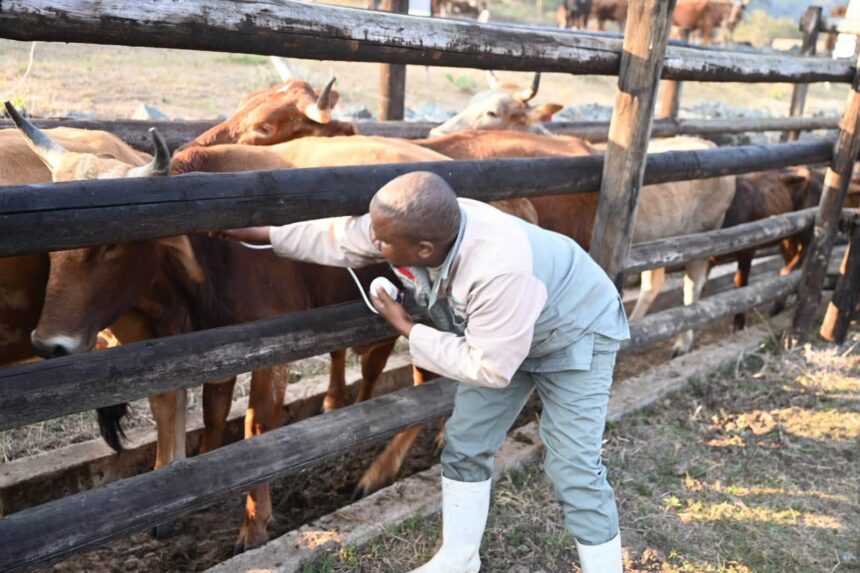
South Africa’s ongoing struggle with Foot-and-Mouth Disease (FMD) has intensified calls for greater investment in veterinary education, as the country faces a shortage of professionals needed to detect, contain and respond to livestock disease outbreaks. More than 2,000 FMD cases have been recorded nationally, placing additional pressure on farmers, veterinary services and the wider livestock industry. The recurring outbreaks have exposed gaps in the country’s ability to provide sufficient veterinary support, particularly in rural and farming communities where access to specialists can be limited. For farmers, delays in disease detection and response can result in livestock losses, movement restrictions, reduced production and serious financial consequences. The crisis has therefore strengthened the argument that expanding veterinary training capacity should form part of South Africa’s long-term strategy for protecting animal health, food security and agricultural livelihoods.
Foot-and-Mouth Disease is a highly contagious viral disease that affects cloven-hoofed animals, including cattle, pigs, sheep and goats. Infected animals can develop high fevers and painful blisters in the mouth, on the tongue and around the hooves, with symptoms often causing severe lameness and reduced productivity. Dairy farmers can experience significant reductions in milk production while livestock producers can face additional costs associated with disease control and movement restrictions. Because FMD can spread rapidly between susceptible animals, early detection and effective containment are critical to limiting the impact of an outbreak. The disease can also affect trade in livestock and animal products, making strong surveillance and veterinary response systems essential for protecting the wider agricultural economy.
For the University of South Africa’s College of Agriculture and Environmental Sciences (CAES), the repeated FMD outbreaks demonstrate the urgent need to strengthen the country’s veterinary education and training capacity. Prof Ashley Gunter, Deputy Executive Dean in CAES, has argued that the scale and persistence of the outbreaks reveal weaknesses in the number of veterinarians available to serve the country. He said South Africa has too few veterinarians on the ground to provide the surveillance, early detection and rapid response required during a disease crisis of this scale. Veterinary professionals play a central role in identifying suspected infections, advising farmers, supporting disease control measures and coordinating responses with relevant authorities. Increasing the number of qualified veterinarians could therefore strengthen the country’s ability to respond to FMD while improving preparedness for other animal diseases.
South Africa currently has only one university offering veterinary training and produces about 160 new veterinary graduates each year. According to Gunter, this output is not sufficient to meet the country’s veterinary needs, particularly in rural areas where farmers can struggle to access professional animal health services. The geographic distribution of veterinarians also matters because having qualified professionals concentrated in major urban centres does not necessarily provide adequate coverage for remote farming communities. Farmers in rural areas may need to travel long distances or wait for veterinary assistance, creating potential delays when animals show signs of disease. Expanding training opportunities and improving the distribution of veterinary professionals could help close these gaps and strengthen animal health services across the country.
The shortage of veterinarians has implications that extend beyond individual farms. Effective disease surveillance depends on professionals who can identify unusual symptoms, investigate suspected cases and support farmers with appropriate control measures. When veterinary capacity is limited, fewer professionals must cover larger areas and greater numbers of livestock operations. This can make it harder to maintain consistent monitoring and respond quickly when infectious diseases emerge. Stronger veterinary capacity could improve early detection and help authorities contain outbreaks before they spread more widely, reducing the economic and social consequences for farming communities.
Unisa believes its proposed College of Veterinary Science could contribute to addressing these challenges through a distributed training model. Rather than concentrating veterinary education and services in a limited number of locations, the university envisages training professionals who can serve communities across the country. Gunter said the model would allow students to be recruited and trained in ways that connect them with the communities where animal health challenges occur. Students could be placed across all nine provinces, creating stronger links between veterinary training, rural communities and livestock producers. This approach could help build a broader veterinary network while giving future professionals practical exposure to the conditions and challenges faced by farmers in different parts of South Africa.
The proposed veterinary college would also aim to contribute to areas beyond simply increasing the number of qualified veterinarians. Unisa envisages integrating veterinary education with research, innovation and community engagement as part of a broader approach to strengthening the country’s animal health system. Research can help improve understanding of livestock diseases and contribute to better prevention and control strategies. Innovation can support the development and adoption of technologies that improve disease surveillance, veterinary communication and animal health management. Community engagement can also help ensure that farmers receive relevant information and understand the importance of reporting suspected diseases and following disease control measures.
Prof Fasina and Dr Mbizeni have also highlighted the importance of strengthening veterinary capacity because of its connection to the wider economy. Healthy livestock are essential to maintaining productive farming systems and reliable agricultural supply chains. When animals become affected by serious diseases, farmers can face production losses while processors, traders and other businesses can experience disruptions. FMD outbreaks can also affect the movement and trade of livestock and animal products, creating economic pressure that extends beyond individual farms. A larger and better-distributed veterinary workforce could help protect animal health while supporting more resilient agricultural communities and food production systems.
The impact of FMD on South Africa’s livestock sector demonstrates why disease prevention and preparedness require sustained investment. Responding to an outbreak after it has already spread can require significant financial and human resources, while farmers may experience losses that cannot easily be recovered. Strong surveillance systems, accessible veterinary services and effective communication with producers can help identify threats earlier. Veterinary professionals can also assist farmers with biosecurity practices and other measures designed to reduce the risk of disease introduction and transmission. Building these capabilities before the next major outbreak can provide a stronger foundation for protecting livestock and maintaining confidence in the agricultural sector.
Unisa’s proposed College of Veterinary Science represents a long-term response to these capacity challenges, with the university aiming to produce approximately 200 veterinarians each year by 2040. If achieved, this would increase the annual number of new veterinary professionals entering the South African workforce and could help improve access to services over time. However, expanding training capacity would need to work alongside broader efforts to ensure that veterinarians can serve areas where demand is greatest. Rural service opportunities, appropriate infrastructure and effective links between veterinary professionals and government animal health programmes would remain important. The proposed expansion therefore forms part of a wider conversation about how South Africa can build a veterinary workforce that is both larger and better positioned to serve the country’s agricultural needs.
The FMD crisis has made the consequences of limited veterinary capacity increasingly difficult to ignore. More than 2,000 recorded cases have placed pressure on farmers and animal health authorities while highlighting the importance of early detection, surveillance and rapid response. South Africa’s livestock sector needs sufficient veterinary professionals to protect animal health, support producers and reduce the risks associated with future disease outbreaks. Unisa’s proposed veterinary college offers one potential long-term contribution through expanded training, distributed education, research and community engagement. Building veterinary capacity before the next outbreak occurs, rather than waiting until disease has already spread, will be critical to protecting farmers’ livelihoods, strengthening livestock production and safeguarding South Africa’s food security.
Join 'Farmers Mag' WhatsApp Channel
Get the latest Farming news and tips delivered straight to your WhatsApp
CLICK HERE TO JOIN




