

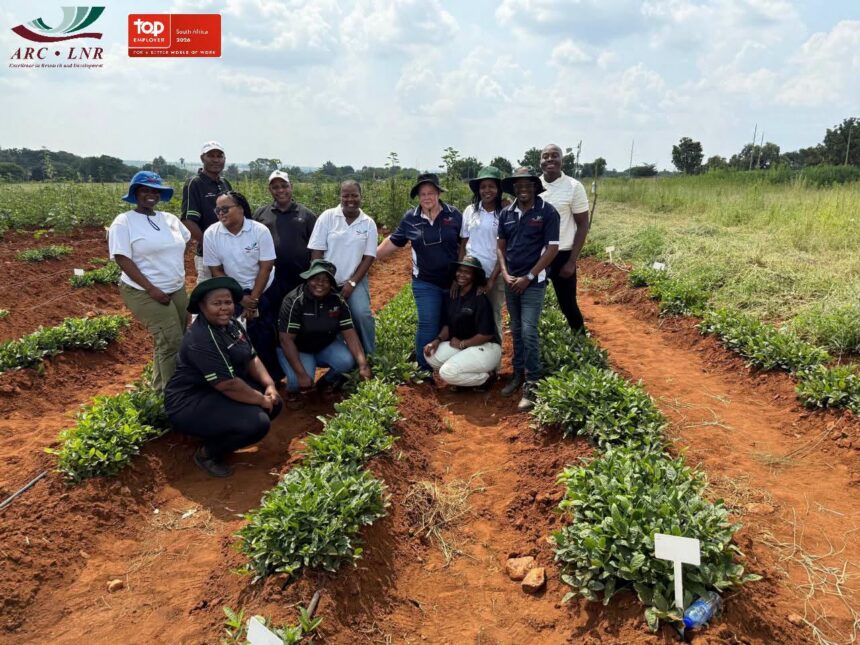
South Africa is exploring the potential of underutilised crops as part of efforts to strengthen food security, improve nutrition and help farmers respond to changing climatic conditions. Although crops such as Bambara groundnut, cowpea, pigeon pea, amaranth, cleome, corchorus, nightshade and okra have valuable agricultural and nutritional qualities, they are not widely grown or used across the country. One of the main reasons is limited knowledge about how to cultivate, prepare and use these crops effectively. The Agricultural Research Council’s Vegetable and Ornamental Plant Institute, through its Leguminous, Leafy and Fruit Vegetables division, is working to address this gap through research and crop development. By improving knowledge and developing varieties suited to local conditions, researchers hope to make these crops more useful to farmers and consumers.
Underutilised crops can provide an important source of diversity within South Africa’s food system. Many of these crops have been grown traditionally in different communities but have received less commercial attention than major food crops. Their limited use means that valuable genetic resources and traditional agricultural knowledge may not be fully utilised in efforts to address food and nutrition challenges. Expanding the production and consumption of these crops could give farmers additional options while giving consumers access to a wider range of nutritious foods. Greater use could also support agricultural diversity, particularly in areas where farmers need crops that can cope with difficult growing conditions.
The ARC-VIMP’s Leguminous, Leafy and Fruit Vegetables division is conducting research into a range of crops with potential to contribute to these goals. Bambara groundnut, cowpea and pigeon pea are among the legumes being studied, while amaranth, cleome, corchorus and nightshade represent leafy vegetables with nutritional and agricultural potential. Okra is also included in the research because of its value as a vegetable crop and its potential to perform under challenging conditions. Studying such a diverse group of crops allows researchers to examine different characteristics and identify varieties that may be useful to farmers. The work can also help build a stronger scientific understanding of crops that have historically received less research and commercial investment.
Improving crop production is one of the main areas of focus for the research programme. Farmers need reliable information about cultivation practices, including suitable growing conditions, planting methods and management techniques. Improving production can help make underutilised crops more attractive to farmers who need crops that can provide dependable yields and economic opportunities. Research can also help identify production challenges and develop practices that improve crop performance under South African conditions. Better production knowledge can therefore play an important role in moving these crops from limited household use towards wider agricultural production.
Drought tolerance is another important focus because water availability remains a major concern for agriculture. Farmers in areas affected by irregular rainfall and prolonged dry conditions need crops that can maintain reasonable performance when water resources are limited. Researchers are therefore examining the ability of different varieties to tolerate drought and identifying characteristics that could help crops survive under water-stressed conditions. Developing and promoting drought-tolerant varieties could give farmers additional options when planning their production systems. It could also contribute to climate resilience by reducing dependence on crops that require more favourable water conditions.
Improving the nutritional value of underutilised crops could provide another important benefit. Many traditional vegetables and legumes contain valuable nutrients that can contribute to healthier diets when included as part of a balanced food system. Research into nutritional characteristics can help identify varieties with desirable levels of important nutrients and other beneficial properties. This information can also support efforts to promote these crops among consumers who may be unfamiliar with them. Greater awareness of their nutritional value could encourage households, food producers and markets to make wider use of these foods.
The research programme also focuses on understanding the diversity found among different seed varieties. Crop diversity is important because different varieties can possess different characteristics, including drought tolerance, yield potential, nutritional qualities and resistance to environmental stresses. Researchers can study this diversity to determine which traits are most useful for farmers and consumers. Identifying valuable characteristics provides the foundation for selecting varieties that can perform well under specific conditions. Preserving and studying genetic diversity can also help protect agricultural resources that may become increasingly important as climate conditions change.
Identifying varieties with useful traits is a key step towards developing improved crops. Researchers can compare different varieties and examine characteristics that could make them more suitable for modern agricultural systems. These traits may include better drought tolerance, improved nutritional content, stronger production performance or other characteristics that support resilience. Once valuable traits have been identified, researchers can use them in breeding programmes designed to develop improved varieties. This approach can help combine desirable characteristics while maintaining the qualities that make traditional crops valuable.
Breeding improved varieties could significantly increase the potential of underutilised crops in South African agriculture. Farmers need varieties that can perform reliably under local conditions and provide benefits that justify the effort required to grow them. Developing crops with stronger drought tolerance and improved nutritional characteristics could make them more attractive for both production and consumption. Improved varieties could also support the development of new markets if farmers can produce consistent quantities and meet consumer demand. Over time, this could create opportunities for these crops to become a more visible part of the agricultural value chain.
Greater adoption of underutilised crops could also benefit smallholder farmers by diversifying their production systems. Depending on local conditions, farmers could incorporate different legumes and vegetables into their farming operations rather than relying heavily on a limited number of crops. Diversification can provide additional food sources and potentially create new income opportunities through local markets. Some underutilised crops may also fit well within farming systems where farmers face constraints relating to water, soil conditions or access to expensive agricultural inputs. Research-based recommendations can help farmers determine which crops and varieties are best suited to their particular circumstances.
Promoting these crops will require more than developing improved varieties, however. Farmers need access to quality seed, practical production information and markets where they can sell their produce. Consumers also need information about how these crops can be prepared and incorporated into everyday meals. Stronger links between researchers, farmers, extension services, food businesses and consumers could help address some of the barriers that have limited wider adoption. Education and awareness can play an important role in turning research findings into practical changes in both production and consumption.
The potential of underutilised crops is particularly relevant as South Africa considers how to strengthen food security while responding to climate change. A food system that relies on a wider range of crops can have greater flexibility when environmental conditions change or particular crops face production challenges. Crops that offer drought tolerance, nutritional benefits and adaptability could become valuable components of climate-resilient farming systems. At the same time, expanding their use can support dietary diversity and provide farmers with additional production opportunities. Research into these crops can therefore contribute to several national priorities at the same time.
The work being undertaken by the ARC-VIMP’s Leguminous, Leafy and Fruit Vegetables division highlights the importance of investing in crops that have historically received less attention. Bambara groundnut, cowpea, pigeon pea, amaranth, cleome, corchorus, nightshade and okra all have characteristics that could contribute to a more diverse and resilient agricultural sector. Research into production, drought tolerance, nutritional value, seed diversity and useful traits can provide the knowledge needed to develop stronger varieties and improve their adoption. If these efforts are supported by better access to seed, farmer training, consumer awareness and markets, underutilised crops could become more important in South Africa’s food system. Unlocking their potential could strengthen food security, improve nutrition, diversify farming opportunities and help South African agriculture become more resilient to the pressures of climate change.
Join 'Farmers Mag' WhatsApp Channel
Get the latest Farming news and tips delivered straight to your WhatsApp
CLICK HERE TO JOIN




