More than 140 subsistence farmers from Ga-Riba Village in the Fetakgomo-Tubatse Local Municipality are celebrating a successful planting season following continued support from the Limpopo Department of Agriculture and Rural Development (LDARD). Through the Department’s 2025/26 Farmer Support Programme, local farmers were provided with quality farming inputs and essential mechanisation services that enabled them to increase production and improve harvest outcomes. The initiative has strengthened household food security while creating new opportunities for smallholder farmers to participate in formal agricultural markets. By investing in both production and farmer development, the department continues to demonstrate its commitment to building sustainable rural economies across Limpopo. The successful maize harvest stands as a positive example of how targeted government support can transform subsistence farming into a more productive and commercially viable agricultural activity.
Agriculture remains a critical source of food, income and employment for many rural communities in Limpopo. However, subsistence farmers often face challenges such as limited access to quality seed, fertilisers, farming equipment and reliable markets. These barriers can restrict productivity and reduce opportunities for farmers to generate sustainable incomes from their harvests. The Farmer Support Programme addresses these challenges by providing practical assistance that enables farmers to improve production while building stronger agricultural enterprises. Such interventions help ensure that emerging farmers are better equipped to contribute to local food systems and the broader agricultural economy.
Under the 2025/26 Farmer Support Programme, the Department supplied farmers with high quality maize seed, fertilisers and mechanisation services to improve planting efficiency and crop performance. With this support, more than 140 farmers successfully cultivated approximately 230 hectares of land during the planting season. Access to mechanised farming services allowed producers to prepare and plant larger areas within the appropriate planting window, improving the likelihood of achieving higher yields. The provision of quality agricultural inputs also contributed to healthier crop development throughout the growing season. Together, these interventions laid the foundation for a productive harvest that has benefited both farming households and the wider community.
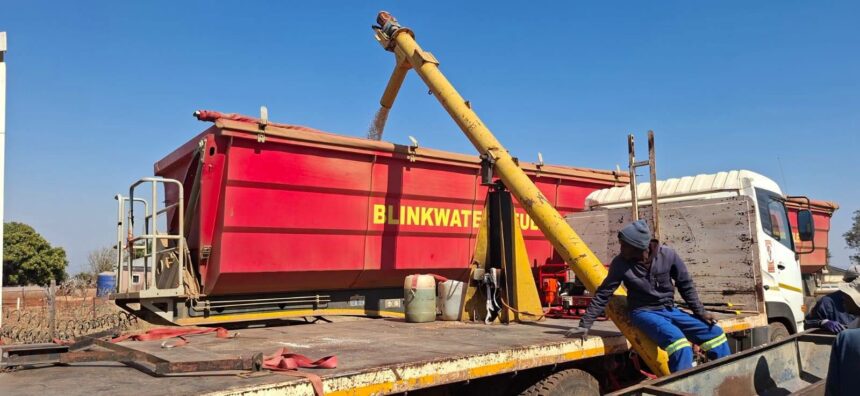
The successful harvest was evident during the loading of harvested maize destined for the market, marking an important milestone for the farmers of Ga-Riba Village. The ability to sell produce through formal markets represents an important step in moving beyond subsistence farming towards greater commercial participation. Increased market access allows farmers to generate income that can be reinvested into future production, household needs and farm improvements. It also creates stronger connections between rural producers and the agricultural value chain. This transition contributes to the long term sustainability of smallholder farming while supporting local economic development.
Chairperson of the Riba Dry Land Farmers Association, Ms Ngwato Christinah, expressed sincere appreciation to the Limpopo Department of Agriculture and Rural Development for its continued commitment to supporting local farmers. She praised the local agricultural office for providing genetically modified maize seed that was well suited to the specific environmental conditions of Ga-Riba Village. Situated approximately 885 metres above sea level, the area experiences unique microclimatic conditions that require careful consideration when selecting suitable crop varieties. According to Christinah, choosing the appropriate seed played a major role in achieving a successful harvest despite the environmental challenges faced by farmers. Her comments highlight the importance of scientific planning and local agricultural expertise in improving farming outcomes.
Selecting crop varieties that match local growing conditions is an essential component of successful agricultural production. Different regions experience varying temperatures, rainfall patterns, soil types and elevations, all of which influence crop performance. By supplying maize seed suited to Ga-Riba’s microclimate, the Department helped maximise productivity while reducing some of the production risks associated with unsuitable planting material. Careful seed selection improves crop establishment, resilience and overall yield potential. This approach demonstrates how agricultural support programmes can combine scientific knowledge with practical farming solutions to deliver meaningful results.
The Department’s support extended beyond supplying farming inputs by investing in farmer education and skills development. Training programmes were organised to strengthen farmers’ technical knowledge and improve agricultural management practices. Through a strategic partnership with Grain SA, farmers received valuable guidance on maize production, crop management and best farming practices. Access to expert advice enables producers to make informed decisions that improve productivity and enhance the long term sustainability of their farming operations. Building farmers’ knowledge alongside providing material support creates stronger and more resilient agricultural enterprises.
Market access has also been an important component of the programme’s success. The Department facilitated access to the Blinkwater Market, providing farmers with a reliable outlet for their harvested maize. Access to dependable markets is essential for ensuring that farmers receive fair opportunities to sell their produce and generate income from their hard work. Reliable marketing channels also encourage increased production because farmers have greater confidence that there will be buyers for their crops. Strengthening market connections helps smallholder farmers integrate into the formal agricultural economy while supporting rural economic growth.
The achievements of the farmers in Ga-Riba Village demonstrate the positive impact that well coordinated government support can have on rural communities. By combining quality inputs, mechanisation services, technical training and market access, the Farmer Support Programme has strengthened agricultural productivity while improving livelihoods. Increased maize production contributes directly to household food security while generating additional income opportunities for farming families. The programme also supports broader national goals of agricultural development, rural employment and inclusive economic participation. Continued investment in emerging farmers will help ensure that more rural communities benefit from similar opportunities in the future.
The successful planting season celebrated by more than 140 subsistence farmers in Ga-Riba Village reflects the value of targeted agricultural support and strong partnerships between government and farming communities. Through the Limpopo Department of Agriculture and Rural Development’s Farmer Support Programme, farmers received the resources, training and market opportunities needed to cultivate approximately 230 hectares and achieve an impressive maize harvest. The initiative has strengthened food production, expanded access to formal markets and improved the economic prospects of smallholder farmers. It also demonstrates that investing in the right seed, technical expertise and farmer development can produce lasting benefits for rural communities. As the department continues to support sustainable and inclusive agricultural enterprises, initiatives like this will remain essential in driving rural economic growth, improving livelihoods and strengthening food security across Limpopo.
Join 'Farmers Mag' WhatsApp Channel
Get the latest Farming news and tips delivered straight to your WhatsApp
CLICK HERE TO JOIN