

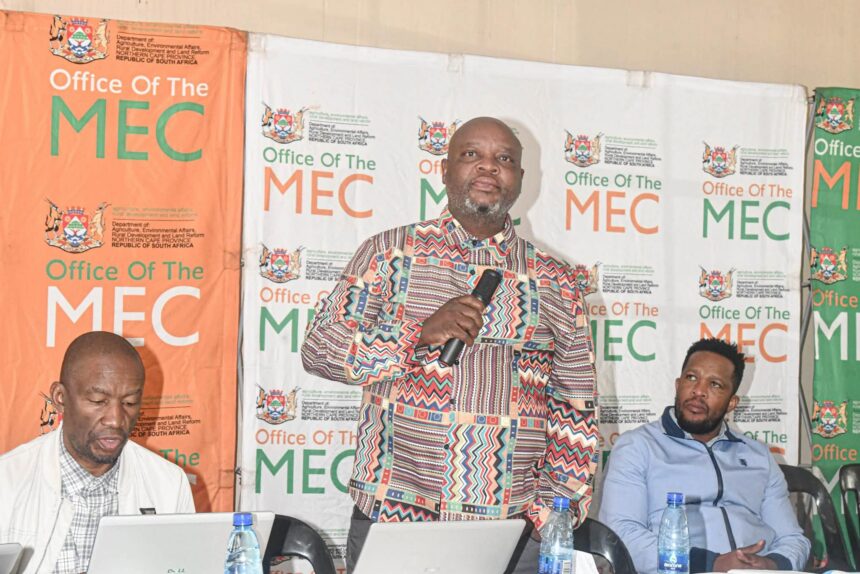
The Northern Cape Department of Agriculture has returned to Phokwane Municipality to provide farmers with feedback on concerns raised during a recent stakeholder engagement session. Departmental officials were joined by representatives from the national Department of Land Reform and Rural Development and the Department of Water and Sanitation during the latest engagement. The meeting reaffirmed government’s commitment to listening to farmers, responding to their concerns and taking practical action to address challenges affecting agricultural production. The feedback session provided an opportunity for farmers to hear what progress had been made since their initial engagement with government representatives. It also demonstrated the importance of continued communication between farmers, government departments, municipalities and other stakeholders in strengthening the agricultural sector across the Northern Cape.
During the initial stakeholder engagement, farmers raised a broad range of concerns affecting their ability to farm productively and sustain their livelihoods. The issues highlighted the different pressures facing agricultural communities, from limited access to grazing land and agricultural machinery to livestock theft and animal health concerns. Farmers also raised concerns about access to veterinary services and support related to Foot-and-Mouth Disease (FMD), which remains an important issue for livestock producers. Other matters included poultry development, delays in Comprehensive Agricultural Support Programme (CASP) applications, water rights and the impact of invasive plant species on agricultural land. The wide range of concerns demonstrated that farmers require coordinated support that addresses infrastructure, finance, animal health, water, land management and access to government services.
Grazing land shortages were among the concerns raised by farmers, highlighting the pressure placed on available agricultural resources in rural communities. Limited grazing can affect livestock production by increasing pressure on available land and making it more difficult for farmers to maintain healthy herds. Farmers also raised concerns about cross-border grazing disputes, which can create tensions between farming communities and complicate the management of livestock and shared resources. These issues require cooperation between affected communities, local authorities and relevant government departments to find workable solutions. Effective land management and clear communication can help reduce disputes while supporting more sustainable use of grazing resources.
Access to agricultural machinery was another concern discussed by farmers during the initial engagement. Machinery such as tractors and other agricultural equipment can play an important role in land preparation, planting, maintenance and other farming activities. Farmers who cannot access suitable machinery may face delays and higher production costs, particularly during critical periods in the agricultural calendar. Government support programmes can help address some of these challenges by providing access to equipment or linking farmers with appropriate agricultural support initiatives. The return visit to Phokwane gave officials an opportunity to explain what interventions are being considered and whether specific machinery-related matters have been referred to relevant institutions.
Livestock theft also remains a serious concern for farmers because stolen animals can result in significant financial losses and undermine the sustainability of farming operations. Livestock represents an important economic asset for many rural farmers, making effective measures to prevent theft and improve animal identification essential. Farmers also need accessible channels through which they can report incidents and work with law enforcement and other relevant authorities. The concerns raised during the stakeholder engagement demonstrate that livestock security requires cooperation between farmers, municipalities, government departments and law enforcement agencies. Continued engagement can help ensure that stock theft remains part of broader rural development and agricultural support discussions.
Animal health and FMD support featured prominently among the farmers’ concerns. Foot-and-Mouth Disease can affect livestock movement, production and market access, making effective surveillance and veterinary support important for livestock producers. Farmers need access to accurate information, veterinary services and appropriate interventions to manage animal health risks. Delays in receiving support can make it more difficult for farmers to respond effectively to disease-related challenges. By involving officials responsible for agriculture and related services, government can strengthen communication with farmers and improve the coordination of animal health interventions.
Farmers also raised concerns about poultry development and the need for stronger support for agricultural diversification. Poultry farming can provide opportunities for income generation, food production and employment when farmers have access to suitable infrastructure, finance, technical knowledge and reliable markets. However, developing a sustainable poultry enterprise requires more than production inputs, as farmers also need assistance with business planning, animal health, compliance and market access. The concerns raised in Phokwane highlight the importance of ensuring that government agricultural programmes respond to the specific needs of different farming sectors. Support for poultry producers can form part of a broader strategy to expand agricultural opportunities and strengthen rural economies.
Delays in CASP applications were another matter raised by farmers, particularly because financial and infrastructure support can determine whether agricultural projects are able to expand or remain sustainable. CASP is designed to provide support to farmers and agricultural enterprises, making timely processing and communication important for beneficiaries and applicants. Delays can create uncertainty for farmers who need to plan production, purchase inputs or implement infrastructure projects within specific agricultural seasons. Farmers therefore need clear information about the status of applications, requirements and expected processes. The feedback session allowed officials to address these concerns and indicate which matters had been referred for further attention.
Water rights were also highlighted, underscoring the importance of reliable and legally recognised access to water for agricultural production. Water is essential for livestock, crops and other agricultural activities, particularly in regions where farmers face challenging climatic conditions. Farmers need clarity around water rights processes and access to the relevant authorities when applications or disputes arise. The participation of officials from the Department of Water and Sanitation was therefore important because water-related challenges often require specialised intervention and coordination. Addressing water concerns can contribute to more predictable agricultural planning and support the long-term sustainability of farming operations.
The farmers further raised concerns about invasive plant species, drought and veldfire relief. Invasive plants can compete with agricultural vegetation, affect grazing capacity and place additional pressure on already limited natural resources. Drought can have an even broader impact by reducing water availability, weakening grazing conditions and increasing the cost of maintaining livestock and crop production. Veldfires can destroy grazing areas, agricultural infrastructure and other resources, leaving farmers with significant recovery costs. Coordinated relief, prevention and land management measures are therefore important to help farming communities prepare for and recover from environmental pressures.
School agriculture initiatives were also identified as an area requiring attention, reflecting the importance of introducing young people to agriculture and rural economic opportunities. Agricultural education can help learners understand food production, natural resource management and the business opportunities available within the agricultural value chain. Early exposure to agriculture can also encourage young people to consider farming, agricultural services and related careers as viable options. Supporting school agriculture initiatives can contribute to the development of skills while strengthening the connection between education and rural economic development. The farmers’ request therefore points to the need for agricultural development strategies that consider both current producers and the next generation.
Farmers also called for improved access to departmental officials and stronger collaboration between government institutions, municipalities and other stakeholders. Effective service delivery depends on farmers knowing where to take their concerns and receiving timely responses from the relevant authorities. When several departments are responsible for different aspects of an agricultural challenge, poor coordination can result in delays or uncertainty for farmers. The involvement of national departments in the Phokwane feedback session reflects an effort to bring the relevant institutions together and address issues according to their respective mandates. Stronger cooperation can make it easier to track commitments, share information and ensure that farmers receive appropriate assistance.
The latest session focused on reporting back to farmers on the progress made since the initial engagement and outlining planned interventions. Officials informed farmers that several matters had already been referred to relevant municipalities, provincial departments and sector partners for further attention. Investigations, awareness programmes, infrastructure support initiatives and policy interventions are also underway in response to the concerns identified. Providing feedback is important because farmers need to know what happens after they raise issues with government representatives. Regular communication can also strengthen trust by showing farmers that their concerns are being recorded, referred and considered as part of ongoing service delivery efforts.
The return to Phokwane demonstrates that meaningful stakeholder engagement should continue beyond a single meeting. Farmers need opportunities to raise concerns, receive clear responses and monitor progress on commitments made by government institutions. At the same time, government departments need direct feedback from farming communities to understand whether interventions are addressing the challenges experienced on the ground. This two-way communication can help identify gaps in service delivery and improve the implementation of agricultural programmes. It can also encourage farmers and stakeholders to work together on issues that require community participation rather than government intervention alone.
The engagement also highlights the importance of coordinated agricultural development in the Northern Cape. Farmers face interconnected challenges involving land, water, livestock health, security, infrastructure, climate conditions, funding and skills development. These challenges cannot always be resolved by a single department or institution, which makes cooperation between provincial and national government, municipalities, farmers and sector partners essential. The involvement of the Department of Land Reform and Rural Development and the Department of Water and Sanitation provides an example of how different government institutions can contribute to resolving agricultural challenges within their respective areas of responsibility. Continued coordination will be important if the interventions identified during the engagement are to produce lasting results.
The latest feedback session in Phokwane represents an important step in maintaining accountability between government and the farming community. Farmers raised serious concerns during the initial engagement, and officials have now returned to provide information on referrals, investigations, awareness programmes, infrastructure initiatives and planned interventions. While many of the challenges will require time and sustained cooperation to resolve, providing regular feedback ensures that farmers remain informed about progress. The Department’s continued engagement also reinforces the importance of practical support that responds to the realities faced by agricultural communities. By keeping communication open and strengthening collaboration among government institutions and farmers, the Northern Cape can improve agricultural service delivery, support sustainable farming and contribute to stronger rural livelihoods across the province.
Join 'Farmers Mag' WhatsApp Channel
Get the latest Farming news and tips delivered straight to your WhatsApp
CLICK HERE TO JOIN




