The North West Provincial Legislature Portfolio Committee on Agriculture and Rural Development has concluded a four-day oversight programme in the Bojanala District, placing livestock protection, agricultural productivity and rural development under close review. Led by Portfolio Committee Chairperson Sipho Dial, the programme brought together provincial lawmakers, agricultural officials, farmers and communities to assess progress and identify challenges affecting the sector. MEC for Agriculture and Rural Development Madoda Sambatha also joined the final day of the programme, adding further support to the oversight process. The programme provided an opportunity to assess how government interventions are reaching farmers on the ground and whether existing programmes are producing the intended results. Its conclusion highlighted the importance of continued cooperation between government, farmers and rural communities in strengthening agriculture across the North West.
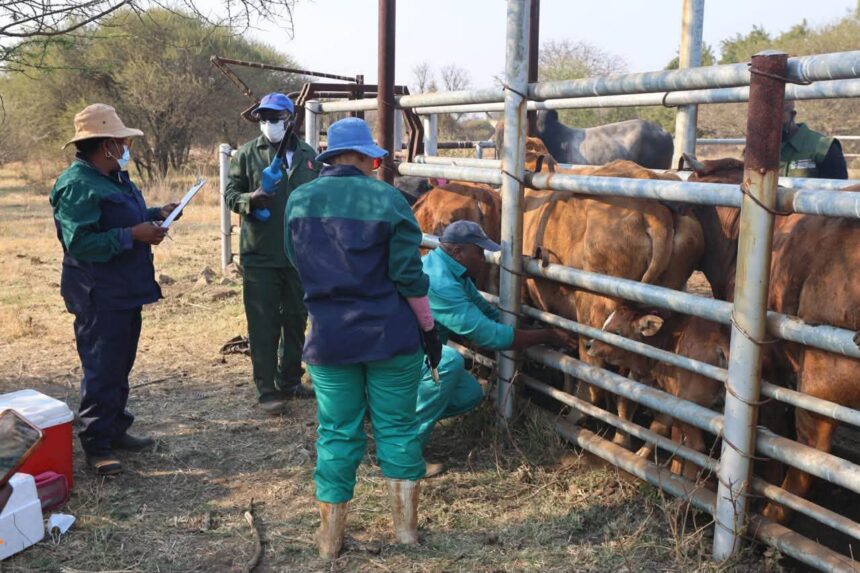
The final day began with a Foot and Mouth Disease (FMD) vaccination and ear-tagging campaign at communal grazing camps in the Rustenburg Local Municipality. FMD remains a major concern for livestock farmers because outbreaks can disrupt animal movement, affect agricultural trade and place significant financial pressure on farming communities. The vaccination campaign forms part of ongoing provincial efforts to protect cattle and other susceptible livestock while improving disease management across communal farming areas. During the visit, the Portfolio Committee and MEC Sambatha witnessed departmental officials carrying out vaccination and ear-tagging activities and assessed the progress being made towards the province’s vaccination targets. The campaign also demonstrated the importance of reaching livestock in communal grazing systems, where effective disease control requires coordinated participation from farmers, government officials and local communities.
Vaccination and animal identification play an important role in strengthening livestock management and responding to animal health risks. Ear-tagging helps officials and farmers maintain better records of individual animals, which can support disease surveillance, traceability and the management of livestock populations. Effective identification becomes particularly important when authorities need to track animals following suspected or confirmed disease cases. The oversight visit therefore gave lawmakers an opportunity to observe not only the vaccination process but also the broader systems supporting livestock health in the province. Continued progress will depend on reaching more animals, maintaining accurate records and ensuring that livestock owners understand the importance of participating in vaccination and identification programmes.
The campaign also reflects the broader role of provincial agricultural programmes in protecting rural livelihoods. Many communities depend on livestock for income, food security and household resilience, making animal health a critical component of rural development. An outbreak of FMD can have consequences that extend beyond individual farmers because restrictions on animal movement can affect markets, auctions and other parts of the agricultural value chain. By monitoring vaccination efforts through an oversight programme, the Portfolio Committee can identify gaps that may require additional resources, improved coordination or stronger community engagement. The involvement of MEC Sambatha on the final day further highlighted the need for political leadership and departmental implementation to work together when addressing agricultural challenges.
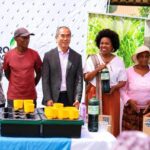
Following the livestock health campaign, the oversight programme moved to the Healthy Life for Achievers Citrus Farm in the Madibeng Local Municipality. The visit provided an opportunity for the Portfolio Committee, MEC Sambatha, the farmer and departmental officials to examine the project’s current position and discuss the challenges affecting its development. Citrus farming requires careful planning, reliable infrastructure, access to markets and consistent production support, making long-term sustainability a key consideration for agricultural projects. The engagement focused on understanding the practical difficulties facing the farm rather than simply assessing its performance from a distance. This approach allowed those involved to discuss possible interventions that could help strengthen productivity and improve the project’s prospects.
The engagement at the citrus farm also demonstrated why agricultural oversight needs to extend beyond government programmes and funding announcements. Farmers often face interconnected challenges that can affect production, profitability and the ability to maintain an agricultural enterprise over time. These may include infrastructure constraints, production costs, access to technical support, market opportunities and the need for appropriate operational planning. By engaging directly with the farmer and departmental officials, the Portfolio Committee was able to gain a clearer understanding of the circumstances affecting the project. Identifying practical solutions can help ensure that agricultural initiatives deliver sustainable benefits rather than remaining dependent on short-term interventions.
The Healthy Life for Achievers Citrus Farm visit also reinforced the importance of supporting agricultural projects after their establishment. A successful agricultural project requires ongoing attention to production, maintenance, management and market access. Government departments have an important role to play in providing appropriate support while farmers must also be able to operate projects efficiently and respond to changing market and environmental conditions. Stronger collaboration between farmers and government can help identify problems before they become major barriers to production. The discussions at the farm therefore provided a platform for considering how available resources and expertise can be better directed towards improving sustainability and productivity.
The four-day oversight programme in Bojanala District ultimately brought together two important aspects of agricultural development, protecting existing livestock resources and strengthening productive farming enterprises. The FMD vaccination and ear-tagging campaign addressed the immediate need for effective livestock health management, while the citrus farm visit focused on the longer-term sustainability of an agricultural project. Both activities demonstrated the value of monitoring government programmes at community and farm level. Oversight allows lawmakers to understand whether policies and interventions are working in practice and to raise concerns where additional action may be needed. It also gives farmers and rural communities a direct opportunity to communicate their experiences and challenges to decision-makers.
The conclusion of the programme signals the importance of turning the issues identified during the oversight visits into practical action. Progress towards the province’s FMD vaccination targets will require continued vaccination, ear-tagging, monitoring and cooperation from livestock owners and communities. At the same time, agricultural projects such as the Healthy Life for Achievers Citrus Farm will need targeted support and practical solutions to improve productivity and strengthen their long-term sustainability. The North West Provincial Legislature Portfolio Committee’s engagement in Bojanala District shows how direct oversight can help connect provincial agricultural policy with conditions experienced by farmers on the ground. Continued collaboration between the Legislature, the Department of Agriculture and Rural Development, farmers and rural communities will remain essential to building a stronger, more resilient and productive agricultural sector in the North West.
Join 'Farmers Mag' WhatsApp Channel
Get the latest Farming news and tips delivered straight to your WhatsApp
CLICK HERE TO JOIN