

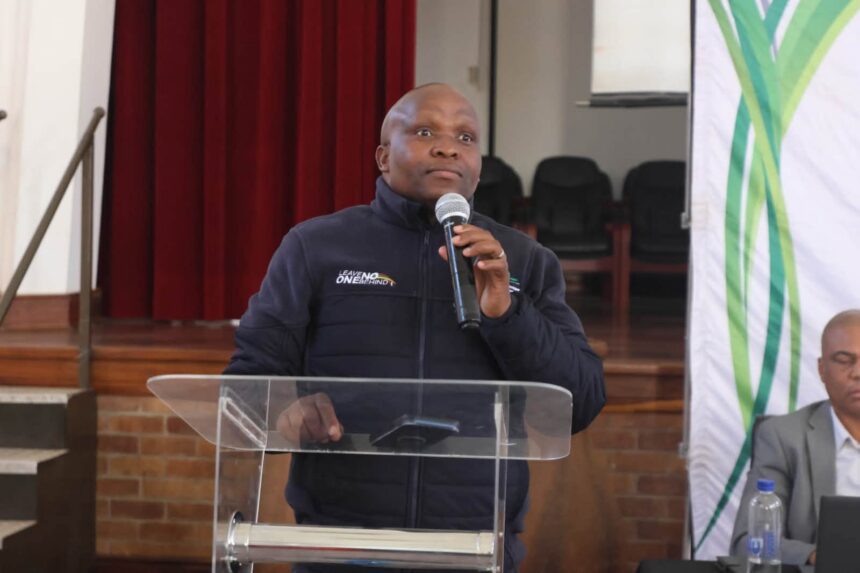
North West MEC for Agriculture and Rural Development, Madoda Sambatha, is addressing 110 unemployed agricultural graduates during the official induction of the Unemployed Graduate Placement Programme in Potchefstroom. The programme gives young agricultural graduates an opportunity to move from classroom-based learning into practical farming environments across the North West province. Participants will spend two years receiving in-service training on farms, where they will gain hands-on experience and strengthen the technical and practical skills required in the agricultural sector. The initiative comes as government continues to look for practical ways to address youth unemployment while expanding opportunities for young people to participate in the agricultural economy. For the graduates, the programme provides an opportunity to gain valuable workplace experience while developing the knowledge and confidence needed to build long-term careers in agriculture.
The 110 participants have been placed on farms across the province, giving them exposure to real agricultural operations and the daily responsibilities involved in running productive farming enterprises. Practical experience can help graduates understand how agricultural knowledge is applied under different conditions and across different types of farming operations. The two-year placement period is designed to give participants sufficient time to develop their skills while learning from experienced farmers and agricultural professionals. Graduates can gain insight into production planning, farm management, agricultural technology, livestock or crop production and other aspects of running a farming enterprise, depending on their placements. This practical exposure can strengthen their employability and help them identify areas of agriculture where they may eventually establish their own businesses.
MEC Sambatha encouraged the graduates to view the programme as more than a temporary employment opportunity. He urged them to use the two years to build a foundation for sustainable careers and businesses within the agricultural sector. The MEC also encouraged participants to develop an exit plan that prepares them for life after completing the programme. Having a clear plan can help graduates identify the skills, networks and resources they need to move into employment, establish agricultural enterprises or pursue other opportunities within the sector. His message places entrepreneurship at the centre of the programme and encourages participants to consider how they can eventually become agricultural producers and business owners rather than remaining dependent on short-term opportunities.
The emphasis on developing an exit plan is particularly important because agricultural training can provide graduates with a strong foundation for entrepreneurship. Participants can use their time on farms to understand production costs, market requirements, labour management, record keeping and other elements that influence the success of an agricultural business. Working alongside experienced farmers can also expose graduates to the practical challenges that are difficult to fully understand through classroom learning alone. Building professional networks during the placement could provide additional opportunities after the programme ends. By approaching the two-year period as a structured learning and development opportunity, graduates can improve their readiness to establish or manage agricultural enterprises in the future.
Many of the participants are graduates from agricultural colleges, including Potchefstroom College of Agriculture and Taung Agricultural College. These institutions provide agricultural education that equips students with knowledge relevant to farming and agricultural management. The placement programme gives graduates an opportunity to build on that foundation by applying what they have learned in operational farming environments. The transition from college to the workplace can be challenging for young professionals who have limited practical experience, making structured placements valuable for their development. The programme can help bridge this gap by allowing graduates to develop workplace skills while contributing to farming operations across the province.
The participation of graduates from agricultural colleges also highlights the importance of creating clear pathways between agricultural education and employment. Young people can complete their studies with valuable qualifications but still struggle to find opportunities where they can gain practical experience. This can limit their ability to compete for jobs and delay their entry into the agricultural economy. A structured placement programme can help address this gap by providing graduates with practical experience while exposing them to the realities of the sector. Over time, stronger links between agricultural colleges, farms, government programmes and private-sector businesses could help create a more effective pipeline of skilled young agricultural professionals.
The programme is funded through the Comprehensive Agricultural Support Programme, commonly known as CASP, which supports agricultural development initiatives. Using CASP funding for graduate placements creates an opportunity to connect agricultural support with skills development and youth employment. The programme addresses two important challenges at the same time by providing unemployed graduates with practical opportunities while strengthening the human capacity available within the agricultural sector. Participants can gain experience that may improve their prospects of securing employment or starting businesses once their placements end. The initiative also demonstrates how agricultural development programmes can contribute to broader economic objectives when investment includes both productive activities and skills development.
Youth participation is important to the future of agriculture because the sector requires skilled people who understand modern production methods and can adapt to changing economic and environmental conditions. Young agricultural professionals can contribute new ideas, technological knowledge and different approaches to farm management. Their involvement can also support the introduction of digital tools, improved production systems and more efficient ways of managing agricultural businesses. Creating opportunities for young people to enter the sector can help build a stronger skills base for the future. It can also encourage graduates to view agriculture as a viable career and business opportunity rather than an industry with limited prospects.
The practical nature of the placement programme can provide benefits for both graduates and participating farms. Farmers gain access to young people who have formal agricultural training and can contribute to day-to-day operations while continuing to learn. Graduates, in turn, receive exposure to experienced producers who can provide practical guidance and demonstrate how agricultural businesses operate. This interaction can encourage knowledge transfer between experienced farmers and the next generation of agricultural professionals. It can also help graduates develop professional relationships that may become valuable when they seek employment, partnerships or business opportunities after the programme.
The North West agricultural sector stands to benefit from having more trained young people gaining practical experience across farms in different parts of the province. Agriculture requires a wide range of skills, from technical production knowledge to business management, marketing and financial planning. Giving graduates exposure to these different aspects of farming can help develop a more rounded workforce capable of contributing to the sector’s long-term growth. The programme can also encourage participants to identify gaps in local agricultural markets where new businesses could be established. If graduates successfully transition into entrepreneurship, the impact could extend beyond their own careers through job creation and increased agricultural production.
The induction of the 110 agricultural graduates in Potchefstroom marks the beginning of an important two-year development journey for the participants. Their success will depend on how effectively they use the opportunity to learn, build professional networks and prepare for their next steps. MEC Sambatha’s call for graduates to develop exit plans reinforces the need to think beyond the immediate placement and focus on long-term sustainability. With practical experience from farms, formal agricultural training and a clear entrepreneurial mindset, participants can position themselves for meaningful careers within the sector. The programme therefore represents more than a response to unemployment, it is an investment in the skills, businesses and agricultural leaders who can contribute to the future of farming in the North West.
Join 'Farmers Mag' WhatsApp Channel
Get the latest Farming news and tips delivered straight to your WhatsApp
CLICK HERE TO JOIN




