

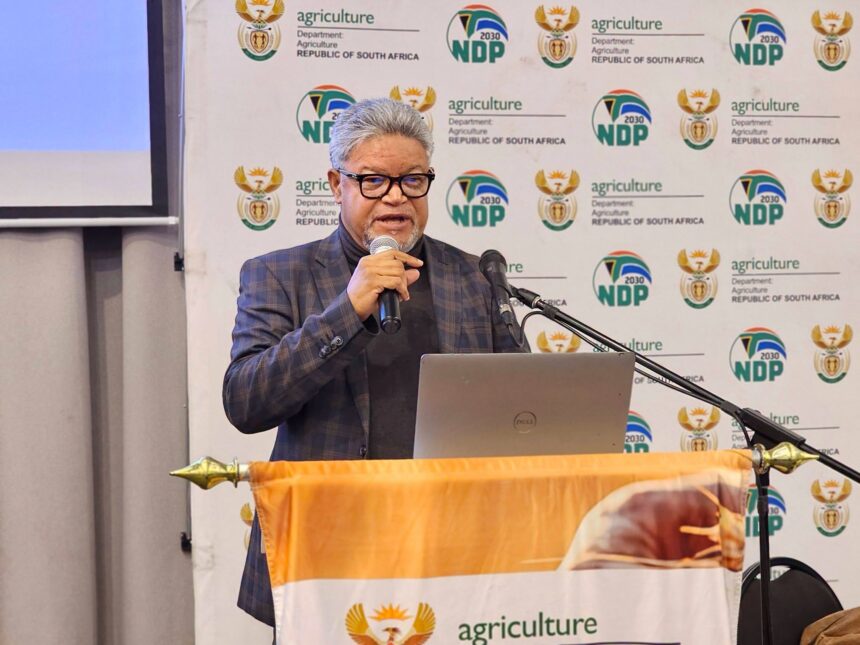
The National Department of Agriculture is bringing agricultural stakeholders together in the Western Cape for a strategic planning session focused on strengthening the support provided to farmers across South Africa. Through National Extension Support Services, the department is hosting the 2027/28 Extension and Advisory Services Strategic Planning Session over three days. Representatives from the national department, all nine Provincial Departments of Agriculture, research institutions, professional bodies, institutions of higher learning, commodity organisations and other agricultural stakeholders are participating in the discussions. The session is focused on a central question about how government and its partners can strengthen the support farmers need to grow their enterprises, create jobs and contribute to food security. The discussions recognise that effective extension and advisory services are essential to helping farmers overcome production challenges and build sustainable agricultural businesses.
The strategic planning session is guided by the theme, “Advancing Producer Support Initiatives, Food Security, Job Creation and Biosecurity,” which reflects several of the priorities facing South African agriculture. Farmers require more than access to land and production inputs to build successful enterprises, as they also need reliable technical advice, market information, research support and guidance on changing production conditions. Extension officers play an important role in connecting farmers with practical knowledge and helping them apply appropriate technologies and production methods. Strong advisory services can also help farmers respond to challenges such as climate variability, animal and plant diseases, changing markets and rising production costs. Strengthening these services can therefore improve the ability of farmers to remain productive and contribute to the wider agricultural economy.
The involvement of all nine Provincial Departments of Agriculture is particularly important because agricultural conditions differ significantly across South Africa. Farmers in different provinces face different production environments, climate conditions, markets and infrastructure challenges. Provincial agricultural departments are therefore well placed to provide insight into the specific needs of farmers in their regions while working within broader national priorities. Bringing provincial representatives together with national officials creates an opportunity to share experiences and identify approaches that can be adapted across different agricultural areas. Greater coordination between national and provincial structures can also help reduce gaps in farmer support and improve the consistency of extension and advisory services.
Research institutions and institutions of higher learning also have an important role in strengthening agricultural support. Agricultural research can provide farmers with improved production techniques, technologies and information that can help them increase productivity and manage emerging risks. Universities and other higher education institutions can contribute through research, training and the development of agricultural professionals with the skills required by the sector. Connecting researchers and educators with extension practitioners can help ensure that new knowledge reaches farmers in practical and accessible forms. This relationship between research, education and extension is important because agricultural innovation has limited impact if farmers cannot access or apply it effectively.
Commodity organisations and professional bodies bring another important perspective to the strategic planning process. Commodity organisations understand the specific challenges affecting different agricultural industries and can provide insight into production trends, market requirements and opportunities for growth. Professional bodies can contribute knowledge about standards, skills development and the professionalisation of agricultural advisory services. Bringing these organisations into the planning process can help ensure that farmer support initiatives reflect the realities of agricultural businesses and markets. Collaboration across these groups can also create stronger links between government programmes and the private sector.
Producer support is closely connected to South Africa’s food security because farmers are responsible for producing the crops, livestock and other agricultural products that supply households and businesses. When farmers receive timely and appropriate support, they can make better production decisions and improve their ability to respond to risks. Smallholder and emerging farmers can particularly benefit from effective extension services because access to technical knowledge and professional advice can help them overcome some of the barriers to commercial growth. Commercial farmers also require access to updated information as production technologies, regulations, markets and biosecurity risks continue to change. A stronger producer support system can therefore contribute to a more productive and resilient agricultural sector across different categories of farmers.
Job creation is another major focus of the strategic planning session because agriculture has the potential to generate employment across the value chain. Jobs are created not only through farming but also through processing, packaging, transportation, logistics, marketing and other agricultural activities. When farmers expand their enterprises, they can create additional employment opportunities in rural communities and contribute to local economic development. Strong extension and advisory services can support this growth by helping producers improve productivity, business planning and market participation. Supporting agricultural enterprises to become more productive and commercially sustainable can therefore contribute to both food security and employment.
Biosecurity is equally important because diseases and pests can have serious consequences for agricultural production and trade. Livestock diseases, plant pests and other biological threats can reduce productivity, cause financial losses and disrupt the movement of agricultural products. Farmers need access to reliable information about prevention, detection and response measures so that potential threats can be identified and managed quickly. Extension officers can play an important role in communicating biosecurity requirements and encouraging farmers to adopt responsible practices. Strengthening biosecurity awareness and support can help protect individual farms while also reducing risks to the broader agricultural sector.
The planning session also provides an opportunity to review progress and identify challenges affecting the delivery of extension and advisory services. Effective planning requires stakeholders to understand what has worked, where gaps remain and what changes are needed to improve outcomes. Discussions over the three-day programme can help identify areas where resources, training, coordination or technology need to be strengthened. It is also important to consider how extension services can reach farmers more effectively, particularly those operating in rural and underserved areas. By examining these challenges collectively, stakeholders can develop strategies that are more responsive to the needs of producers.
Technology can also play an increasingly important role in improving the delivery of agricultural advice. Digital platforms can help extension officers share information about weather conditions, disease outbreaks, production practices, markets and other issues affecting farmers. However, technology should complement rather than replace direct engagement, especially in communities where farmers may face limited access to digital infrastructure. A combination of field-based extension work, digital communication, research and farmer training can create a more comprehensive support system. Strategic planning therefore needs to consider how different tools and approaches can work together to ensure farmers receive useful information when they need it.
The gathering in the Western Cape demonstrates the value of collaboration in addressing complex agricultural challenges. No single department or organisation can provide every form of support required by farmers, particularly in a sector that spans production, research, finance, markets, technology and environmental management. Bringing different stakeholders together creates opportunities to align priorities and develop coordinated responses. It can also help ensure that farmer support programmes are informed by evidence, practical experience and the needs of agricultural industries. Strong partnerships can make it easier to translate strategic plans into actions that deliver measurable benefits for producers and communities.
The 2027/28 Extension and Advisory Services Strategic Planning Session therefore represents an important opportunity to strengthen the foundation on which South African agriculture depends. The discussions are focused on improving producer support while advancing food security, job creation and biosecurity across the country. Effective extension and advisory services can help farmers make informed decisions, improve productivity, respond to risks and build more sustainable enterprises. When government, provinces, researchers, professional bodies, higher education institutions, commodity organisations and other agricultural stakeholders work together, they can create a more coordinated support system for producers. Strengthening producer support ultimately strengthens the agricultural sector itself, creating greater opportunities for farmers, supporting jobs and helping communities benefit from a more resilient and productive food system.
Join 'Farmers Mag' WhatsApp Channel
Get the latest Farming news and tips delivered straight to your WhatsApp
CLICK HERE TO JOIN




