

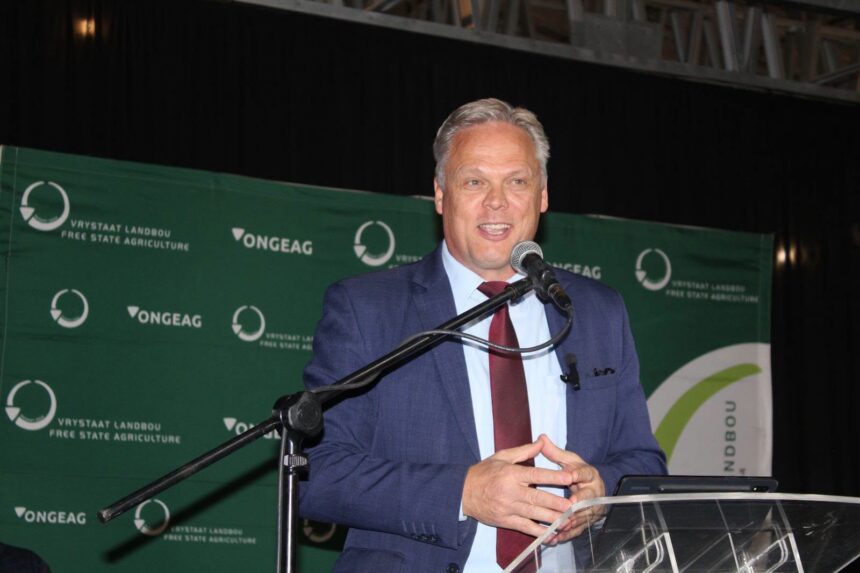
South Africa’s agricultural sector remains one of the country’s most important economic drivers, providing food security, employment and export opportunities while supporting thousands of rural communities. Yesterday, Minister Willie Aucamp attended the Free State Agriculture Congress in Bloemfontein, where he reinforced government’s commitment to creating an environment that enables farmers to thrive. His message focused on supporting producers through practical policies, stronger partnerships and continued collaboration between government and the agricultural sector. The congress also served as a platform for discussing some of the most pressing challenges facing farmers across the country. As agriculture continues to navigate economic pressures, animal disease outbreaks and infrastructure concerns, the event highlighted the importance of working together to secure the future of farming in South Africa. Minister Aucamp’s address reflected a shared commitment to ensuring that farmers remain productive, competitive and capable of creating sustainable economic growth.
Speaking to delegates at the congress, Minister Willie Aucamp praised South African farmers for their dedication, innovation and resilience. He described local farmers as among the best in the world, acknowledging their ability to produce high quality food despite difficult operating conditions. He stressed that government recognises the vital contribution agriculture makes to the country’s economy through food production, exports and job creation. According to the Minister, farmers need an enabling environment that allows them to focus on what they do best, producing food, expanding their businesses and creating employment opportunities. He explained that this requires practical government support, effective policies and close cooperation with industry stakeholders. His remarks reinforced the importance of viewing agriculture as a strategic sector that deserves consistent investment and long term planning.
Minister Aucamp also highlighted the value of partnerships between government, agricultural organisations, financial institutions, researchers and the private sector. He noted that collaboration plays a key role in helping farmers overcome obstacles while improving productivity and competitiveness. Public and private partnerships can contribute to better access to technology, improved training opportunities and stronger market connections for producers of all sizes. These relationships also support innovation by encouraging knowledge sharing and the adoption of modern farming practices. The Minister emphasised that successful agriculture depends on all stakeholders working toward common goals rather than operating in isolation. Building these partnerships can strengthen rural economies while ensuring that South African agriculture remains competitive both locally and internationally.
One of the major issues discussed during the Free State Agriculture Congress was rural safety, which remains a serious concern for farming communities across South Africa. Farmers often face challenges related to crime, theft and damage to farming equipment, livestock and infrastructure. These incidents not only affect individual businesses but can also disrupt food production and reduce confidence in rural investment. Delegates explored ways to improve cooperation between law enforcement agencies, farming organisations and local communities to strengthen security measures. Improved communication, intelligence sharing and community policing initiatives were identified as important components of creating safer rural areas. Addressing rural safety effectively can help protect livelihoods while encouraging continued agricultural investment and growth.
The congress also focused significant attention on foot and mouth disease, commonly known as FMD, which continues to pose a major threat to the livestock industry. Outbreaks of the disease can result in movement restrictions, trade disruptions and substantial financial losses for farmers. Livestock producers rely on effective disease surveillance, rapid response measures and strict biosecurity practices to minimise the spread of infections. Discussions at the congress highlighted the importance of cooperation between veterinary authorities, government departments and farmers to strengthen disease control efforts. Maintaining animal health is essential for protecting domestic production while preserving valuable export markets for South African meat and livestock products. Continued investment in veterinary services and disease prevention remains critical for the long term sustainability of the agricultural sector.
Delegates also examined the growing impact of rising input costs on farming operations. Many producers continue to face increasing expenses related to fuel, fertiliser, animal feed, electricity, transport and agricultural equipment. Higher production costs place pressure on profit margins and can limit farmers’ ability to invest in expansion or adopt new technologies. The discussions recognised that improving operational efficiency and supporting productivity are important ways to help farmers remain financially sustainable. Government policies that reduce unnecessary barriers while encouraging investment can also contribute to a healthier agricultural business environment. Finding practical solutions to these cost pressures will be essential for maintaining affordable food production and supporting the broader economy.
Infrastructure challenges formed another key topic during the congress, as reliable infrastructure is fundamental to successful farming. Poor road conditions, unreliable electricity supply, inadequate water infrastructure and logistical bottlenecks can significantly affect production and market access. Farmers depend on efficient transport networks to move fresh produce, livestock and agricultural products to local and international markets without unnecessary delays. Better infrastructure also helps reduce operating costs while improving the competitiveness of South African agriculture. Investment in roads, storage facilities, irrigation systems and energy infrastructure can strengthen the entire agricultural value chain. These improvements benefit not only farmers but also consumers, processors, exporters and rural communities that rely on agriculture for economic activity.
The Free State Agriculture Congress demonstrated the importance of ongoing dialogue between government and the agricultural sector as South Africa works to strengthen food security and economic development. Minister Willie Aucamp’s address reinforced government’s commitment to creating conditions that allow farmers to succeed through practical support, effective partnerships and enabling policies. By recognising the excellence of South African farmers and acknowledging the challenges they face, the congress provided an opportunity to focus on realistic solutions for the future. Discussions around rural safety, foot and mouth disease, rising input costs and infrastructure reflected the complex issues that require coordinated action across multiple sectors. As government and industry continue working together, these efforts have the potential to strengthen agricultural resilience, protect rural livelihoods and encourage further investment in farming. A productive and competitive agricultural sector will remain essential for creating jobs, supporting economic growth and ensuring that South Africa continues to produce safe, high quality food for both domestic and international markets.
Join 'Farmers Mag' WhatsApp Channel
Get the latest Farming news and tips delivered straight to your WhatsApp
CLICK HERE TO JOIN




